

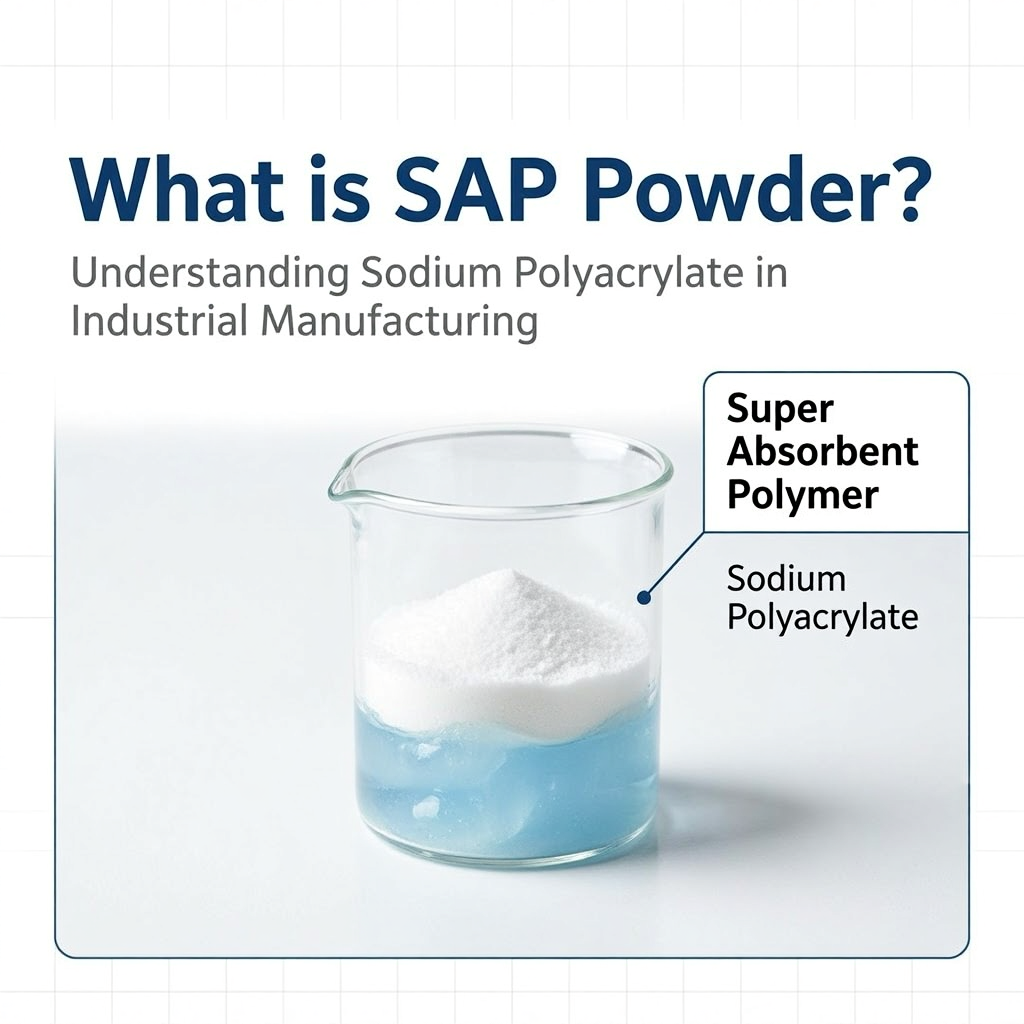
Welcome to our comprehensive guide on one of the most revolutionary materials in modern manufacturing. If you have ever wondered how a tiny diaper stays dry or how plants survive droughts, you are looking for the magic of SAP powder.
At Favourite Fab, we specialize in high-quality non-woven and hygiene raw materials. We understand that choosing the right Super Absorbent Polymer is crucial for your product’s success. Therefore, we have compiled this deep dive to answer all your technical and industrial questions.
Understanding the Basics: SAP Powder Full Form and Chemistry
To begin with, we must define our terms. The SAP powder full form stands for Super Absorbent Polymer. In the world of science, specifically chemistry, the SAP chemical full form refers to a category of functional polymers. These materials are famous for their ability to soak up massive amounts of aqueous solutions.

What is the full form of SAP in chemistry?
In chemical terms, SAP is most commonly known as Sodium Polyacrylate powder. This substance consists of a long polymer chain of acrylate compounds. Because of its unique molecular structure, it acts as a superior water absorbent polymer. Most importantly, it can absorb and retain liquids hundreds of times its own mass.
The Science of the Liquid-to-Gel Powder
Commonly called slush powder or liquid-to-gel powder, this material works through the principle of osmosis. When the polyacrylate absorbent comes into contact with water, it draws the liquid into the polymer network. Consequently, it transforms from a dry powder into a stable hydrogel polymer. Unlike a sponge that releases water when squeezed, this hydrogel locks the liquid inside.
How is Super Absorbent Polymer Made?
Understanding the manufacturing process is vital for industrial buyers. Most SAP resin is produced through a process called polymerization. Manufacturers mix acrylic acid with a neutralizing agent like sodium hydroxide.
The Role of Cross-linkers
Besides that, a “cross-linker” is added to the mix. These chemicals act like bridges between polymer chains. Without them, the polymer would simply dissolve in water. Therefore, the density of these cross-links determines how “firm” the gel becomes. At Favourite Fab, we ensure our SAP has the perfect balance of absorbency and gel strength.
The Role of SAP in Hygiene Products
The hygiene industry is the largest consumer of SAP resin globally. Because of its efficiency, it has revolutionized personal care products and enabled the creation of ultra-thin designs.
SAP Powder for Diapers
Manufacturers use SAP powder for diapers to ensure infants stay dry for long periods. Without this super absorbent polymer, diapers would be bulky and prone to leaking. Because the gel locks moisture away instantly, it prevents skin rashes and discomfort for the baby.
SAP for Non-woven Hygiene Products
At Favourite Fab, we provide specialized SAP for non-woven hygiene products. This includes high-performance materials for adult incontinence pads and medical underpads. Since these products require high retention under pressure (known as Absorbency Under Load), we ensure our SAP meets rigorous industrial standards.
SAP Powder for Sanitary Napkins
For women’s health, SAP powder for sanitary napkins is indispensable. It allows for thin, discreet designs while maintaining maximum absorption. Therefore, brands can offer comfort and confidence without compromising on safety.
Agricultural Applications: Growing with SAP
Agriculture is seeing a massive shift towards sustainable water management. This is where Agricultural grade SAP powder plays a starring role.
What is the use of SAP powder in agriculture?
Farmers use SAP to act as “miniature reservoirs” for plant roots. It is often referred to as “solid rain.” Besides that, it helps in:
- Reducing Irrigation Frequency: You can save up to 50% of water.
- Improving Soil Porosity: The swelling and shrinking of the gel aerates the soil.
- Nutrient Retention: It prevents fertilizers from washing away during heavy rains.
What is SAP in water?
In an aquatic or soil context, SAP acts as a moisture regulator. It absorbs rainwater and releases it slowly as the soil dries out. Thus, it prevents water wastage and nutrient leaching. Most importantly, it ensures seedling survival in arid regions where rainfall is unpredictable.
Potassium vs. Sodium Polyacrylate in Farming
While sodium polyacrylate is perfect for hygiene, farmers often prefer Potassium Polyacrylate. Because sodium can lead to soil salinity over many years, potassium-based SAP is safer for long-term agricultural use. It adds beneficial potassium to the soil as it degrades.
Industrial and Emergency Uses
Beyond hygiene and farming, sodium polyacrylate serves many specialized, high-stakes roles.
Super Absorbent Polymer for Spill Control
Industrial facilities use super absorbent polymer for spill control to manage hazardous liquid leaks. Because it turns liquid into a solid gel instantly, cleanup becomes much safer. It is also used in “sandless sandbags” for flood control. These bags are light until they hit water, at which point they expand to create a heavy barrier.
Electrical and Cable Insulation
In the power sector, SAP is used in water-blocking tapes for fiber optic and power cables. If a cable sheath is damaged, the SAP swells to prevent water from traveling down the line. This prevents short circuits and expensive repairs.
Construction and Concrete Curing
Did you know SAP is used in concrete? It acts as an internal curing agent. It releases water slowly as the concrete sets, preventing cracks and increasing the overall strength of the structure.
Common FAQs about SAP Powder
What is the meaning of SAP powder?
The meaning of SAP powder refers to a granular substance capable of absorbing liquids up to hundreds of times its own weight. It is a vital raw material in hygiene, medical, and agricultural industries.
What is the full form of SAP in chemistry?
The sap powder full form in chemistry is Super Absorbent Polymer, typically referring to cross-linked Sodium Polyacrylate or Polyacrylamide.
Is SAP powder biodegradable?
Standard Sodium Polyacrylate powder is generally not fully biodegradable in a short timeframe. However, it is inert and non-toxic. Many manufacturers are now developing bio-based versions from starch or cellulose. Most importantly, current SAP is considered environmentally safe when used correctly in soil conditioning.
How much water can SAP powder absorb?
High-quality SAP can typically absorb between 300 to 800 times its weight in distilled water. However, the absorption capacity decreases when the liquid contains salts. For example, it might only absorb 50 times its weight in saline water or urine.
Difference between SAP and Sodium Polyacrylate ?
Technically, SAP is the category (Super Absorbent Polymer), while Sodium Polyacrylate is the specific chemical compound. Think of SAP as the “job title” and Sodium Polyacrylate as the person.
Market Insights: Price and Sourcing
If you are looking for where to buy bulk SAP powder in India, you must consider both quality and price consistency.
SAP Powder Price and Factors
The SAP powder price per kg fluctuates based on raw material costs, specifically acrylic acid. Besides that, the price depends on:
- Absorption Speed: Faster absorption usually costs more.
- Centrifuge Retention Capacity (CRC): The ability to hold liquid under force.
- Bulk Volume: Purchasing in metric tons significantly lowers the Super Absorbent Polymer price.
At Favourite Fab, we strive to offer the most competitive rates for our industrial partners while maintaining premium quality.
Related Keywords and Practical Information
- Sap powder full form in chemistry: Sodium Polyacrylate.
- Sap powder full form in agriculture: Potassium Polyacrylate.
- SAP Powder where to buy: Reliable industrial suppliers like Favourite Fab.
- How to make sap POWDER at home: You can extract small amounts from clean diapers, but industrial-grade SAP requires precise factory polymerization.
- Liquid-to-gel powder: Essential for medical waste solidification.
Safety and Handling of SAP Powder
As an industry authority, Favourite Fab emphasizes safety. While SAP is non-toxic, it is a fine powder. Therefore, workers should wear masks to avoid inhaling dust. Most importantly, never flush SAP down the drain. Because it expands, it will cause massive blockages in plumbing systems.
The Future of SAP: 2025 and Beyond
The global SAP market is projected to grow significantly by 2030. The demand for “thinner” diapers and eco-friendly agricultural polymers is driving innovation. We are seeing a move toward SAP resin that is more compatible with compostable non-woven fabrics.
Why Choose Favourite Fab?
At Favourite Fab, we do not just sell materials; we provide solutions. We are experts in the hygiene and non-woven industry. Therefore, we ensure that our SAP powder integrates perfectly with your production line.
Our efficiency ensures that you get your supplies on time, every time. Because we value your trust, we maintain transparency in our pricing and quality control.
Contact Us
Are you ready to elevate your product quality with the best Super Absorbent Polymer? Contact our expert team today for quotes, samples, and technical data sheets.
- Email:sale@favouritehub.com
- WhatsApp: +91-9528811566
- Website: www.favouritehub.com
Conclusion
In conclusion, understanding the SAP powder full form and its varied uses is essential for modern manufacturing. Whether you are in the hygiene sector, agriculture, or industrial spill control, Sodium Polyacrylate offers unmatched performance. Trust Favourite Fab to be your reliable partner in sourcing high-quality polymers.
Let us grow your business together with efficiency and expertise!


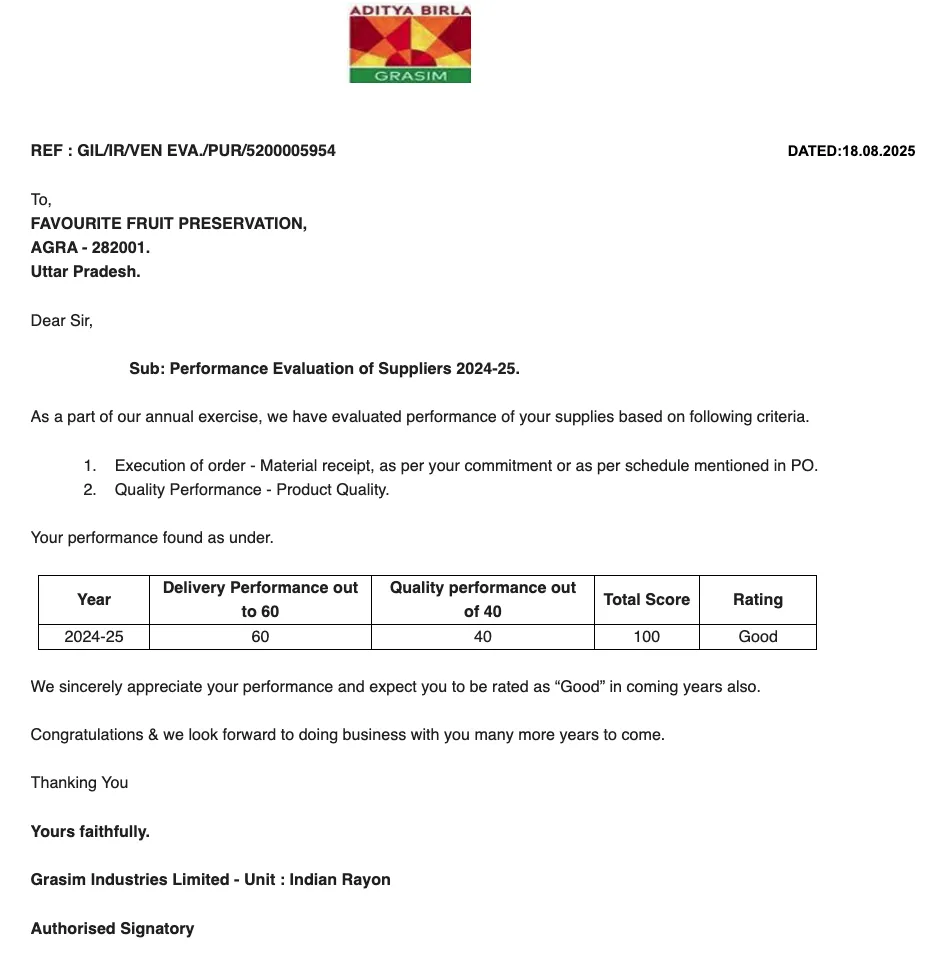


We Do Business On Trust.Our Nonwoven fabric Business is Built on trust. Trust starts with Transparency.
Mr.Ramniwas Garg Founder Of Favourite Group