

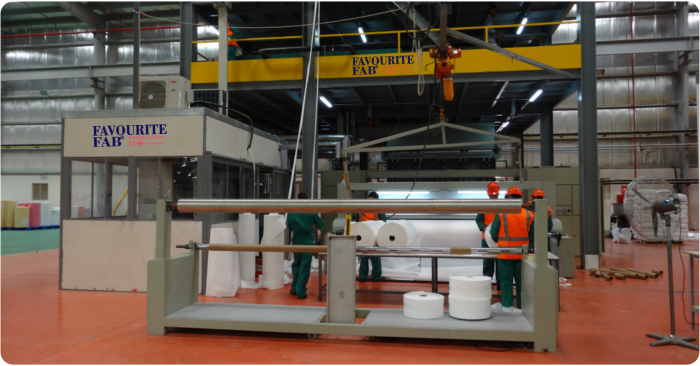
Non Woven fabric is an artificial fabric which is made up of Polypropylene Granolas. This formed without weaving process, thus called non woven. In this pandemic time we can easily familiarize it as Non Woven Fabric is the raw material of mask.
Non Woven Fabric means the fabric which is not woven. Because Non Woven Fabric Made Of PP, It is also called Polypropylene Non Woven Fabric (pp non woven) or PP Spunbond Nonwoven.
We can avail Non Woven Fabric Artinya. Non Woven Fabric HSN Code is 560314, Hs Code for Non Woven Fabric & Non Woven Fabric Bag Hs Code in India is same.
Non Woven Fabrics Huge Discount. Non Woven Material Sale
Apa Itu Non Woven Fabric & Arti Non Woven Fabric is available at reasonable price. Non Woven Fabric Artinya is also available.
We are encouraging our products to give our services to Indonesia People by providing various ranges of Non Woven Material:
Non Woven Fabric Adalah , Jual Non Woven Fabric, Kain Non Woven Fabric, Jual Geotextile Non Woven, Bahan Non Woven Fabric, Kain Nonwoven, Apa Itu Non Woven, Spesifikasi Geotextile Woven, Harga Geotextile Non Woven Per M2
We are prepare with Spun Bonded Fabric & Non Woven Fabric Adalah. We are ready to fulfill the requirement of Tas Non Woven, Kain Spunbond Non Woven Fabric, Non Woven Itu Apa, Maksud Non Woven, Kain Non Woven Polypropylene, Kain Non Woven Fabric & Apa Itu Non Woven Fabric.
Our New Products:
- Geotextile Non Woven Fabric
- Non Woven Geotextile Fabric
- With Non-Woven Fabric Dust Cover
- Woven Geotextile
Non Woven Fabric Examples:
- Non Woven Fabric Environmentally Friendly
- Spunlace Nonwoven
- Kain Spunbond Non Woven Fabric,
- Non Woven Itu Apa,
- Maksud Non Woven,
- Kain Non Woven Polypropylene
Non Woven Fabric Manufacturer Indonesia
We are an India based Non Woven Fabric Manufacturer & becoming famous as Non Woven Fabric Manufacturer In Indonesia Our company is with the Best Non Woven Fabric Manufacturing Process.
Technical Specifications — Nonwoven vs Woven vs Knit: Properties Comparison
Understanding what separates nonwoven fabric from woven and knitted textiles is essential for engineers and procurement teams selecting materials for product design. The table below presents a structured comparison across six critical parameters.
| Property | Nonwoven Fabric | Woven Fabric | Knitted Fabric |
|---|---|---|---|
| Structure | Randomly bonded fibres (thermal / chemical / mechanical) | Interlaced warp and weft yarns at 90 degrees | Looped interlocked yarn rows |
| Tensile Strength (MD) | Moderate — highly customisable via bonding | High — directional load bearing | Low-to-moderate — stretch dominant |
| Elongation | Low to medium (5–40 percent depending on grade) | Low (structured, low stretch) | High (50–300 percent stretch) |
| Cost per kg | Lower — continuous fibre process, low labour | Medium to high — loom time, yarn preparation | Medium — yarn formation overhead |
| Recyclability | High (mono-fibre PP/PET grades fully recyclable) | Moderate (blended fibres reduce recyclability) | Moderate (similar blend issues) |
| Typical Use | Single-use hygiene, medical, filtration, geotextile | Apparel, industrial tarps, woven sacks | Sportswear, underwear, stretch applications |
Nonwovens deliver the lowest-cost path to high-performance, single-use, or disposable applications — particularly where directional uniformity, controlled porosity, or rapid production is required. Polypropylene (PP) nonwovens are chemically inert, moisture-resistant, and fully recyclable in mono-material streams.
B2B Applications & OEM Use-Cases
- Sanitary pad and diaper OEMs: The defining property of PP spunbond nonwoven — rapid liquid strike-through combined with a dry surface feel — makes it the standard topsheet material in feminine hygiene and baby diaper construction. Polypropylene is hydrophobic by default; hydrophilic surfactant finish is applied to allow one-way fluid transfer.
- Filter and air-quality manufacturers: The fibre diameter control available in meltblown PP nonwoven (1–5 micron fibres) allows the material to function as a sub-micron particulate barrier. This is the core filtration layer in HEPA-equivalent masks, HVAC cassette filters, and industrial dust-collection cartridges.
- Agricultural and construction converters: Spunbond nonwovens (40–80 GSM, UV-stabilised PP) are used as crop-protection covers, root-ball wraps, and landscaping weed barriers — substituting woven polypropylene at lower per-unit cost with equivalent UV resistance up to 1–3 seasons.
Sourcing from Favourite Fab — MOQ, Lead Time & Customisation
Favourite Fab manufactures and supplies polypropylene and polyester nonwoven fabrics direct to OEMs and industrial buyers from our production facility in Agra, Uttar Pradesh. We are a manufacturer-direct source — no trading markup.
- MOQ: 500 kg per specification
- Domestic lead time: 7–14 business days from confirmed PO
- Export lead time: 21–30 days including all documentation
- Custom GSM: 10–600 GSM across all bonding technologies
- Roll width: 1.6 m to 3.2 m, slit-to-order available
- Fibre options: PP, PET, Viscose, Cotton blends
- Certifications: ISO 9001:2015, OEKO-TEX Standard 100
Bulk pricing inquiries, technical data sheets, and sample requests are handled directly by our B2B sales team. No distributor intermediary.
Frequently Asked Questions
What is nonwoven fabric made of?
Most industrial nonwoven fabrics are made from polypropylene (PP) or polyester (PET) fibres that are laid into a web and bonded together without weaving or knitting. Specialty grades use viscose, cotton, or bicomponent fibres. The absence of yarn formation makes nonwovens faster and less expensive to produce than conventional textiles.
Is polypropylene nonwoven fabric safe for skin contact?
Yes — PP nonwoven with OEKO-TEX Standard 100 Class I certification is approved for direct skin contact, including infant-use applications. Favourite Fab supplies OEKO-TEX certified grades for hygiene and medical applications. The certification verifies the absence of harmful substances including formaldehyde, heavy metals, and restricted pesticides.
How is nonwoven fabric different from woven or knitted textile?
Nonwoven fabric is formed by bonding fibres directly — through thermal, chemical, or mechanical means — without spinning them into yarn first. This gives nonwovens a unique combination of low cost, high production speed, and tunable properties (porosity, softness, strength) that woven and knitted fabrics cannot match for single-use or high-volume applications.

Gaurav Garg
I'm Gaurav Garg, CEO of Favourite Fab, a company on a mission to revolutionize the nonwoven industry with sustainable practices. We work hand-in-hand with manufacturers and suppliers who share our commitment to eco-friendly production. With a deep interest in textile innovation, I'm passionate about educating consumers about sustainable material options and their potential to transform the nonwoven landscape.


