

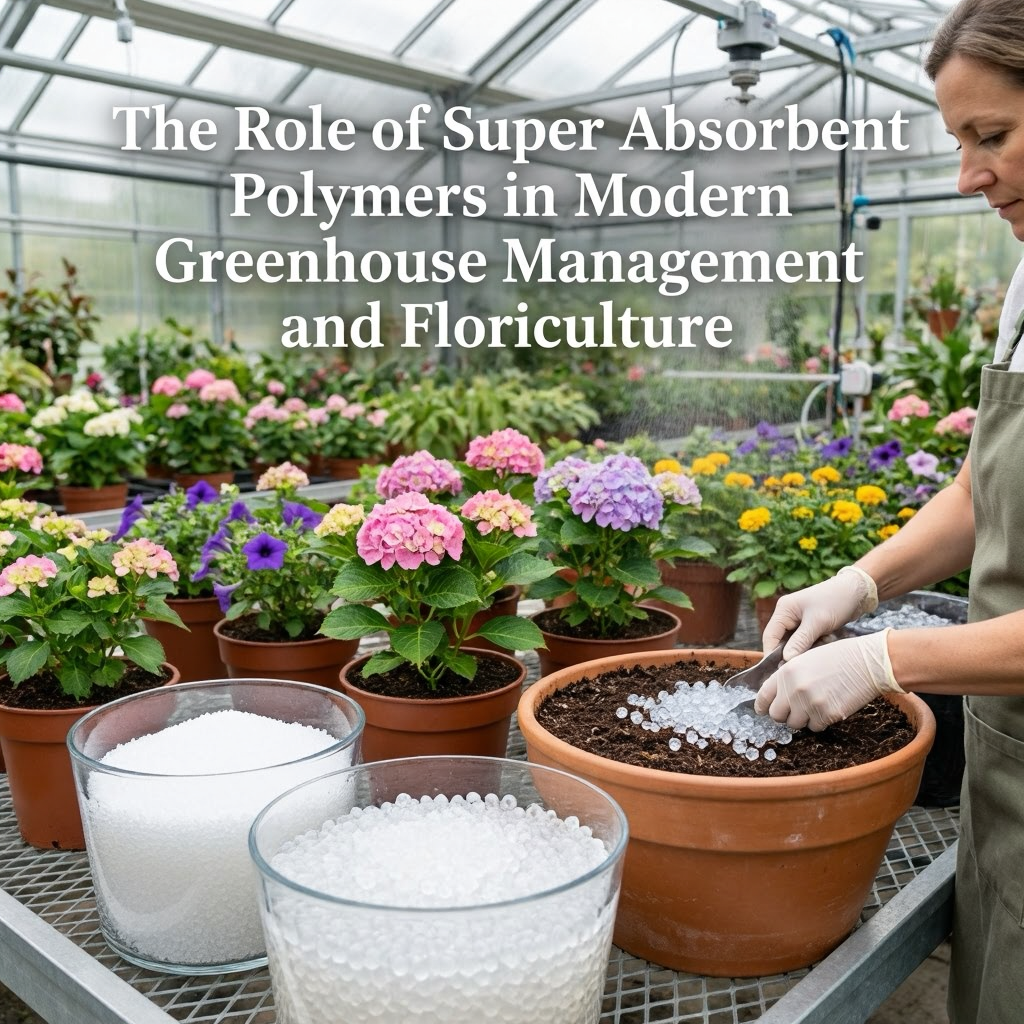
In the fast-paced world of modern horticulture, efficiency is the key to success. Greenhouse managers and floriculturists constantly seek ways to optimize resources. Most importantly, they need reliable solutions for water management. Therefore, the introduction of the Super Absorbent Polymer for agriculture has changed the game entirely.
At Favourite Fab, we specialize in high-quality Agro-hydrogel solutions. These advanced materials help growers maintain consistent moisture levels. Because water is a precious resource, using an Agricultural SAP ensures your plants thrive even during peak heat. Besides that, these polymers act as a “mini-reservoir” for the root system.
Understanding the Science of SAP in Floriculture
What exactly makes these crystals so powerful? A Super absorbent polymer for agriculture is a cross-linked chain of molecules. It can absorb hundreds of times its own weight in water. Most importantly, it doesn’t just hold water; it releases it slowly. This creates a stable root zone moisture environment.
In floriculture, where delicate blooms require precise care, Potassium Polyacrylate for plants is the preferred choice. Unlike sodium-based versions, potassium-based polymers provide essential nutrients. Most importantly, they are safer for the soil and long-term plant health. Therefore, choosing the right Potassium-based super absorbent polymer manufacturers like Favourite Fab is vital for your commercial success.
Key Benefits for Greenhouse Management
- Water-holding capacity: SAP increases the soil’s ability to retain moisture by up to 400%. Because the polymer swells upon contact with water, it creates a gel-like substance that stores hydration effectively.
- Irrigation efficiency: You can reduce watering frequency by 50% or more. This is particularly beneficial for commercial greenhouses where labor costs for manual watering are high.
- Soil conditioner: The swelling and shrinking of the gel improves soil moisture retention and aeration. This rhythmic expansion prevents soil compaction, which is a common issue in potted floriculture.
- Cation exchange capacity: It helps in better nutrient uptake for vibrant flowers. Most importantly, the polymer prevents fertilizers from washing away during heavy irrigation cycles.
Agricultural SAP: Potassium Polyacrylate vs. Sodium Polyacrylate
When looking for a water-retaining polymer for soil, you will encounter two main types. It is important to distinguish between Potassium Polyacrylate and Sodium Polyacrylate.
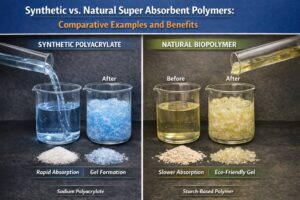
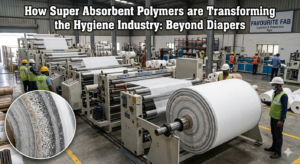
Sodium Polyacrylate is often used in industrial applications and hygiene products. However, in farming, sodium can lead to soil salinity issues. Therefore, expert growers prefer Potassium Polyacrylate. Because it releases potassium—a core macronutrient—it actively supports plant growth. Most importantly, it is a biodegradable super absorbent polymer for farming, making it environmentally responsible.
Furthermore, sodium-based polymers can lead to structural damage in the soil over time. In contrast, potassium-based SAP enhances the nutritional profile of the soil. Besides that, the degradation of Potassium Polyacrylate leaves behind beneficial potassium that plants can readily absorb. Therefore, for long-term greenhouse health, the potassium variant is the only logical choice for professionals.
The Manufacturing Process: Quality Control at Favourite Fab
As leading Super Absorbent Polymer manufacturers in India, we adhere to a rigorous super absorbent polymer manufacturing process. This process begins with the precision polymerization of acrylic acid. Most importantly, we use specialized cross-linking agents to ensure the polymer does not dissolve into the water.
Instead of dissolving, the material forms a sturdy hydrogel structure. Because we monitor the cross-linking density closely, our products offer superior durability. Therefore, the gel remains effective in the soil for several years before naturally degrading. This longevity is what sets Favourite Fab apart from other suppliers. Besides that, we conduct batch testing to ensure consistent water-holding capacity across all our agricultural products.
Expert Application: Super Absorbent Polymer Application Rate per Hectare
To achieve the best results in large-scale greenhouses, you must follow the correct super absorbent polymer application rate per hectare. While specific needs vary based on soil type and crop, a general guideline is:
- Field Crops: 20 kg to 50 kg per hectare. This rate is ideal for broad-acre crops like maize or wheat in arid regions.
- Greenhouse Bench Crops: 1 kg to 3 kg per cubic meter of potting soil. This ensures every seedling has access to a consistent water supply.
- Floriculture (Potted Plants): 2 grams to 5 grams per liter of substrate. Delicate flowers like orchids or roses benefit from this precise dosing.
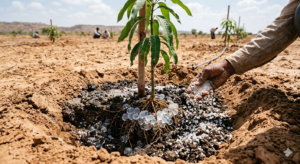
- Tree Planting: 50g to 150g per pit, depending on the size of the root ball.
Most importantly, you should mix the dry granules thoroughly with the soil. Because the polymer expands when wet, leaving space for the gel is essential. Therefore, avoiding over-application prevents the soil from “heaving” out of the containers. Most importantly, pre-hydrating the polymer can sometimes assist in immediate moisture availability during the transplanting phase.
Arid Land Farming Solutions and Drought Resistance
In regions with limited water, hydrogel for drought resistance is a lifesaver. Arid land farming requires every drop of water to count. By using SAP for soil moisture retention, farmers ensure that rainwater or irrigation doesn’t just evaporate.
Besides that, the polymer reduces nutrient leaching. This means your fertilizers stay in the root zone longer. Most importantly, this leads to a higher yield and healthier plants. Therefore, it is a cost-effective solution for large-scale operations. In places like Rajasthan or areas with sandy soil, the Super absorbent polymer for agriculture in India has become an indispensable tool for food security.
Deep Dive: SAP and Non Woven Geotextile Synergy
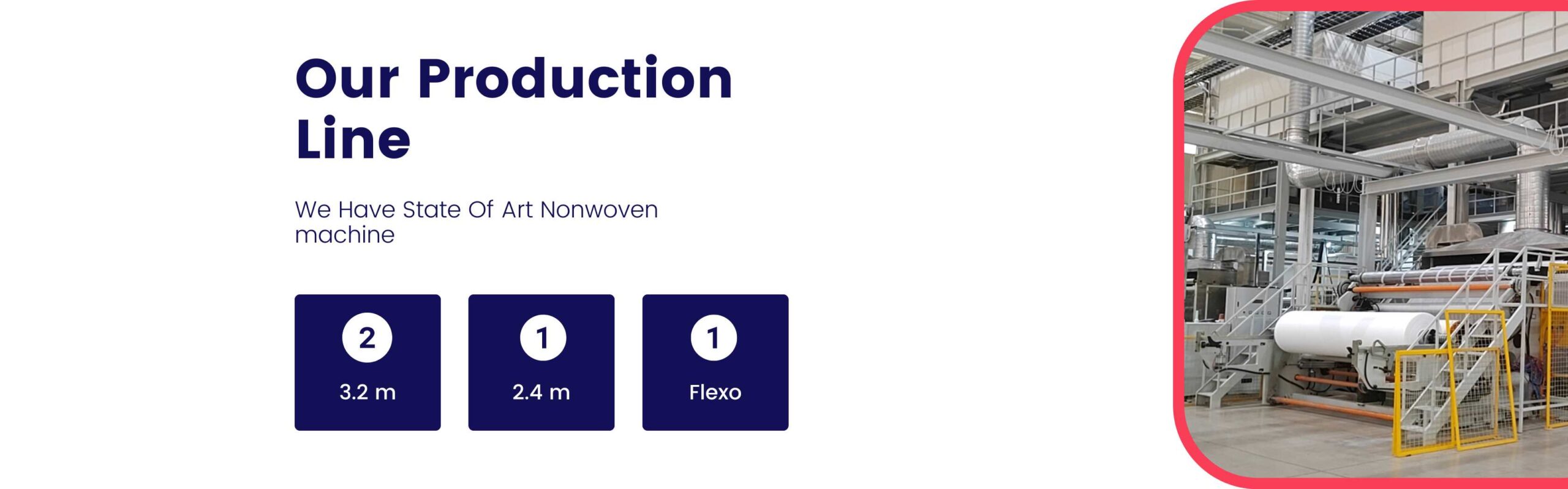
At Favourite Fab, we understand the broader landscape of agricultural infrastructure. Often, our customers combine SAP with Non Woven Geotextile for superior drainage and filtration in greenhouse benches.
How does this work? The Non Woven Geotextile acts as a separator, preventing the SAP-enriched soil from clogging drainage systems. Most importantly, it allows water to pass through while keeping the precious hydrogel and nutrients in the root zone. Because both products are designed for durability, they create a long-lasting, high-performance growth environment. Therefore, integrating these two technologies is a hallmark of modern, high-tech floriculture.
Case Study: Floriculture and Root Zone Moisture
Consider a commercial rose grower. In a standard setup, roses require frequent watering to maintain the bloom quality. However, by incorporating Potassium Polyacrylate for plants, the grower can reduce the irrigation frequency by nearly 60%.
Most importantly, the root zone moisture remains consistent. Because there are no “drought shocks” between watering sessions, the roses produce more uniform stems and larger heads. Therefore, the return on investment (ROI) for the SAP is realized within a single growing season. Besides that, the reduced labor costs for irrigation further enhance the profit margins for the greenhouse.
Frequently Asked Questions (FAQ)
What polymer is used in agriculture?
The most common polymer used in agriculture is Potassium Polyacrylate. It is specifically designed to be a soil conditioner and water reservoir that is safe for plants. Unlike other gels, it is tailored for the biological needs of crops.
What are examples of super absorbent polymers?
Common Super Absorbent polymer examples include Potassium Polyacrylate (agricultural grade) and Sodium Polyacrylate (industrial/hygiene grade). Natural super absorbent polymer options like starch-based hydrogels are also gaining popularity for short-term use.
What is sodium polyacrylate used for in farming?
In farming, Sodium Polyacrylate is sometimes used for short-term moisture retention or in seedling transport. However, it is less common than potassium-based versions due to potential sodium buildup in the soil. Therefore, we generally recommend it only for non-soil applications.
What is the chemical name for super absorbent polymer?
The most common chemical name for the synthetic version is cross-linked polyacrylate. Specifically, it is often referred to as a Potassium Polyacrylate or sodium salt of polyacrylic acid.
How long does SAP last in the soil?
Most high-quality agricultural SAPs from Favourite Fab last between 3 to 5 years. Because they are a biodegradable super absorbent polymer for farming, they eventually break down into water, carbon dioxide, and potassium salts.
Related Insights and Industry Trends
- Super absorbent polymer for agriculture uses: Beyond soil mixing, it is used in seed coating, forest restoration, and even as a carrier for slow-release fertilizers.
- Super absorbent polymer for agriculture in India: With the rise of precision farming, India is a growing hub for Super Absorbent Polymer manufacturers in India.
- Super Absorbent Polymer price: While the initial Super Absorbent Polymer price might seem like an added cost, the savings in water and fertilizer usually pay for the product quickly.
- Natural super absorbent polymer: Research is ongoing into cellulose-based polymers, though synthetic potassium polyacrylate remains the most efficient for commercial use.
Contact Us
Are you ready to revolutionize your greenhouse management? Our experts at Favourite Fab are here to help you choose the right SAP Hydrogel for your specific needs. We provide custom solutions for floriculture, landscaping, and large-scale agriculture.
- Email: sale@favouritehub.com
- WhatsApp: +91-9528811566
- Office: Visit our headquarters for technical demonstrations and bulk order discussions.
Conclusion
In conclusion, the role of Super Absorbent Polymers in modern floriculture cannot be overstated. Because they save water, reduce labor, and improve plant health, they are a vital tool for any professional grower. Most importantly, they provide a sustainable path forward in an era of water scarcity. Therefore, investing in high-quality Agricultural SAP is an investment in the future of your business.
By choosing Potassium Polyacrylate for plants, you ensure that your crops have a constant supply of moisture and nutrients. Trust Favourite Fab to be your partner in growth, providing the advanced materials needed for the greenhouses of tomorrow.





























We Do Business On Trust.Our Nonwoven fabric Business is Built on trust. Trust starts with Transparency.
Mr.Ramniwas Garg Founder Of Favourite Group