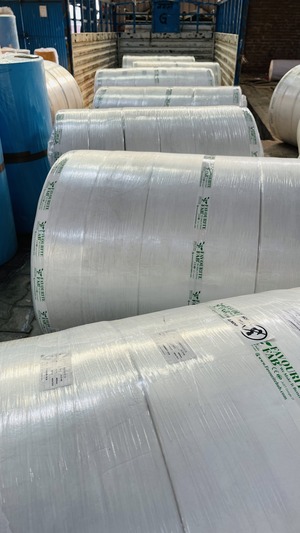
...

Low Lint Spunlace Nonwoven Fabric

Low lint spunlace nonwoven fabric roll for industrial cleaning wipes
B2B Raw Material Supplier · India

Low Lint Spunlace Nonwoven Fabric — Manufacturer & Supplier India

Favourite Fab supplies low lint spunlace nonwoven fabric in bulk to clean-room equipment manufacturers, electronics assembly wipe producers, medical device converters, optical lens wipe makers, and pharmaceutical manufacturing suppliers across India and 50+ export markets. Low lint performance is not a marketing claim — it is an engineered fibre and process specification with measurable particle count parameters.

30–120GSM Range
Class 100Clean-room Compatible
50+Export Countries
ISOCertified

What Is Low Lint Spunlace Nonwoven Fabric?

“Low lint” is a specific performance characteristic of spunlace nonwoven fabric — not a fibre type or a web-formation method. A low lint spunlace fabric sheds minimal loose fibres, particles, and fragments when subjected to mechanical abrasion, wetted with solvents or cleaning solutions, or flexed during wiping. This property is achieved through a combination of fibre type selection, fibre fineness control, hydroentanglement intensity, and finishing — not simply by using a higher GSM substrate.

Standard spunlace nonwoven fabric sheds fibres because hydroentanglement does not permanently bond every fibre junction — mechanically interlocked fibres at the fabric surface can release under abrasion. Low lint grades address this through: (1) higher hydroentanglement pressure in the finishing manifold to more deeply interlock surface fibres; (2) finer denier fibre selection (1.0–1.2 denier vs 1.5–1.7 in standard grades) for reduced particle size on shedding; and (3) controlled edge cutting to prevent selvedge fibre release on slit rolls.

For B2B manufacturers supplying electronics, pharmaceutical, optical, or precision medical device sectors, low lint spunlace is not optional — particle contamination from substrate shedding in these environments causes product failure, regulatory non-compliance, and warranty liability.


STANDARD SPUNLACE
LOW LINT SPUNLACE ✓


Loose surface fibres shed under abrasion
↑ Particle release: HIGH


Standard grade: high lint count


Surface fibres tightly interlocked
↑ Particle release: MINIMAL


Low lint grade: controlled particle count

🔬
Higher Hydroentanglement Pressure = Fewer Loose FibresLow lint spunlace is produced with elevated water jet pressure in the finishing manifold — typically 150–250 bar versus 80–150 bar in standard grades. This higher pressure drives more fibre-to-fibre interlock at the fabric surface, reducing the population of fibres that can be released by abrasion. The result is a measurably lower particle count per 100 cm² under standardised abrasion test conditions.
📏
Finer Denier Fibre — Smaller Particles If ShedLow lint grades typically use 1.0–1.2 denier fibre versus 1.5–1.7 denier in standard hygiene spunlace. Even where fibres are shed, the smaller fibre diameter produces smaller particles — reducing the particle size in ISO cleanroom particle count measurements and lowering the risk of visible contamination on product surfaces.
✂️
Controlled Edge Slitting — No Selvedge Fibre ReleaseStandard spunlace rolls have raw slit edges where cutting severs fibre bundles — producing a high-particle selvedge zone on each side of the roll. Low lint grades are slit with precision blades under tension control and may include edge-sealing treatment to eliminate this selvedge contamination source.
🧪
Particle Count — The Only Metric That MattersLow lint performance must be verified by a standardised particle count test — not inferred from GSM, fibre type, or production description. Favourite Fab provides particle count data per ISO 9073-10 or Helmke drum test method on request. If your specification states a maximum particle count, state this in your enquiry so we can confirm the grade meets the requirement.

Low Lint Spunlace — Performance Requirements by Application

Different applications specify “low lint” at very different particle count thresholds. Specifying the correct performance tier avoids both over-specification (cost waste) and under-specification (quality failure).


APPLICATION
LINT TIER REQUIRED
PERFORMANCE LEVEL
Semiconductor / ISO Class 1–5 Cleanroom
Ultra Low Lint (T1)
<50 particles/m² — premium grade
Optics / Lens Cleaning / LCD Assembly
Very Low Lint (T2)
<200 particles/m² — engineered grade
Pharmaceutical Mfg / Sterile Area Wipe
Low Lint (T3)
<500 particles/m² — standard low lint
Medical Device Mfg / ISO Class 7–8
Low Lint (T3)
<500–1000 particles/m²
Industrial Precision / Automotive Paint
Reduced Lint (T4)
<2000 particles/m² — lower cost
Surface Disinfection / Medical Wipes
Standard OK
Standard hygiene grade sufficient
T1–T4 are Favourite Fab internal tier codes. Always state the particle count requirement from your quality specification, not just “low lint”.

Low Lint Spunlace — Full Specification Range

The key differentiating specification from standard grades is particle count — always request this data alongside standard physical parameters.

ParameterStandard RangeNotes for Buyers
GSM (Weight)30 – 120 gsmLower GSM (30–60) for surface wipes; higher (80–120) for clean-room and precision wipers
Fibre Composition100% Polyester (most common); Viscose/PET blend; 100% Lyocell100% polyester preferred for ISO Class 5+ applications; lyocell for skin-contact low lint applications
Fibre Fineness1.0–1.2 denier (low lint); 0.5–0.8 denier (ultra low lint)Finer denier = smaller particle size on any residual shedding
Particle CountT3: <500/m²; T2: <200/m²; T1: <50/m²State your particle count requirement explicitly — tier confirmed at specification and verified per batch
Roll Width10 cm – 320 cmPrecision slitting with edge treatment available for ultra-low lint grades
Surface PatternPlain (standard); Laser-perforated (ultra-low lint)Laser perforation eliminates mechanical punching particle release for T1/T2 grades
MD Tensile Strength≥ 60 N / 5cm at 60 gsm (polyester)Polyester low lint grades have higher tensile than cellulosic equivalents at equivalent GSM
ExtractablesAvailable on requestIon extractables and NVR test data available for pharmaceutical and electronics applications
PackagingIndividual roll PE wrap; clean-room packaging availableFor T1/T2 grades, clean-room packaging (double bagged) is available — state requirement at order
CertificationsISO certified; OEKO-TEX compatible (lyocell grades)Particle count COA, extractables data, and MSDS provided per batch

Low Lint Spunlace — B2B Applications by Segment

Each segment purchases low lint spunlace because particle contamination from standard spunlace causes product failure, regulatory non-compliance, or customer rejection.

💻 Electronics Manufacturing

T1–T2 Grade

PCB assembly wipes, semiconductor clean-room wipers, LCD panel cleaning cloths. Any fibre particle on a semiconductor surface causes yield loss. 100% polyester low lint at <200 particles/m² is the standard specification.

🔭 Optical / Lens Cleaning

T2 Grade

Lens wipes for camera lenses, microscopes, eyewear, and precision optics. Fibre contamination on an optical surface is immediately visible and causes return/rejection.

💊 Pharmaceutical Mfg

T2–T3 Grade

Clean-room surface wipers for pharmaceutical manufacturing areas, filling line cleaning, equipment wipe-down between batches. Particle count and extractables data required for GMP compliance.

🦴 Medical Devices

T3 Grade

Device assembly clean areas (ISO Class 7–8), sterile packaging area wipers, and device surface preparation wipes. Low lint performance reduces particulate bioburden in the manufacturing environment.

🚗 Automotive Precision

T3–T4 Grade

Paint preparation wipers, tack cloths, interior trim assembly area wipes. Lint on a painted surface causes paint inclusions, warranty returns, and rework in premium automotive assembly.

🏥 Sterile Healthcare

T3 Grade

Operating theatre surface wipes, sterile area equipment cleaning, and instrument wipe-down. Hospital infection control protocols increasingly specify low lint substrates to reduce environmental particle counts.

Why Manufacturers Source Low Lint Spunlace From Favourite Fab

Low lint is not a label — it is a measurable specification that must be backed by particle count data on each production batch. Favourite Fab provides particle count COA for low lint grades and offers third-party testing for T1 and T2 applications.

50+Export MarketsLow lint spunlace exported to electronics and pharmaceutical hubs across Asia, Middle East, and Europe
T1–T4Lint TiersFour performance tiers from reduced-lint (T4) to ultra-low lint (T1) for ISO Class 5 clean-room applications
ISOCertifiedParticle count COA per batch; extractables data available for GMP-regulated buyers
48hSample DispatchSample rolls with particle count COA dispatched within 48 hours for clean-room qualification
📊
Particle Count on Every Batch COAEvery low lint grade COA includes particle count data using the agreed test method (ISO 9073-10 or equivalent). This gives your quality team batch-specific data required for incoming goods inspection and GMP or ISO documentation — not just a general “low lint” claim on the specification sheet.
🧪
Extractables Data Available for Regulated BuyersFor pharmaceutical and medical device buyers requiring ion extractables (cation/anion profiles) and non-volatile residue (NVR) data for GMP documentation, this data can be arranged through third-party laboratory testing. State this requirement at the time of enquiry.
📦
Clean-Room Packaging for T1 and T2 GradesRolls of T1 and T2 low lint spunlace can be packaged in clean-room conditions (double bagged, class-packaged) so they arrive at your facility without introducing external particle contamination during receipt and storage.
ISO CertifiedParticle Count COAT1–T4 GradesExtractables on RequestClean-room Packaging50+ Countries

Wholesale Pricing & How to Order Low Lint Spunlace

Always state your particle count requirement — not just “low lint” — so we can quote the correct grade. T1 ultra-low lint carries the highest premium; T3/T4 grades are cost-competitive with standard hygiene spunlace.
1
Send Your SpecificationInclude: GSM, fibre type, maximum particle count requirement, test method, roll width, clean-room packaging requirement, and monthly volume. Email to sale@favouritehub.com.
2
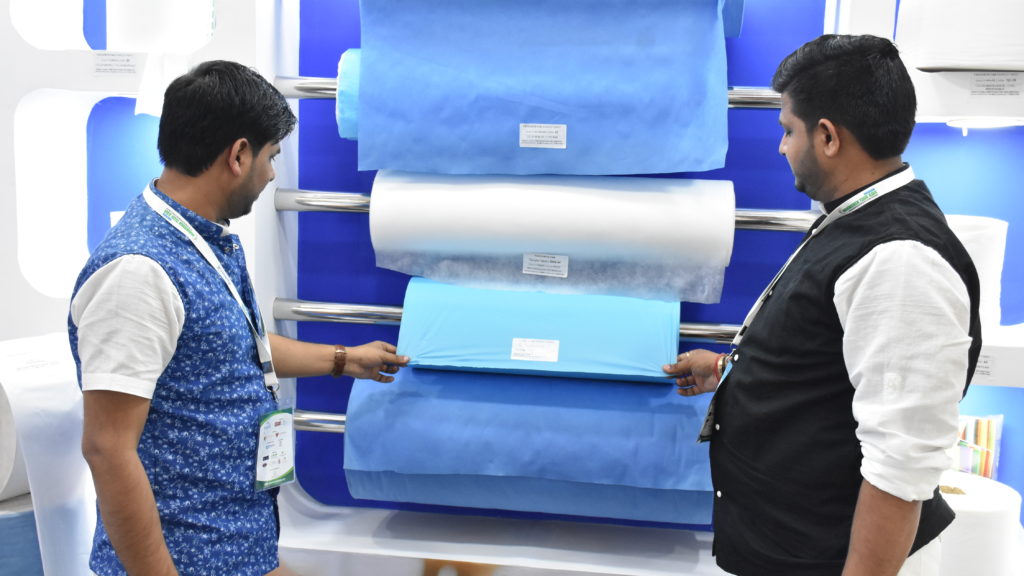
Receive Quote & Sample With Particle Count COAPricing confirmed within 24 hours. Sample roll with particle count COA dispatched within 48 hours for incoming goods testing and clean-room qualification at your facility.
3
Confirm & DispatchOrder confirmed on PO receipt. Particle count COA issued per batch. Clean-room packaging applied if specified. Full export documentation for international orders.
Why Choose Favourite Fab

Get Free Sample Kit Of Our Fabric At Your Door Step

  • Online Order
  • Door Delivery
  • 1-Click Quotation

Frequently Asked Questions — Low Lint Spunlace

What actually makes a spunlace fabric “low lint”?+
Low lint performance comes from three engineering factors: (1) higher hydroentanglement pressure in the finishing manifold, which more deeply interlocks surface fibres; (2) finer denier fibre selection (1.0–1.2 denier), which reduces the size of particles produced if any shedding does occur; and (3) precision slit edges with edge treatment, which eliminates the high-particle selvedge zone produced by standard cutting. Low lint is not achieved by higher GSM alone — a 120 gsm standard hygiene spunlace sheds more particles than a properly engineered 40 gsm low lint grade.
What particle count should I specify for my application?+
ISO Class 1–5 semiconductor and precision optics: <50–200 particles/m² (T1/T2); pharmaceutical GMP and medical device ISO Class 7–8: <500 particles/m² (T3); automotive precision and industrial: <2000 particles/m² (T4). If your quality specification states a particle count, use that number directly. If you are not sure, share your application details and we will recommend the appropriate tier.
What fibre type is best for clean-room low lint spunlace?+
100% polyester is the most common specification for ISO Class 5+ clean-room applications. Polyester does not absorb moisture, does not shed cellulose particles, and produces stable particle count measurements. For skin-contact or medical applications where biodegradability is required, lyocell low lint grades are available. Viscose is generally not recommended for clean-room applications due to higher natural cellulose particle shedding.
Can you provide extractables data (NVR, ion profile) for pharmaceutical buyers?+
Yes. Non-volatile residue (NVR) and ion extractables data can be arranged through third-party laboratory testing. These reports are required by GMP-regulated pharmaceutical manufacturers for incoming material documentation. State this requirement at the time of enquiry so we can include testing timeline and cost in the quotation.
Is clean-room packaging available for low lint spunlace rolls?+
Yes. T1 and T2 low lint spunlace rolls can be individually wrapped in anti-static PE bags with outer carton and particle count COA reference. This prevents contamination introduction during transit and warehouse receipt. State your clean-room packaging requirement at order placement.
What is the MOQ for low lint spunlace nonwoven fabric?+
MOQ for T3 and T4 low lint grades starts from 500 kg per specification. T1 and T2 ultra-low lint grades carry higher MOQ due to specialised manufacturing parameters — confirmed at quotation. Contact us with your full specification including particle count requirement, fibre type, and GSM for an accurate MOQ and pricing.

Source Low Lint Spunlace Nonwoven Fabric in Bulk

State your particle count requirement, fibre type, and GSM — receive a quote and particle count COA sample within 48 hours.

Picture of Gaurav Garg (Ceo)

Gaurav Garg (Ceo)

I'm Gaurav Garg, the CEO of Favourite Fab, a company on a mission to revolutionize the nonwoven industry with sustainable practices. We work hand-in-hand with manufacturers and suppliers who share our commitment to eco-friendly production processes. With a deep interest in textile innovation, I'm passionate about educating consumers about sustainable material options, and their potential to transform the Non woven landscape.
Talk with CEO

Visit Our Fabrics

Discover the latest Fabrics range.

View Fabrics Now

Get Free Sample Kit At Your Door Step

Speak with Our Experts

Get personalized assistance and answers to all your queries.

Talk to an Executive

Get Your Best Price

Get the best bulk prices hassle-free.

Make An Inquiry For Your Requirements

Our Team Will Call You

##favoourite Fab #Become Our Partner compressed

Get Your Free Sample Kit Now

Fill This Form Our Team Will Send You Sample