


Molecular Sieve Pouch Nonwoven Fabric — Manufacturer & Supplier India
Favourite Fab supplies molecular sieve pouch nonwoven fabric in bulk to desiccant pouch manufacturers, pharmaceutical packaging converters, industrial packaging producers, and specialty packaging OEMs across India and 50+ export markets. Molecular sieve pouch fabric is a precision-engineered substrate — pore size, dust retention, and chemical compatibility must all be specified correctly for the desiccant to function as designed inside the finished pouch.
What Is Molecular Sieve Pouch Nonwoven Fabric?
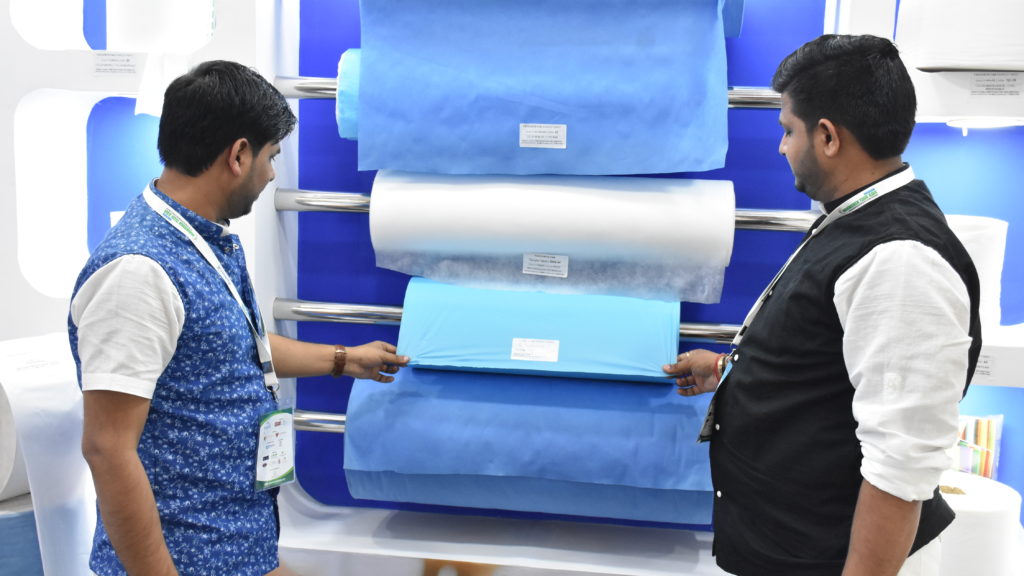
Molecular sieve pouch nonwoven fabric is the encapsulation substrate used to manufacture desiccant sachets and moisture control pouches containing molecular sieve (zeolite) granules. Molecular sieves are crystalline alumino-silicate materials with precisely uniform pore diameters (3Å, 4Å, 5Å, or 13X) that adsorb water molecules while excluding larger molecules. They are significantly more aggressive desiccants than silica gel, capable of reducing relative humidity to below 10% in sealed packaging.
The nonwoven fabric used to encase molecular sieve granules must meet a fundamentally different specification from standard packaging nonwoven. Molecular sieve granules are extremely abrasive and fine-dusting — the fabric must retain all granules and all dust generated by granule abrasion inside the pouch under the mechanical stresses of automated pouch filling, heat sealing, and in-package handling. Any dust escape through the fabric or at heat-sealed seams constitutes a packaging contamination failure.
At the same time, the fabric must allow rapid and unobstructed water vapour transmission — if moisture vapour cannot diffuse freely through the pouch wall, the molecular sieve cannot function as a desiccant. This dual requirement — maximum vapour permeability combined with zero particle leakage — defines the entire specification for molecular sieve pouch nonwoven fabric.
POUCH FABRIC WALL
OUTSIDE
ENVIRONMENT
INSIDE
POUCH
Molecular Sieve
Granules
✓ H₂O vapour passes freely through
✗ Zeolite dust and granules retained inside
Which Nonwoven Fabric Is Used for Molecular Sieve Pouches?
The choice of pouch fabric depends on the desiccant particle size, the application environment, the heat sealing equipment, and whether pharmaceutical-grade documentation is required.
FABRIC TYPE
GSM RANGE
KEY ADVANTAGE
BEST FOR
PP Spunbond
40–80 gsm
Excellent heat seal; clean; economical
General industrial & consumer desiccant pouches
PP SMS Nonwoven
45–90 gsm
Better dust barrier than pure spunbond; soft
Pharmaceutical desiccant pouches; higher dust retention
PE/PP Bicomponent Spunbond
50–100 gsm
Lower seal temperature; broader FFS compatibility
Pouches requiring lower seal temperature (100–140°C)
Tyvek® (HDPE Flash-spun)
55–75 gsm
Ultra-low dust passage; pharmaceutical-grade
Pharma primary packaging, sterile barrier pouches
Laminated Nonwoven (NW+PE film)
60–120 gsm
Perforated film face; precise pore control
Heavy industrial desiccant; container desiccant bars
Spunlace (Viscose/PET)
50–100 gsm
Soft; good absorbency; requires adhesive seal
Specialty pouches only — not standard for mol. sieve
Molecular Sieve Pouch Nonwoven Fabric — Full Specification Range
Favourite Fab supplies PP spunbond, SMS, and PE/PP bicomponent spunbond grades for molecular sieve pouch applications. All grades supplied with dust retention test data and WVTR values on the COA.
| Parameter | Standard Range | Notes for Buyers |
|---|---|---|
| GSM (Weight) | 40 – 120 gsm | 40–60 gsm for standard consumer desiccant pouches; 60–90 gsm for industrial; 80–120 gsm for heavy-duty container desiccant bars |
| Fabric Type | PP Spunbond; PP SMS; PE/PP Bicomponent Spunbond | PP spunbond for general use; SMS for higher dust retention; bicomponent for lower seal temperature requirement |
| WVTR | ≥ 800 g/m²/24h at 38°C, 90% RH | WVTR must be sufficient to not rate-limit molecular sieve adsorption capacity — specify minimum WVTR alongside GSM |
| Dust Retention | Zero visible dust passage under 500-shake test | Zeolite dust retention tested by agitation in standardised chamber — confirmed on COA for pharmaceutical-grade grades |
| Heat Seal Strength | ≥ 15 N / 15mm width after sealing at 160°C, 2s dwell | Tested per ASTM F88 — must survive package drop test without seal failure and granule release |
| Seal Temperature Range | PP Spunbond: 140–180°C; Bicomponent: 100–140°C | Confirm with your FFS machine specifications before ordering — wrong fabric type for machine temperature = seal failure |
| Pore Size (effective) | 3 – 20 μm effective pore diameter | Pore size must be smaller than the d50 of the molecular sieve granule to prevent particle passage |
| Chemical Extractables | < 0.1% NVR by weight | Non-volatile residue data available for pharmaceutical-grade grades — required for drug packaging material qualification |
| Roll Width | 5 cm – 160 cm | Common pouch machine infeed widths: 10, 15, 20, 30, 50 cm — confirm with your FFS machine format before ordering |
| Roll Length | 2,000 – 10,000 m per roll | Long rolls reduce change-over frequency on high-speed FFS machines — confirm maximum roll OD |
| Colour | White (standard); Natural; Printed on request | Printed rolls available for branded desiccant sachets with minimum order quantity |
| Certifications | ISO certified; OEKO-TEX Standard 100; USP Class VI (pharmaceutical grades) | Pharmaceutical-grade grades supplied with USP Class VI biocompatibility and extractables data on request |
Molecular Sieve Pouch Nonwoven — Who Buys This Material
Favourite Fab supplies molecular sieve pouch nonwoven fabric as an upstream raw material to desiccant manufacturers, packaging converters, and OEM pouch producers in these segments.
SMS / Bicomponent
Desiccant sachets inside pharmaceutical bottles, blister packs, and multi-dose containers. Molecular sieve is specified over silica gel for aggressive moisture control (<10% RH). SMS or pharmaceutical-grade spunbond with USP Class VI and extractables data required.
PP Spunbond
Desiccant sachets inside electronics packaging, LED component bags, and battery packaging where moisture causes corrosion and premature failure. Molecular sieve at 3Å or 4Å reduces RH below the threshold for condensation and corrosion.
Laminated NW
Large-format desiccant bars and hanging strips for shipping container moisture control. Heavy-duty fabric (80–120 gsm laminated or SMS) for container desiccant bars — must withstand mechanical stress during installation and throughout a 30–90 day voyage.
PP Spunbond
Desiccant sachets in food packaging for moisture-sensitive products. Food-grade PP spunbond with OEKO-TEX Standard 100 and FDA food-contact compliance documentation required.
SMS / Spunbond
Desiccant sachets in VCI packaging for metal components, hydraulic parts, and precision instruments. Molecular sieve + VCI film is the industry standard for long-term storage of corrosion-sensitive components.
All Types
The primary buyer segment — companies that manufacture molecular sieve desiccant sachets and supply them to pharmaceutical, electronics, food, and industrial packaging customers. Purchases pouch nonwoven fabric in bulk rolls for FFS machine processing.
Why Desiccant Manufacturers Source From Favourite Fab
Molecular sieve pouch nonwoven is a precision substrate. Favourite Fab provides dust retention, WVTR, and seal strength on the COA for every molecular sieve pouch grade.
Frequently Asked Questions — Molecular Sieve Pouch Nonwoven
Source Molecular Sieve Pouch Nonwoven Fabric in Bulk
Send your fabric type, GSM, roll width, FFS seal temperature, and application — receive a quote and COA sample within 48 hours.




























We Do Business On Trust.Our Nonwoven fabric Business is Built on trust. Trust starts with Transparency.
Mr.Ramniwas Garg Founder Of Favourite Group