Carrier Tissue Paper for Sanitary Napkins: Complete B2B Buying Guide (2026)

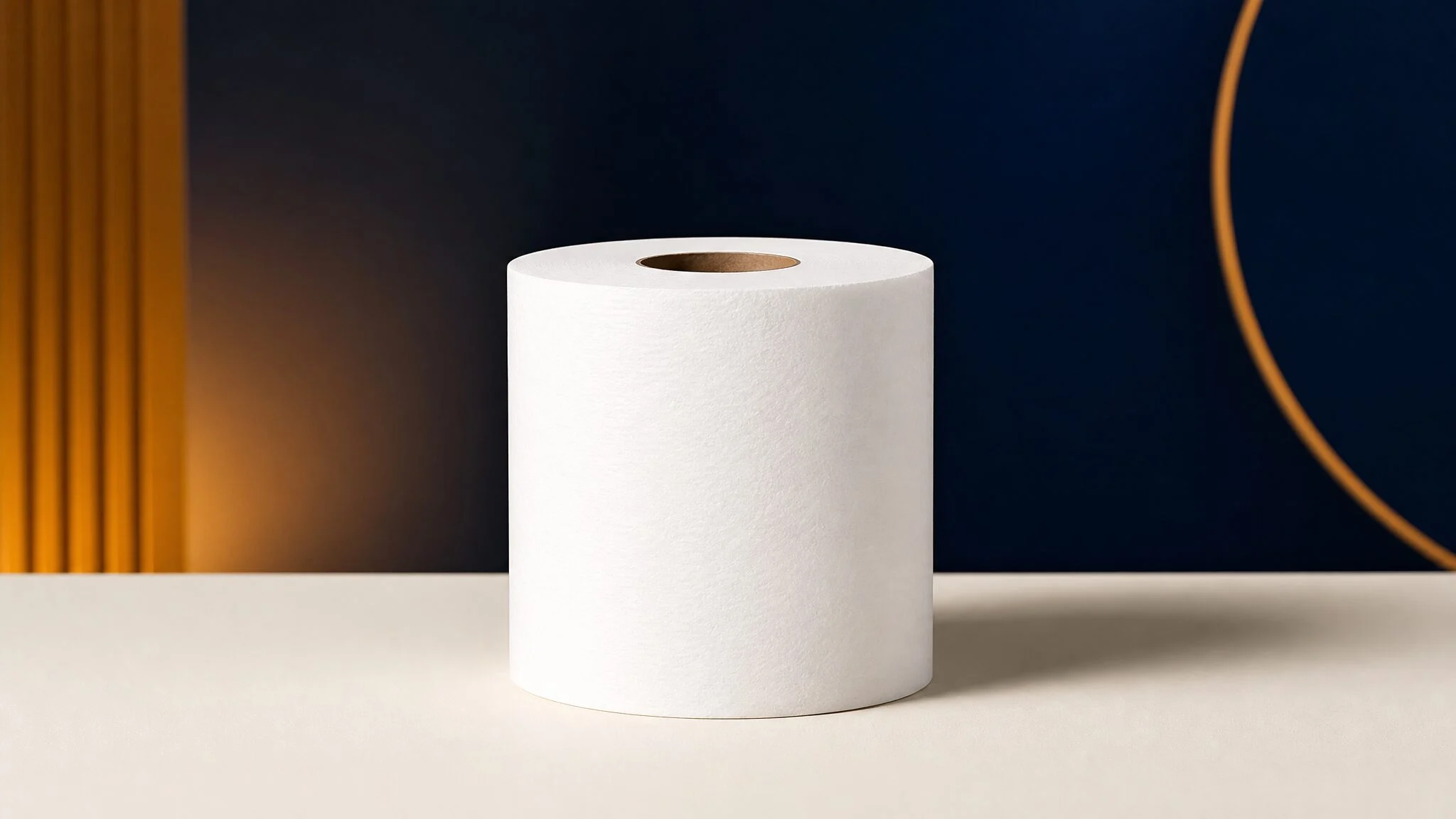
Carrier tissue paper jumbo rolls stacked for bulk B2B supply
Share

Carrier Tissue Paper Supplier India for Sanitary Napkins: Complete B2B Buying Guide (2026)

Favourite Fab is a carrier tissue paper supplier india-wide for sanitary napkin and diaper manufacturers. We import and stock 13–15 GSM virgin wood-pulp carrier tissue, quality-verify every lot before dispatch, and supply from 1000 kg. This guide covers function, specifications, sourcing, and how carrier tissue compares with our own spunbond nonwoven core wrap.

Favourite Fab is an importer and supplier of carrier tissue — not its manufacturer. We source it from established pulp-tissue mills and supply it under our quality-check process.

Request a carrier tissue sample

What is carrier tissue paper?

Carrier tissue paper is a thin, high-strength paper used inside disposable hygiene products. It wraps the super absorbent polymer (SAP) and fluff pulp that form the absorbent core of a sanitary napkin, baby diaper, or adult incontinence pad.

The tissue holds the loose SAP granules and shredded fluff in a fixed shape during high-speed converting. Without it, dry SAP would migrate, dust, and settle unevenly, producing pads that leak or feel lumpy.

Carrier tissue is made from virgin wood-pulp fibre and engineered for two properties that ordinary tissue lacks: controlled wet strength and machine runnability. It must stay intact when it contacts fluid inside the pad, and it must run through a converting machine at speed without tearing or web breaks.

In the hygiene bill of materials it sits between the absorbent core and the polyethylene backsheet. Buyers also call it core wrap tissue, SAP wrap tissue, or absorbent core tissue. All refer to the same functional layer.

Where Carrier Tissue Sits in a Sanitary Pad — Layer Cross-Section

1 · Topsheet
perforated nonwoven — skin contact
2 · ADL
acquisition & distribution layer
3 · CARRIER TISSUE — top wrap
13–15 GSM
4 · Absorbent core
SAP + fluff pulp
5 · CARRIER TISSUE — bottom wrap
13–15 GSM
6 · Backsheet
PE film — leak barrier

Carrier tissue wraps the SAP core on both faces — it holds the core together during high-speed converting and blocks SAP granules from pinholing through to the topsheet or backsheet.

13–15
GSM (g/m²)

100%
virgin wood pulp

1000 kg
MOQ (bulk)

Wet
strength treated

How carrier tissue protects the SAP core

The layer does more than hold the core together. It performs four jobs at once.

  • Contains the SAP. It encloses swelling polymer granules so they distribute fluid evenly instead of clumping at one end of the pad.
  • Prevents pinholing and strike-through. When the pad is compressed and the SAP swells, sharp granule edges can push against the thin backsheet film. Carrier tissue forms a barrier that stops granules from creating pinholes that would let fluid strike through to a garment.
  • Protects the backsheet. By cushioning the core, the tissue reduces mechanical stress on the polyethylene backsheet, protecting film integrity through the product’s use.
  • Carries the core through the machine. Wet and dry strength let the wrapped core travel through embossing, sealing, and cutting stations without the web splitting.

The wet-strength requirement is the defining spec. A general-purpose facial tissue disintegrates on contact with fluid. Carrier tissue is treated so it retains a working share of its dry strength when wet, which is what keeps a swollen core intact inside a used pad.

Grammage is the second lever. At 13–15 GSM the tissue is light enough to keep the pad thin and flexible, yet strong enough to contain the core. Heavier paper adds bulk and cost without improving containment; lighter paper risks tearing on the line.

Carrier tissue paper specifications (13–15 GSM)

Favourite Fab supplies carrier tissue in the grammage band that most Indian and export sanitary-napkin lines specify. The confirmed specification we stock is set out below. Roll width, exact wet-strength values, and lot test certificates are shared on request against a specific enquiry.

Property Specification
Grammage (GSM) 13–15 g/m²
Furnish / composition 100% virgin wood-pulp tissue
Function SAP core wrap / absorbent core carrier
Strength profile Wet + dry strength for machine runnability
Form supplied Rolls (width to order — available on request)
Sourcing Imported, quality-verified before dispatch
Minimum order quantity 1000 kg
Pricing Competitive wholesale pricing (quote on enquiry)

We do not publish a single fixed wet-strength number here because the working value depends on your line speed, core design, and fluid load. Share your pad specification and we return the matching grade with its test data.

Carrier tissue is one layer in a full core build. It pairs with an absorbent core and SAP stack and, in many pad designs, an acquisition and distribution layer above the core.

Carrier tissue technical data — sanitary pad grade

Property Sanitary pad grade Test method
Basis weight (GSM) 13–15 g/m² EDANA WSP 130.1 / ISO 9073-1
Composition 100% virgin wood pulp Furnish declaration
Wet-strength treatment Yes — wet-strength resin for hygiene-core duty Wet tensile (MD), ISO 12625-5
Tensile strength MD/CD rated for high-speed unwind EDANA WSP 110.4 / ISO 9073-3
Function in pad Core wrap — top & bottom face of SAP/fluff core
Primary job Pinhole / strike-through resistance under SAP swell
Minimum order (MOQ) 1000 kg
Sourcing Imported & quality-verified by Favourite Fab

Test-method references are the recognised EDANA/ISO standards for nonwoven and tissue basis weight, tensile, and wet tensile. Confirm exact per-lot values against your incoming-QC spec sheet — see the full quality checklist.

Verifying carrier tissue against published test methods is what separates a hygiene-core grade from ordinary tissue. Basis weight is confirmed gravimetrically to EDANA WSP 130.1 or ISO 9073-1, cutting a known sheet area and weighing it to prove the paper sits inside the 13–15 GSM band. The true differentiator, though, is wet tensile strength measured to ISO 12625-5. A normal facial or toilet tissue loses almost all its strength on contact with fluid, whereas wet-strength-treated carrier tissue retains a working share of its dry strength — which is what holds a swollen SAP core together inside a used pad.

Two failure modes make these numbers matter on the converting line. First, pinhole rate: as the wrapped core is compressed and the SAP swells, sharp granule edges probe the tissue, and any pinhole becomes a strike-through path that shows up as a leaking pad, so a tight wet-strength sheet keeps the pinhole count low. Second, GSM consistency: a wide basis-weight tolerance keeps shifting the web tension needed for a clean unwind, so a line running at speed sees more web breaks and stops. A grade held to a narrow ± GSM tolerance runs predictably, which is why incoming QC checks both the average grammage and its spread, not just a single spot value.

How it is used in sanitary napkin & diaper lines

On a converting line the carrier tissue feeds from a parent roll and forms a continuous channel that receives the metered core. The sequence is straightforward.

  1. The tissue web unwinds and is guided into a forming pocket or C-fold former.
  2. Fluff pulp and SAP are deposited onto the moving tissue in a controlled dose.
  3. The tissue folds over the core, fully enclosing the SAP so no loose granules escape.
  4. The wrapped core is compressed and, in many designs, embossed to lock the SAP in place.
  5. The core is laminated to the topsheet above and the backsheet film below, then sealed and cut to pad length.

Because the web runs continuously at speed, dry strength governs whether the line runs clean or stops for web breaks. Once fluid is introduced in use, wet strength governs whether the core holds its shape. Both matter, and both are built into the grade we supply.

The same layer appears in baby diapers and adult incontinence products, where core dimensions are larger but the containment principle is identical. Buyers converting multiple product formats often standardise on one carrier tissue grade across lines to simplify procurement.

For the wider raw-material stack around this layer, see our guide for the sanitary pad raw material supply range.

How we source and quality-verify imported carrier tissue

We are transparent about our role. Favourite Fab does not run a tissue mill. We import carrier tissue from established virgin-pulp tissue producers and supply it into the Indian and export hygiene market under our own quality-check process.

Every incoming lot passes a verification step before it reaches a customer.

  • Grammage check. We confirm the 13–15 GSM band on receipt so you get the grade you specified.
  • Strength check. We verify wet and dry strength behaviour against the intended converting application.
  • Runnability and defect check. We inspect rolls for winding quality, edge condition, and web defects that would cause line stops.
  • Documentation. Product test certificates and full specifications are made available on request for each supplied lot.

This sourcing model gives you a single Indian point of contact, local stock, rupee wholesale pricing, and consolidated logistics — without the lead time and container commitment of importing directly. You buy a verified product from a supplier who has served hygiene manufacturers since 2011.

Looking for a carrier tissue manufacturer in India? Here is what actual suppliers ship

Many buyers search for a “carrier tissue manufacturer india” or a “carrier tissue paper manufacturers list india” expecting a domestic mill. It is worth being clear about how the supply chain actually works, because it changes who you should contact.

Most carrier tissue used by Indian sanitary-napkin makers is produced by a small number of specialist virgin-pulp tissue mills, several of them overseas, and then supplied into the market by importers and distributors. The company you order from is usually a supplier, not the mill that made the paper.

That distinction matters for procurement. A supplier holds local stock, breaks bulk to your MOQ, verifies quality on arrival, and invoices in rupees. A mill sells full production lots on long lead times. For most converters, a supplier is the practical route to a consistent 13–15 GSM grade.

Favourite Fab fills the supplier role. We do not claim to manufacture carrier tissue. We import it, quality-verify it, and ship it from 1000 kg with the documentation your QA team needs. If you have been searching for a manufacturer, an established supplier such as Favourite Fab answers the same need — a reliable, specified grade delivered on your schedule.

Carrier tissue vs SSS spunbond nonwoven core wrap

Carrier tissue is not the only way to wrap an absorbent core. A light spunbond nonwoven can also serve as core wrap, and at the lower grammage band it can be cost-competitive. Favourite Fab manufactures a spunbond nonwoven fabric line in 10–60 GSM, so we can supply either route and help you choose on merit.

The two materials behave differently. Use the comparison to match the wrap to your pad design, not to pick a universal winner.

Factor Carrier tissue (13–15 GSM) SSS spunbond nonwoven (10–60 GSM)
Material Virgin wood-pulp paper Polypropylene spunbond fibre
Core containment Tight SAP hold; low pinholing risk Good hold; depends on grammage and bond
Cost position Competitive at 13–15 GSM Cost-competitive at the lighter end (≈≤12 GSM)
Where it fits Thin pads needing tight wet-strength containment Lines standardising on nonwoven, or lighter core wraps

As a rule of thumb, carrier tissue suits thin sanitary napkins where wet-strength containment is the priority, while a light spunbond wrap suits converters already running nonwoven who want a single-material core at the lighter grammage. Because we supply both, you can trial each against your own line before committing. Our nonwoven fabric range and this carrier tissue sit in the same catalogue.

For a fibre-based absorbent option that changes the core build entirely, some buyers also evaluate airlaid nonwoven for sanitary pads, which combines absorbency and structure in one layer.

MOQ, ordering & lead time

Carrier tissue supplies from a minimum order quantity of 1000 kg. That threshold lets us break an imported lot to your requirement while keeping per-kilogram pricing competitive.

  • MOQ: 1000 kg per order.
  • Grade: 13–15 GSM virgin wood-pulp carrier tissue.
  • Pricing: competitive wholesale pricing, quoted per kilogram against your specification and volume.
  • Roll width: confirmed to your line on enquiry.
  • Documentation: product test certificates and specs on request.
  • Lead time: confirmed at quotation based on current stock position.

To move fast, send your pad grammage, target core dimensions, line speed, and required roll width. We match the grade, confirm stock, and return a quote with lead time. Sample rolls for line trials are available before you place a bulk order.

Buyer checklist before you order carrier tissue

Run through these eight points before you commit a purchase order. They prevent the most common mismatches between a tissue grade and a converting line.

  1. Confirm grammage. Specify a value inside the 13–15 GSM band that matches your pad thickness target.
  2. Define wet-strength need. State your fluid load and line speed so the grade is matched, not guessed.
  3. Fix roll width. Give the exact width your former needs to avoid trimming waste.
  4. Verify furnish. Confirm virgin wood-pulp composition for consistent strength and cleanliness.
  5. Request test certificates. Ask for lot documentation before bulk dispatch.
  6. Run a line trial. Test a sample roll at production speed to confirm runnability.
  7. Check MOQ and stock. Confirm the 1000 kg minimum and current lead time suit your schedule.
  8. Compare the wrap options. Weigh carrier tissue against a light spunbond core wrap on cost and containment for your specific pad.

Why source carrier tissue from Favourite Fab

Favourite Fab has supplied nonwoven fabric and hygiene raw materials from Agra, India since 2011. The company operates under credentials that give hygiene buyers a stable, auditable supply partner.

  • ISO 9001:2015 certified quality-management system.
  • OEKO-TEX Standard 100 and REACH compliance across our certified product lines.
  • 30+ countries served through our export operation.
  • 500+ B2B buyers supplied since 2011.

These certifications and references describe Favourite Fab as a company. They are not a claim that this specific imported carrier tissue carries OEKO-TEX or food-contact certification — product-level test certificates for the carrier tissue are provided on request per lot. We keep that distinction explicit so your QA and compliance teams work from accurate documentation.

What you get as a buyer is a single Indian supplier for carrier tissue and its alternatives, local stock, rupee wholesale pricing, quality verification on arrival, and a team that has shipped hygiene raw materials to manufacturers for over a decade.

For the difference between carrier tissue, airlaid paper, and generic wrapping tissue, see Tissue Paper for Sanitary Napkins: Types, GSM & How to Choose. For a supplier comparison view, see Top Carrier Tissue Paper Manufacturers in India. For diaper-core spec, see Carrier Tissue Paper for Baby Diapers.

Frequently asked questions

What is carrier tissue paper used for in sanitary napkins?

It wraps the super absorbent polymer and fluff pulp that form the absorbent core. The wrap contains the SAP, prevents pinholing and strike-through against the backsheet, and carries the core through the converting machine.

Is Favourite Fab a carrier tissue manufacturer?

No. Favourite Fab is an importer and supplier of carrier tissue, not its manufacturer. We source it from established virgin-pulp tissue mills, verify quality on arrival, and supply it into the Indian and export hygiene market.

What GSM carrier tissue do you supply?

We supply 13–15 GSM carrier tissue made from virgin wood pulp. This band keeps pads thin and flexible while providing the wet and dry strength needed for core containment and machine runnability.

What is the minimum order quantity?

The minimum order quantity is 1000 kg. That volume lets us break an imported lot to your requirement while holding competitive wholesale pricing per kilogram.

Can I get a sample before ordering in bulk?

Yes. Sample rolls are available for line trials so you can confirm runnability and containment at production speed before placing a bulk order.

Is carrier tissue certified for food contact or OEKO-TEX?

Favourite Fab holds company certifications including ISO 9001:2015, OEKO-TEX Standard 100, and REACH compliance across its certified lines. For this imported carrier tissue, product-level test certificates and full specifications are provided on request per lot.

Should I use carrier tissue or a spunbond nonwoven core wrap?

Carrier tissue suits thin pads that need tight wet-strength containment. A light spunbond nonwoven can be cost-competitive at the lighter grammage band. Favourite Fab supplies both, so you can trial each against your own line.

Do you export carrier tissue outside India?

Yes. Favourite Fab exports hygiene raw materials to over 30 countries. Carrier tissue can be supplied for export alongside our nonwoven range, subject to order volume and documentation.

What documentation is provided with each order?

Each supplied lot comes with product test certificates and full specifications on request, covering grammage and strength verification carried out under our quality-check process.

How do I get a price quote?

Send your pad grammage, core dimensions, line speed, and required roll width. We match the grade, confirm stock, and return a quote with lead time and competitive wholesale pricing.

Order carrier tissue from a verified India supplier

Get a specified 13–15 GSM carrier tissue grade, quality-verified before dispatch, from 1000 kg. Share your pad specification for a wholesale quote and a trial sample.

Request a sample kit   Contact the supply team

About the supplier

Favourite Fab is a nonwoven fabric and hygiene raw-material supplier based in Agra, India, operating since 2011. The company runs an ISO 9001:2015 quality-management system, holds OEKO-TEX Standard 100 and REACH compliance across its certified product lines, and exports to 30+ countries serving 500+ B2B buyers. Favourite Fab supplies imported carrier tissue alongside its own spunbond, SMS, spunlace, and bico nonwoven fabric ranges for sanitary napkin, diaper, and medical hygiene manufacturers.

Written by the Favourite Fab technical supply team. For product specifications and lot test certificates, contact Favourite Fab.

Gaurav Garg — CEO, Favourite Fab
CEO
Message from our CEO

Gaurav Garg

I'm Gaurav Garg, CEO of Favourite Fab, a company on a mission to revolutionize the nonwoven industry with sustainable practices. We work hand-in-hand with manufacturers and suppliers who share our commitment to eco-friendly production. With a deep interest in textile innovation, I'm passionate about educating consumers about sustainable material options and their potential to transform the nonwoven landscape.

Buyer Essentials

Most-read non-woven guides

Hand-picked pillar articles — GSM, HSN, material comparison, wound-care and raw-material stacks.

Need fabric for your product?
Free sample kit in 48 hours · MOQ from 500 kg · 30+ country export
ANFA Asia Nonwoven Fabrics Association IN-87

This article is published by Favourite Fab — a registered member of the Asia Nonwoven Fabrics Association (ANFA), member code IN-87. Our technical content is backed by 14 years of manufacturing experience and active industry participation.