

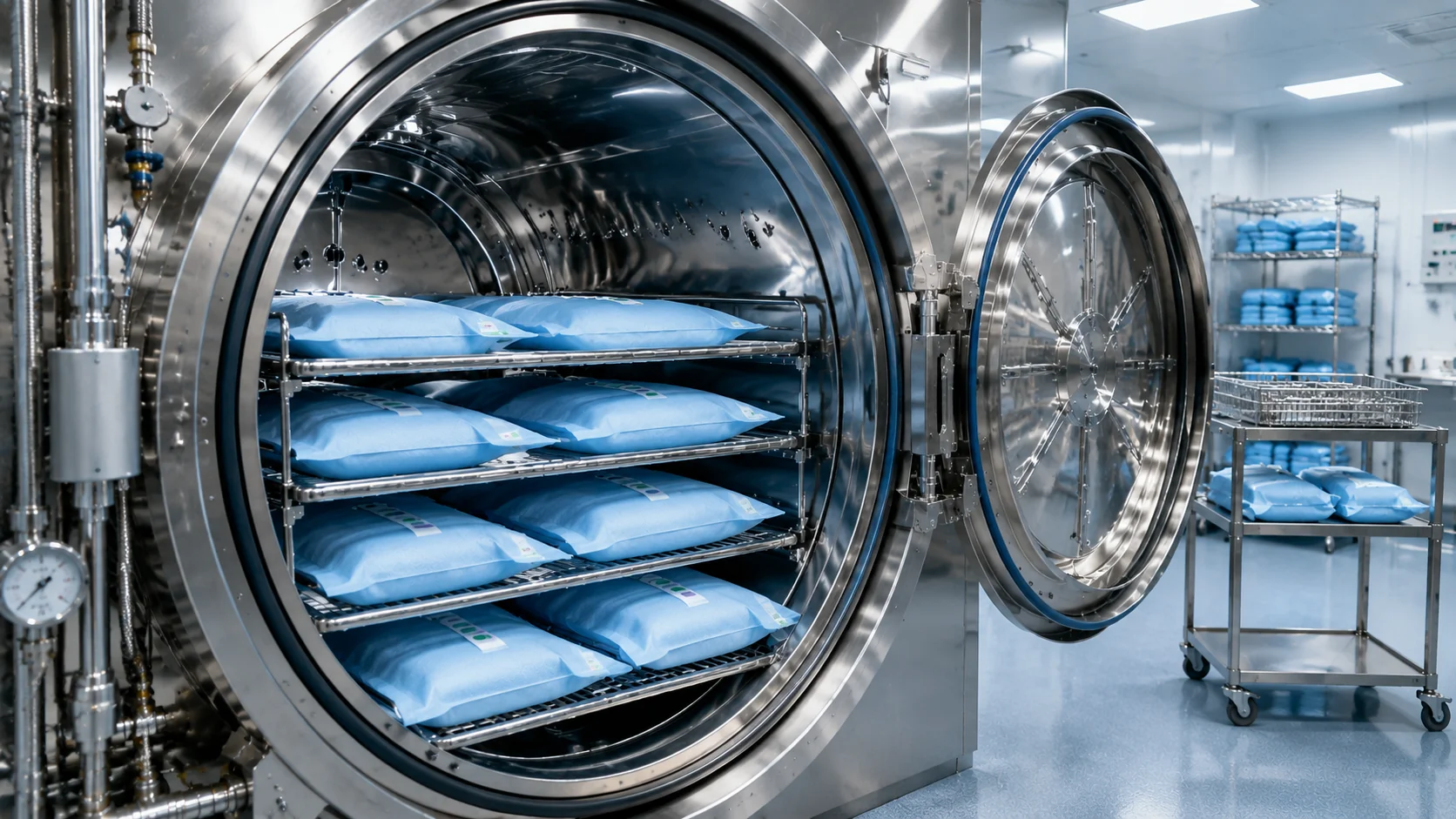
EO and Gamma Sterilisation Compatible Nonwoven Fabric for Medical Devices — India Supplier Guide
EO (ethylene oxide) and gamma sterilisation compatible nonwoven fabric is a critical raw material requirement for medical device OEMs manufacturing surgical gowns, drapes, wound care products, and sterile packaging. Favourite Fab, a B2B nonwoven fabric raw material supplier based in Agra, India, supplies sterilisation-compatible nonwoven grades — PP spunbond, SMS, and spunlace — tested for EO and gamma compatibility. This guide covers sterilisation method comparison, material impact, and selection criteria for medical nonwoven procurement teams.
What Is Sterilisation Compatibility for Nonwoven Fabric
Sterilisation compatibility means a nonwoven fabric can withstand a sterilisation cycle — EO, gamma irradiation, or steam — without significant degradation of mechanical properties, barrier performance, or chemical safety. For medical device OEMs, the nonwoven raw material must survive the sterilisation process used in the final packaged device. Incompatible materials yellow, degrade tensile strength, off-gas harmful residues, or lose barrier properties — causing device failures or regulatory non-conformances.
Sterilisation Compatibility: Key Parameters
| Parameter | EO (ISO 11135) | Gamma (ISO 11137) | Steam (ISO 17665) |
|---|---|---|---|
| Process temperature | 37–55°C | Room temp. to 40°C | 121–134°C |
| PP spunbond compatibility | Yes — monitor EO residues | Yes — check yellowing at high dose | Risk — PP melting point ~160°C; shrinkage at 134°C |
| SMS nonwoven compatibility | Yes — standard medical grade | Yes — standard medical grade | Limited — same PP risk |
| Spunlace (viscose/PET) compatibility | Yes — adequate aeration required | Yes — minimal property change | Yes — natural and PET fibres stable |
| Meltblown layer impact | No degradation noted | Minor filtration efficiency drop at very high dose | Not recommended — structural damage |
| Governing standard | ISO 11135 | ISO 11137-1/2/3 | ISO 17665-1 |
| EO residue limit (WHO) | <10 ppm EO; <25 ppm ECH | Not applicable | Not applicable |
| Gamma dose range (typical) | Not applicable | 15–50 kGy (SAL 10⁻⁶) | Not applicable |
Why Sterilisation Compatibility Matters for Medical OEMs
Medical device manufacturers sourcing nonwoven fabric for surgical gowns, drapes, sterile packaging, or wound care products must validate that the raw material survives the terminal sterilisation step. Material failures — yellowing, off-gassing, barrier loss, tensile degradation — can cause entire batches to fail release testing, triggering costly investigations and production downtime.
Specifying sterilisation compatibility at the raw material qualification stage — not after production — prevents these failures. Favourite Fab’s technical team can advise on grade selection based on the sterilisation method your facility uses and provide supporting material characterisation data for your design history file (DHF).
EO Sterilisation: What Nonwoven Buyers Need to Know
EO sterilisation operates at low temperature (37–55°C), making it the preferred method for temperature-sensitive nonwoven products including PP spunbond and SMS. The key concern is EO residue — the fabric must aerate sufficiently post-cycle to bring residual EO and ECH (ethylene chlorohydrin) below regulatory limits. Favourite Fab’s PP spunbond and SMS grades have low additive loading, which reduces EO absorption and shortens aeration time.
Gamma Sterilisation: What Nonwoven Buyers Need to Know
Gamma irradiation is effective, penetrating, and leaves no chemical residue. The main concern for nonwoven fabric is dose-dependent yellowing (particularly in PP containing hindered amine light stabilisers) and potential reduction in meltblown filtration efficiency at very high doses (>50 kGy). Favourite Fab can supply gamma-stabilised PP spunbond grades with reduced yellowing at standard sterilisation doses (25–35 kGy).
Why Source From Favourite Fab
- MOQ-friendly — sterilisation-compatible grades available from sample quantities
- Export-ready — material data for DHF/technical file preparation supplied on request
- ISO certified — consistent additive package across production batches
- 10+ years hygiene and medical nonwoven supply
- Custom specs on request — gamma-stabilised or low-EO-residue grades available
- Compatibility data and material certificates provided for regulatory submissions
Pricing and MOQ
Sterilisation-compatible nonwoven grades are priced based on GSM, width, and additive specification. Gamma-stabilised and ultra-low-additive EO grades may carry a small premium over standard grades. Contact sale@favouritehub.com with your sterilisation method, dose (for gamma), and product specification for a targeted quotation.
See also: ISO OEKO-TEX GMP certifications, MSDS for nonwoven fabric, and our spunbond nonwoven for surgical gowns product page. Parent pillar: nonwoven fabric for medical device OEMs.
How to Order
- Send requirements to sale@favouritehub.com — specify sterilisation method, dose (gamma), and application
- Receive grade recommendation + material data sheet within 48 hours
- Confirm sample or bulk order — compatibility data included with shipment documentation
Frequently Asked Questions
Q: Is PP spunbond nonwoven fabric compatible with EO sterilisation?
A: Yes. PP spunbond nonwoven is widely used in EO-sterilised medical devices — surgical gowns, drapes, and sterile packaging. The low process temperature (37–55°C) does not affect PP mechanical properties. EO residue management (aeration) is the primary consideration. Favourite Fab’s low-additive PP grades support faster aeration cycles.
Q: Is PP spunbond nonwoven compatible with gamma sterilisation?
A: Yes, at standard medical device doses (25–35 kGy). Some yellowing may occur in standard PP grades. Favourite Fab offers gamma-stabilised PP spunbond grades with reduced yellowing. Very high gamma doses (>50 kGy) may affect tensile strength — specify your dose requirement for grade recommendation.
Q: Can nonwoven fabric be steam sterilised (autoclaved)?
A: PP-based nonwoven fabrics are generally not suitable for steam sterilisation at 121–134°C due to softening and potential shrinkage near PP’s melting range. Viscose spunlace and PET nonwoven fabrics are more compatible with steam sterilisation. Specify your sterilisation method so Favourite Fab can recommend the right material.
Q: What EO residue limits apply to nonwoven fabric used in medical devices?
A: ISO 10993-7 and WHO guidelines set limits: residual EO <10 ppm (or contact-time dependent); ECH (ethylene chlorohydrin) <25 ppm in the finished device. These limits are for the device, not the raw fabric — the OEM’s validation study determines aeration time needed to achieve compliant residue levels.
Q: Does Favourite Fab provide material data to support sterilisation validation?
A: Yes. Favourite Fab provides: material composition data, additive package information (type and loading), pre- and post-sterilisation mechanical property data (on request), and MSDS. This data supports the OEM’s sterilisation validation study and design history file (DHF) under ISO 11135/11137.
Contact Favourite Fab
Email: sale@favouritehub.com | WhatsApp: +91-8800775462
Send your sterilisation method and material specifications today for a same-day grade recommendation.

Gaurav Garg
I'm Gaurav Garg, CEO of Favourite Fab, a company on a mission to revolutionize the nonwoven industry with sustainable practices. We work hand-in-hand with manufacturers and suppliers who share our commitment to eco-friendly production. With a deep interest in textile innovation, I'm passionate about educating consumers about sustainable material options and their potential to transform the nonwoven landscape.


