

Discovering Wound Care Solutions for Gentle Healing with Favourite Fab
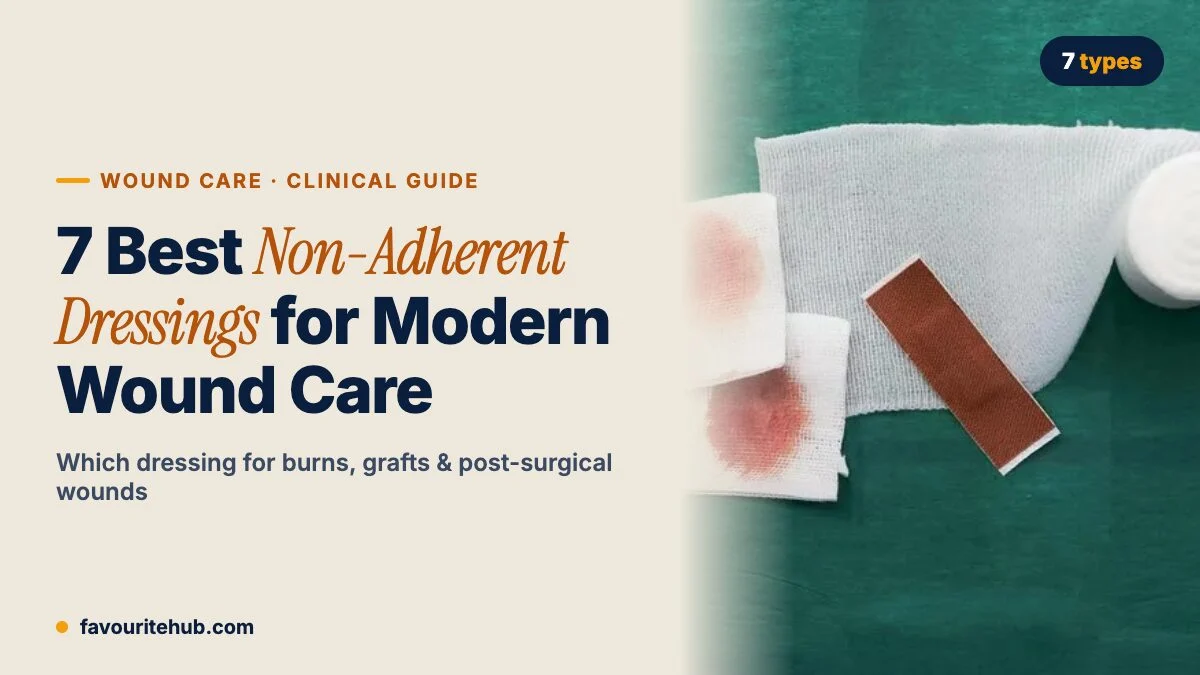
In the complex world of wound care, selecting the right dressing is paramount for promoting optimal healing, minimizing patient discomfort, and preventing complications. A key innovation in this field is the non adherent dressing, designed specifically to protect the wound bed without sticking to delicate new tissue. This ensures pain-free removal and prevents trauma that can delay the healing process.
At Favourite Fab, we are committed to providing high-quality medical dressing solutions. Because we understand the crucial role of gentle wound management, we offer a comprehensive range of non adherent dressings. Therefore, we aim to equip healthcare professionals and individuals with the knowledge to choose the ideal dressing for every situation. This guide will delve into non adherent dressing examples that are revolutionizing modern wound care.
What is a Non-Adherent Dressing? Unpacking the Definition
What is a non adhering dressing?
A non adhering dressing (also frequently called a non adherent dressing or non stick dressing) is a type of wound contact layer that is specifically engineered to prevent adherence to the wound bed. For more, see best non-adherent dressings available. For more, see non-adherent dressing options. This means the dressing will not stick to the new tissue, blood clots, or exudate as it dries. The primary goal is to facilitate atraumatic dressing changes, minimizing pain and preventing disruption of the fragile healing process.
What is an example of a non stick dressing?
A common and classic example of a non stick dressing is a Telfa dressing. These pads typically feature a highly absorbent cotton core encased in a non-adherent, perforated film that prevents the dressing from sticking to the wound.
What are non-adhesive dressings?
It’s important to clarify the distinction: A non adhesive dressing is a broader term meaning the dressing itself does not have an adhesive border or backing. It requires a secondary dressing (like tape or a bandage) to hold it in place. Many non adherent dressings are also non-adhesive, but not all non-adhesive dressings are necessarily non-adherent at the wound interface unless specified. The key difference between adherent and non adherent dressings lies in whether they stick to the wound bed (adherent) or not (non-adherent).
When to Use a Non-Adherent Dressing: Key Scenarios
When should you use a non-adherent dressing?
You should use a non-adherent dressing whenever preserving the integrity of the wound bed and ensuring pain-free removal are primary concerns. This includes:
- For Burns: Non adherent dressing for burns is crucial. Burn wounds are extremely painful and delicate, and a non-adherent layer prevents the dressing from fusing with the tissue, making changes less traumatic.
- For Skin Grafts and Donor Sites: Non adherent dressing for skin grafts and non adherent dressing for donor sites are vital to protect newly grafted skin or the fragile donor area without pulling away new cells.
- For Open Wounds: For any open wounds with exposed, delicate tissue, a non stick dressing for open wound prevents the dressing from becoming embedded in the wound bed.
- For Sensitive Skin: Patients with sensitive skin, pediatric patients, or the elderly with fragile skin benefit greatly from the gentle removal.
- For Surgical Wounds (Post-Op): Non adherent dressing for surgical wounds (or post-op wounds) ensures sutures or staples are not snagged and the incision line remains undisturbed.
- For Tattoos: A non adherent dressing for tattoos can protect the fresh tattoo without sticking to the healing skin or scabs.
- For Weeping Wounds: A non-adherent dressing for weeping wounds with a good absorbent secondary layer can manage exudate while ensuring the dressing doesn’t stick as fluid dries.
- For Skin Tears: These delicate injuries require a dressing that won’t cause further trauma upon removal.
The 7 Best Non-Adherent Dressing Examples
Here are some of the most effective and widely used non adherent dressing examples, each with unique properties making them suitable for different wound types:
- Telfa Dressing (Telfa Pads):
- Uses: A versatile non stick wound dressing for light to moderately exuding wounds, surgical incisions, minor burns, and abrasions. They are widely considered the best non stick gauze pad for general use due to their soft, perforated film that prevents adherence.
- Benefits: Excellent for pain-free removal, cushions the wound, and allows for fluid passage to a secondary dressing.
- Mepitel Dressing (Silicone Mesh Dressing):
- Uses: An advanced non adherent dressing with a soft silicone mesh. Ideal for a wide range of wounds, including burns, skin grafts, skin tears, and wounds with fragile surrounding skin. Can remain in place for several days.
- Benefits: Extremely gentle on the wound and surrounding skin, minimizes trauma, allows exudate to pass through to a secondary dressing, and can be easily repositioned.
- Adaptic Gauze Dressing (Petrolatum Emulsion Dressing):
- Uses: A non-adherent knitted cellulose acetate mesh impregnated with a petrolatum emulsion. Excellent for burns, skin grafts, donor sites, and wounds where a moist environment and minimal adherence are crucial.
- Benefits: Keeps the wound moist, prevents adherence, and promotes epithelialization. The mesh structure allows exudate to pass through to a secondary dressing.
- Xeroform Dressing (Bismuth Tribromophenate Petrolatum Dressing):
- Uses: A fine mesh gauze impregnated with petrolatum and 3% Bismuth Tribromophenate (a deodorizing/antiseptic agent). Often used for ulcers, donor sites, burns, and wounds with a risk of infection or odor.
- Benefits: Non-adherent, promotes a moist healing environment, helps reduce odor, and offers bacteriostatic properties.
- Jelonet Dressing (Paraffin Gauze Dressing):
- Uses: A paraffin-impregnated open-weave gauze dressing. Commonly used for burns, skin grafts, ulcers, and skin tears.
- Benefits: Creates a moist environment at the wound surface, preventing adherence and protecting newly formed tissue. Requires a secondary absorbent dressing.
- Kendall Non-Adherent Pads (or similar Non-Woven Pads):
- Uses: These are typically multi-layered non stick wound pads made from non-woven materials, often with a coated contact layer to prevent adherence. Used for general wound care, minor cuts, abrasions, and as a primary dressing post-op.
- Benefits: Absorbent, low-lint, conformable, and designed for gentle removal.
- Hydrogel Dressings (Sheet or Amorphous):
- Uses: While some hydrogels are adhesive, many come as non adhesive dressing sheets or amorphous gels that require a secondary dressing. Ideal for dry wounds, necrotic wounds (aiding debridement), and minor burns.
- Benefits: Provide moisture to the wound, aid in autolytic debridement, cool painful wounds, and are non-adherent.
How to Apply a Non Adherent Dressing
How to apply a non adherent dressing?
Applying a non adherent dressing correctly is essential for its effectiveness:
- Hand Hygiene & Clean Field: Always start by washing your hands thoroughly. If dealing with an open or surgical wound, prepare a sterile field and don sterile gloves.
- Wound Preparation: Gently clean the wound with an appropriate wound cleanser or saline solution. Pat the surrounding skin dry completely.
- Choose the Right Size: Select a non adherent dressing that completely covers the wound bed and extends slightly onto the surrounding healthy skin. If using a Large Non Adhesive Wound Dressing, ensure it can be properly secured.
- Place the Dressing: Carefully place the non adherent Pad directly onto the wound surface, ensuring the non-adherent side is facing down. Avoid touching the wound contact layer with your fingers.
- Secure with a Secondary Dressing: Since it’s a non adhesive dressing, it needs external securement. Use medical tape, a cohesive bandage, a non adhesive bandage, or an adhesive film to hold it in place. Ensure the secondary dressing is applied firmly but without excessive tension.
Important Considerations
- Is gauze a non-adherent dressing? Plain woven gauze is not a non-adherent dressing. It can stick to wounds, causing trauma upon removal. However, specialized non adherent gauze dressings (like Adaptic or Xeroform, or non adherent gauze dressing made from non-woven material with a non-stick coating) are designed to be non-adherent.
- Can you put a non-adherent dressing directly on a wound? Yes, non adherent dressings are specifically designed to be placed directly on the wound bed. This is their primary function – to protect the wound surface while preventing adherence. They form the wound contact layer.
- Non-adherent dressing for weeping wounds: For wounds with significant exudate, a non-adherent dressing still serves as the primary contact layer. However, it must be combined with a highly absorbent non adherent dressing as a secondary dressing (e.g., a thick foam or highly absorbent pad) to manage the fluid and prevent maceration of the surrounding skin.
Favourite Fab: Your Trusted Source for Non-Adherent Dressings
At Favourite Fab, we are pioneers in providing advanced wound care solutions. Our expertise as a leading manufacturer ensures that our non adherent dressing examples meet the highest standards of quality, effectiveness, and patient comfort. We understand the nuances of wound management and are dedicated to supporting healthcare professionals and caregivers with superior products.
Whether you are looking for Telfa pads, silicone non-adherent dressings, or require bulk non adherent dressings for a hospital or private label wound dressings for your brand, Favourite Fab is your reliable partner. We offer wound dressing wholesale and can provide tailored solutions for your specific needs. Our commitment to E-E-A-T means you receive products from a trustworthy source, backed by extensive experience and authority in the medical textile industry.
Frequently Asked Questions (FAQ)
What is an example of a non stick dressing?
A common example of a non stick dressing is a Telfa dressing. These pads are specifically designed with a perforated non-adherent film layer that prevents them from sticking to the wound bed while still allowing exudate to pass through to an absorbent layer.
What are non-adhesive dressings?
Non-adhesive dressings are wound dressings that do not have their own sticky (adhesive) border or backing. They need to be secured in place over the wound using a separate method, such as medical tape, a cohesive bandage, or an adhesive film dressing.
Which is considered a non-adherent dressing?
Many types are considered non-adherent dressings, including Telfa dressing, Mepitel dressing, Adaptic gauze dressing, Xeroform dressing, Jelonet dressing, and certain silicone non adherent dressing products. They all share the key characteristic of preventing adherence to the wound bed.
What is a non adhering dressing?
A non adhering dressing is a wound dressing whose primary contact layer with the wound surface is specially treated or designed to prevent it from sticking to the delicate new tissue, blood clots, or dried exudate. This ensures pain-free removal and minimizes trauma to the healing wound.
Raw Materials Used in Non-Adherent Dressing Manufacturing
For medical device manufacturers, hospital procurement teams, and healthcare OEM suppliers, understanding the raw material composition of non-adherent dressings is essential for product qualification, cost benchmarking, and supplier selection. The performance characteristics of any non-adherent dressing — its release profile, absorbency, tensile strength, and biocompatibility — are determined entirely by the substrate and coating specifications chosen during manufacturing.
Core raw materials in non-adherent dressing construction:
- Nonwoven fabric substrate: The base layer of most non-adherent dressings is a low-lint nonwoven fabric — typically spunlace viscose-polyester or spunbond polypropylene in 30–60 GSM. The nonwoven must meet ISO 10993 biocompatibility standards for direct wound contact applications. See: non-adherent dressing examples for how substrate choice affects performance.
- Silicone coating: Soft silicone dressings (e.g., Mepitel-type) apply a medical-grade silicone gel layer to the nonwoven substrate. Silicone content, coating weight, and cure process determine the release force — the lower the force, the more atraumatic the dressing change.
- Paraffin or petroleum-based tulle: Traditional Jelonet-type dressings impregnate an open-weave gauze with soft paraffin. Paraffin loading (typically 175–185 g/m²) determines the non-adherent properties and moisture-vapour transmission rate.
- Perforated film layer: Telfa-type dressings use a perforated polyester or polyethylene film bonded to an absorbent cotton-rayon core. Perforation diameter and density control fluid strike-through to the secondary dressing layer.
- Absorbent core: Airlaid nonwoven, cotton-rayon blend, or superabsorbent polymer (SAP) core material determines exudate management capacity. Higher exudate wounds require deeper SAP loading.
Sourcing Non-Adherent Dressing Raw Materials: B2B Supplier Guide
Manufacturers producing non-adherent wound dressings at scale require consistent, certified raw material supply with full traceability. India has emerged as a significant source for medical-grade nonwoven fabrics, with suppliers holding ISO 13485, ISO 9001, and SGS certifications covering tensile strength, absorbency, lint count, and biocompatibility testing.
Favourite Fab supplies medical-grade nonwoven fabric for wound care dressing applications to OEM manufacturers, contract packagers, and healthcare distributors across India and export markets. Our wound-care-grade nonwoven range includes:
- Low-lint spunlace nonwoven — viscose-polyester blends in 30–60 GSM for wound contact layer applications. Lint-free specification available with SGS test reports. See: low-lint spunlace nonwoven fabric.
- Viscose spunlace nonwoven — high-absorbency 100% viscose substrate for dressing pads and wound swabs.
- Industrial and medical wipes nonwoven — heavy-duty nonwoven suitable for sterile wound cleaning substrates. See: industrial wipes nonwoven fabric.
- PE bandage raw material — polyethylene-based substrate for self-adhesive bandage and wound wrap production. See: PE bandage raw material.
For bulk orders, sample requests, and custom GSM/width specifications, contact our B2B sales team at sale@favouritehub.com or WhatsApp +91-8800775462. We provide 24-hour quotation turnaround with FOB India pricing and full export documentation for international buyers.
Contact Us
Elevate your wound care standards with Favourite Fab’s premium non adherent dressing examples. For inquiries, bulk orders, or custom manufacturing, reach out to us today.
Email: sale@favouritehub.com WhatsApp: 8800775462
Partner with Favourite Fab for innovative, reliable, and high-quality wound management solutions.
Related Resources
- Post-Surgery Wound Care — The Crucial Role of Non-Adherent Dressings
- Bulk Easy-Tear Bandage Rolls — Cost-Effective for Clinics & Athletic Trainers
- Bulk Non-Sterile Non Woven Bandages — Healthcare Solutions
- Disposable Underpad Export from India — Quality Standards & Global Compliance
- Certified Medical Underpads Suppliers India — Quality & Compliance
- PE Bandage Raw Material — Supplier & Specifications
Related Wound Care Nonwoven Resources
- non woven fabric — medical-grade nonwoven hub
- spunlace non woven fabric — low-lint wound-contact substrate
- spunbond non woven fabric — wound dressing carrier ply
- SMS non woven fabric manufacturer India — sterile-barrier dressing layer
- SSMMS non woven fabric manufacturer India — premium medical barrier nonwoven
- meltblown nonwoven fabric manufacturer India — fine-fibre absorbent layer
- airlaid nonwoven fabric manufacturer India — absorbent dressing core
- hot air through bonded nonwoven fabric — soft non-adherent contact layer
- why choose Favourite Fab nonwoven — medical nonwoven supplier credentials
Frequently Asked Questions
What is a non-adherent dressing?
A non-adherent dressing is a wound contact layer engineered so it does not stick to the wound bed. It will not adhere to new tissue, blood clots, or exudate as it dries, which allows the dressing to be removed without disturbing healing skin or causing pain. The goal is atraumatic dressing changes that protect fragile new tissue and prevent disruption of the healing process. Common non-adherent types include silicone-coated meshes, paraffin-impregnated gauze, and petrolatum-based dressings, each using a different substrate or coating to achieve the non-stick effect. Because the dressing itself usually lacks its own adhesive border, it is generally combined with a secondary dressing such as tape or a bandage to hold it in place over the wound.
What is a non stick bandage and what is an example of one?
A non stick bandage, also called a non stick dressing, is designed with a wound contact layer that will not fuse to the wound as it heals. A common example is a Telfa dressing. Telfa pads use a highly absorbent cotton core wrapped in a non-adherent, perforated film so the pad does not stick to the wound surface. The perforations let wound fluid pass through to the absorbent core while the smooth outer film prevents the dressing from fusing with new tissue or dried exudate. Telfa dressings are widely used for light to moderately exuding wounds, surgical incisions, minor burns, and abrasions because they combine gentle, pain-free removal with reliable absorbency. They are considered one of the most versatile non stick wound dressings for general use, and their soft perforated film design is the reason they are often described as the best non stick gauze pad for everyday wound care.
What are non-adhesive dressings?
Non-adhesive dressings are wound dressings that do not have their own sticky border or adhesive backing. Because they carry no adhesive, they must be secured over the wound using a separate method such as medical tape, a cohesive bandage, or an adhesive film dressing. The term is broader than non-adherent: many non-adherent dressings are also non-adhesive, since a dressing that will not stick to the wound bed often also lacks an adhesive edge, but the two properties are not identical. A dressing can be non-adhesive without necessarily being non-adherent at the wound contact layer unless it is specifically designed for that purpose. In practice, most wound care non-adhesive pads are paired with a secondary fixation product so the primary wound contact layer stays in place while remaining gentle on surrounding skin.
What is a good telfa dressing alternative?
Several dressing types are considered non-adherent, including Telfa dressing, Mepitel dressing, Adaptic gauze dressing, Xeroform dressing, Jelonet dressing, and certain silicone non-adherent dressing products. Each shares the key characteristic of preventing adherence to the wound bed, but they differ in construction. For buyers looking for a Telfa dressing alternative, Mepitel offers a soft silicone mesh that can remain in place for several days and is gentle on fragile surrounding skin, Adaptic is a petrolatum emulsion mesh well suited to burns and skin grafts, Xeroform adds a bismuth tribromophenate antiseptic layer useful where infection or odor is a concern, and Jelonet is a paraffin-impregnated gauze that keeps the wound surface moist. Selecting an alternative depends on the wound type, exudate level, and whether an antimicrobial or moisture-retentive property is needed alongside the basic non-stick function.
What is the difference between non-adherent and non-adhesive dressings?
The key difference lies in what each term describes. A non-adherent dressing means the wound contact layer will not stick to the wound bed, protecting new tissue, blood clots, and dried exudate from disruption at the point where the dressing touches the wound. A non-adhesive dressing means the product itself carries no sticky border or backing, so it must be secured over the wound with a secondary dressing such as tape, a cohesive bandage, or an adhesive film. Many non-adherent dressings are also non-adhesive, since a product that will not stick to the wound bed often also skips an adhesive edge, but the two properties are not automatically the same thing. A dressing can be non-adhesive without being non-adherent at the wound interface unless it is specifically designed for that purpose. In practice, most non-adherent wound contact layers used in professional wound care are applied as non-adhesive products and held in place with a separate secondary dressing.
What is the best non-adherent dressing for wounds?
Silicone-coated dressings are generally considered the best non-adherent option for most wounds because they conform closely to wound contours, can be removed without pain, and allow exudate to pass through to a secondary absorbent layer while remaining in place for several days between changes. For lighter or minor wounds where cost is a bigger factor, paraffin gauze such as Jelonet is a cost-effective option that is commonly purchased in bulk for hospital and clinic use. The right choice ultimately depends on the wound type: burns and skin grafts benefit from the gentleness and repositionability of silicone mesh, while general surgical or minor wounds can often be managed adequately with simpler options such as Telfa pads or paraffin-impregnated gauze. Buyers sourcing at volume should weigh healing performance against per-unit cost when selecting a non-adherent dressing for a given care setting.
Where can I source non-adherent dressing raw materials in bulk in India?
Favourite Fab supplies medical-grade nonwoven fabric used in non-adherent wound dressing manufacturing to OEM manufacturers, contract packagers, and healthcare distributors across India and export markets. The wound-care-grade nonwoven range includes low-lint spunlace nonwoven in viscose-polyester blends around 30 to 60 GSM for wound contact layer applications, viscose spunlace nonwoven for dressing pads and wound swabs, heavy-duty nonwoven for sterile wound cleaning substrates, and PE bandage raw material for self-adhesive bandage and wound wrap production. India has become a significant source for this category, with suppliers holding ISO 13485, ISO 9001, and SGS certifications covering tensile strength, absorbency, lint count, and biocompatibility testing, which supports product qualification for hospital procurement and OEM manufacturing. For bulk orders, sample requests, or custom GSM and width specifications, buyers can contact the sales team by email or WhatsApp, with a 24-hour quotation turnaround and FOB India pricing plus export documentation available for international buyers.
What GSM spunlace is used in non-adherent dressings?
The base layer of most non-adherent dressings is a low-lint nonwoven fabric, typically a spunlace viscose-polyester blend or spunbond polypropylene in the 30 to 60 GSM range. This nonwoven substrate must meet ISO 10993 biocompatibility standards for direct wound contact, since the choice of base fabric directly determines the finished dressing release profile, absorbency, and tensile strength. On top of this substrate, manufacturers apply the coating or impregnation that creates the actual non-adherent surface: a medical-grade silicone gel layer for soft silicone dressings, a paraffin or petroleum-based tulle loaded at roughly 175 to 185 grams per square meter for traditional paraffin gauze, or a petrolatum emulsion for cellulose acetate mesh dressings. The absorbent core beneath the contact layer, made from airlaid nonwoven, cotton-rayon blend, or superabsorbent polymer, is sized separately according to how much exudate the wound is expected to produce.
When should you use a non-adherent dressing?
A non-adherent dressing should be used whenever preserving the wound bed and ensuring pain-free removal are the primary concerns. This includes burns, where a non-adherent layer prevents the dressing from fusing with delicate, painful tissue during changes, and skin grafts or donor sites, where protecting newly grafted skin or the fragile donor area without pulling away new cells is essential. Open wounds with exposed tissue also benefit, since a non-adherent layer avoids becoming embedded in the wound bed. Patients with sensitive or fragile skin, including pediatric and elderly patients, gain from the gentler removal these dressings offer. Surgical or post-operative wounds use non-adherent dressings so sutures or staples are not snagged and the incision line stays undisturbed, and fresh tattoos can be protected without the dressing sticking to healing skin or scabs. Weeping wounds and skin tears, both involving delicate tissue at risk of further trauma, round out the main scenarios calling for a non-adherent dressing.
How does Adaptic compare to Mepitel for wound dressing?
Mepitel is a silicone mesh dressing that is extremely gentle on both the wound and surrounding skin. It is suitable for a wide range of wounds including burns, skin grafts, skin tears, and cases with fragile surrounding skin, can remain in place for several days, allows exudate to pass through to a secondary dressing, and can be easily repositioned if needed. Adaptic is a non-adherent knitted cellulose acetate mesh impregnated with a petrolatum emulsion, and is commonly used for burns, skin grafts, and donor sites where a moist wound environment and minimal adherence are both important. It keeps the wound moist, prevents adherence, and promotes epithelialization, with its mesh structure also allowing exudate to pass through to a secondary dressing. Both are non-adherent and support similar wound types such as burns and grafts, but Mepitel relies on a soft silicone contact layer suited to longer wear time and easy repositioning, while Adaptic relies on a petrolatum-impregnated mesh geared toward maintaining a moist healing environment.
Related B2B Resources
- Spunlace Nonwoven for Wound Dressing
- Non Woven Wound Dressing Roll Bulk India
- Medical Grade Spunlace Nonwoven Fabric
- Medical Non Woven Dressing Fabric Bulk India
Medical & Surgical Nonwoven — Related Resources

Gaurav Garg
I'm Gaurav Garg, CEO of Favourite Fab, a company on a mission to revolutionize the nonwoven industry with sustainable practices. We work hand-in-hand with manufacturers and suppliers who share our commitment to eco-friendly production. With a deep interest in textile innovation, I'm passionate about educating consumers about sustainable material options and their potential to transform the nonwoven landscape.


