

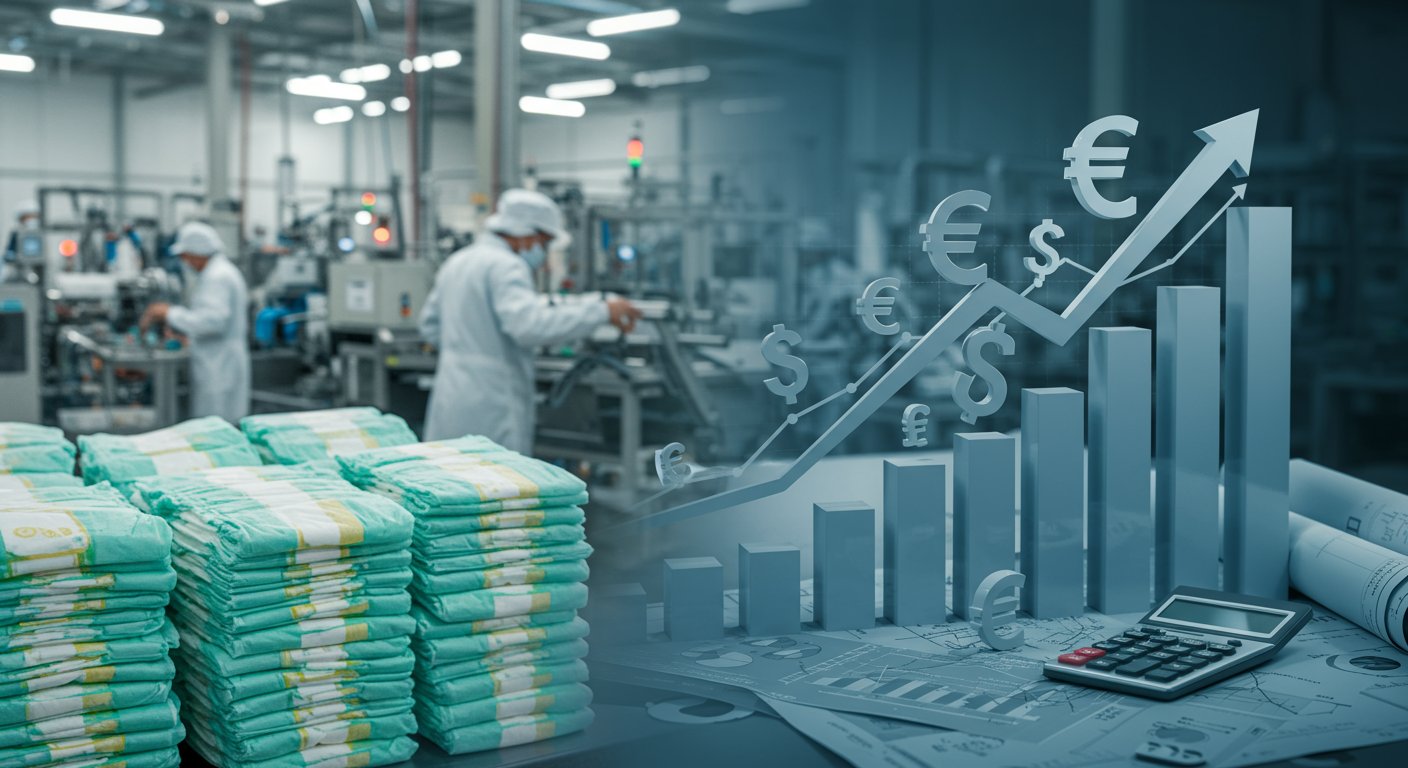
Starting a diaper manufacturing business can be a lucrative venture, because the demand for disposable diapers (both baby and adult) is consistently high. However, understanding the diaper factory cost and potential return on investment (ROI) is crucial before taking the plunge. This comprehensive guide, brought to you by Favourite Fab, a leading supplier of diaper-making machinery, will walk you through everything you need to know. We’ll cover everything from the cost of setting up a diaper factory to calculating diaper production cost per piece.
Understanding the Scope of Your Diaper Factory
Product: Mechanical Hook Tape Diaper
Product: PP Diaper Side Tape
Product: Mechanical Frontal Tape for Adult Diaper Making
Product: BOPP Frontal Tape for Adult Diaper
Before diving into the numbers, you need to define the scope of your operation. This will significantly impact your initial investment and ongoing expenses. Consider these factors:
- Product Type: Will you focus on baby diapers, adult diapers, or both? Besides that, will you offer various sizes and absorbency levels?
- Production Capacity: What is your target daily or monthly output? This will determine the size and type of diaper making machine you require. A small-scale operation will have a significantly lower small scale diaper factory setup cost than a large-scale industrial plant. For more, see factory ROI in Indian vs US context. For more, see diaper factory setup investment. For more, see diaper machine investment guide. For more, see diaper factory investment. For more, see diaper production investment.
- Target Market: Are you targeting a local, regional, or national market? This will influence your distribution and marketing costs.
- Level of Automation: Will you opt for a fully automatic, semi-automatic, or manual production line? Fully automatic lines offer higher efficiency but come with a higher diaper production line cost.
Breaking Down the Diaper Factory Cost: A Detailed Analysis
The diaper factory cost can be broadly categorized into the following areas:
1. Land and Building
You’ll need a suitable space to house your machinery, raw materials, and finished products. The cost will vary significantly based on location and size. You can either purchase land and construct a building or lease an existing facility. Therefore, carefully consider factors like proximity to suppliers and transportation networks.
2. Diaper Making Machinery
This is arguably the most significant investment. The diaper making machine cost depends on its features, capacity, and level of automation.
- Fully Automatic Machines: These offer high-speed production with minimal manual intervention. They are ideal for large-scale operations.
- Semi-Automatic Machines: These require some manual input, offering a balance between cost and efficiency. They are suitable for medium-scale businesses. Most importantly, they represent a good compromise.
- Used Diaper Making Machine Price: Consider this as a more budget-friendly option. However, thoroughly inspect the machine’s condition and maintenance history before purchasing. Favourite Fab can guide you on sourcing reliable used equipment.
Related Keywords: Baby diaper factory cost Small scale Diaper Making Machine Price in India Diaper manufacturing cost in India Diaper manufacturing Plant Used Baby Diaper machine for sale Baby Diaper manufacturing Machine in India Diaper manufacturing companies in India Semi Automatic Diaper Making Machine.
3. Raw Materials
The cost of raw materials for diaper production constitutes a significant portion of your ongoing expenses. Key materials include:
- Fluff Pulp: The absorbent core of the diaper.
- Super Absorbent Polymer (SAP): Enhances absorbency.
- Nonwoven Fabrics: Used for the top sheet, back sheet, and leg cuffs.
- Adhesives: Used to bond the various layers together.
- Elastic Threads: Provide a snug fit.
- Tapes and Fasteners: For securing the diaper.
Because raw material prices fluctuate, it’s essential to establish reliable supplier relationships and explore bulk purchasing options to minimize costs.
4. Labor Costs
The number of employees you need will depend on the level of automation of your machinery. Factor in wages, benefits, and training costs.
5. Utilities
Electricity, water, and other utilities will contribute to your operational expenses. The diaper production cost is directly affected by these factors.
6. Packaging and Distribution
You’ll need packaging materials (bags, boxes) and a system for distributing your finished products to retailers or distributors.
7. Marketing and Sales
Allocate a budget for marketing your brand and building relationships with retailers.
8. Permits and Licenses
Obtain all necessary permits and licenses to operate your factory legally. The diaper business startup cost should include these fees.
9. Working Capital
You’ll need sufficient working capital to cover day-to-day expenses, including raw material purchases, salaries, and utilities, until your business becomes self-sustaining.
10. Contingency Fund
It’s always wise to have a contingency fund to cover unexpected expenses or delays.
Calculating Diaper Production Cost Per Piece
How to calculate diaper production cost per piece is crucial for pricing your products competitively and ensuring profitability. You need to consider:
- Direct Material Costs: The cost of all raw materials used in one diaper.
- Direct Labor Costs: The labor cost associated with producing one diaper.
- Overhead Costs: A portion of your fixed costs (rent, utilities, etc.) allocated to each diaper.
A simple formula is:
(Direct Material Cost + Direct Labor Cost + (Total Overhead Costs / Total Units Produced)) = Cost Per Diaper
Diaper Factory Cost Analysis Spreadsheet & Profitability Calculator
Product: ADL For Adult Diaper
Favourite Fab recommends using a diaper factory cost analysis spreadsheet to track all your expenses and project your revenue. A diaper factory profitability calculator can help you estimate your potential profits based on different production volumes and selling prices. These tools are invaluable for making informed business decisions.
Diaper Factory Investment ROI
Product: Polypropylene Side Tape Diaper
Product: Magic Side Tape For Diaper
Product: Disposable Frontal Adhesive Tape Diaper
Product: Adult Diaper Polypropylene Frontal Tape
Calculating your diaper factory investment ROI is essential for assessing the long-term viability of your business. Consider:
- Initial Investment: The total cost of setting up your factory.
- Projected Revenue: Your estimated sales based on market demand and pricing.
- Operating Expenses: Your ongoing costs, including raw materials, labor, and utilities.
- Net Profit: Your revenue minus your expenses.
ROI = (Net Profit / Initial Investment) x 100
A higher ROI indicates a more profitable investment.
Diaper Factory Cost in India & Other Regions
Product: Printed Brushed Frontal Tapes Disposable Diaper Raw Materials
The diaper factory cost in India, and other regions, will vary based on local factors such as land prices, labor costs, and import duties on machinery. The diaper making machine price in India may also differ from prices in other countries. Therefore, conduct thorough research specific to your chosen location. For example, if you’re looking to establish in India.
Where to Buy a Diaper Making Machine?
Product: Hydrophilic diaper Top Sheet
Choosing the right supplier is critical. Where to buy diaper making machine is a question with many answers, but Favourite Fab stands out. We offer:
- High-Quality Machines: We provide a range of reliable and efficient diaper-making machines, from fully automatic to semi-automatic models.
- Competitive Pricing: We offer competitive prices without compromising on quality.
- Expert Support: Our team of experienced engineers provides comprehensive technical support and training.
- Customization Options: We can customize machines to meet your specific needs.
Diaper Factory Startup Guide & Business Plan
Product: Diaper Raw Materials PP Frontal Tapes With High Quality
Product: Baby Diaper Refastening Adhesive Double PP Side Tape Adult Diaper
A well-structured diaper factory business plan is essential for securing funding and guiding your business. This plan should include:
- Executive Summary: A brief overview of your business.
- Company Description: Details about your company’s mission, vision, and values.
- Market Analysis: Research on your target market, competition, and industry trends.
- Products and Services: Description of the diapers you will produce.
- Marketing and Sales Strategy: Your plan for reaching your target customers.
- Operations Plan: Details about your production process, machinery, and staffing.
- Financial Projections: Your projected revenue, expenses, and profitability.
- Management Team: Information about your team’s experience and expertise.
This is your diaper factory startup guide in a condensed form.
How to Start a Diaper Manufacturing Business
Product: Print Paper Frontal Tape for Diaper
Starting a diaper manufacturing business requires careful planning and execution. Here’s a step-by-step guide:
- Conduct Market Research: Understand the demand for diapers in your target market.
- Develop a Business Plan: Create a detailed plan outlining your business goals and strategies.
- Secure Funding: Determine your funding needs and explore financing options.
- Choose a Location: Select a suitable site for your factory.
- Purchase Machinery: Invest in reliable diaper-making machinery from a reputable supplier like Favourite Fab.
- Source Raw Materials: Establish relationships with reliable suppliers.
- Obtain Permits and Licenses: Comply with all legal requirements.
- Hire and Train Staff: Recruit skilled employees and provide adequate training.
- Start Production: Begin manufacturing your diapers.
- Market and Sell Your Products: Implement your marketing and sales strategy.
FAQ
Product: S Cut Side Tape Baby Diaper Raw Material
Product: Hook and Loop Fastener Tape For Baby Diaper
Product: Super Absorbent Polymer (SAP) Sheet For Adult Diaper
- Is a diaper business profitable?
Yes, a diaper business can be highly profitable because of the consistent demand for diapers. However, profitability depends on factors like efficient production, competitive pricing, and effective marketing. - How to start a diaper company?
Follow the steps outlined above, starting with thorough market research and a comprehensive business plan. - How much is the diaper industry?
The global diaper industry is a multi-billion dollar market, with significant growth potential, particularly in developing countries. - How much does 1 diaper cost?
The cost of producing one diaper varies depending on raw material costs, labor costs, and overhead expenses. The retail price also varies based on brand, features, and location.
Diaper Raw Material Sourcing Strategy for New Manufacturers
Raw materials typically account for 55–65% of total diaper production cost. For new manufacturers, getting the sourcing strategy right from day one is critical — both for cost competitiveness and product quality. Here is a practical framework used by established Indian diaper manufacturers.
Domestic vs. Import Sourcing
India now has mature domestic supply for most diaper raw materials. Importing from China or Southeast Asia was the default 10 years ago; today, domestic supply on nonwoven fabrics, frontal tape, and SAP sheet is cost-competitive with comparable quality. Import still makes sense for ultra-specialised silicone leg cuff elastic and certain high-loft ADL grades not manufactured domestically.
- Source domestically: Spunbond top sheet, SMS back-sheet reinforcement, frontal tape, hot-air through bonded ADL, release paper. See: frontal tape raw material supplier India and hot air through bonded nonwoven supplier India.
- Evaluate import vs. domestic: SAP granules (China remains lowest cost), breathable back-sheet film (some Indian suppliers now competitive), spandex elastic.
- Always qualify two suppliers per material: Single-source dependency is the most common cause of production stoppages for small manufacturers.
MOQ and Cash Flow Management
New manufacturers face a cash flow squeeze when raw material MOQs are high relative to initial production volumes. Practical strategies:
- Negotiate with suppliers for trial/sample roll quantities before committing to full-roll MOQs. Reputable suppliers like Favourite Fab accommodate trial orders for new buyers evaluating material performance.
- Start with 2–3 SKUs (e.g., medium and large baby diaper) to concentrate volume on fewer material specifications, improving your negotiating position with suppliers.
- Use consignment or credit terms from established suppliers once you have 2–3 months of payment history — this can free up 20–30% of working capital tied in raw material inventory.
Supplier Certification Requirements
For BIS-certified diapers (mandatory for domestic sale in India) and export market entry, your raw material suppliers must provide:
- Certificate of Analysis (CoA) per batch — GSM, tensile strength, elongation, absorbency
- ISO 9001 or ISO 13485 certification (for medical/adult diaper grade)
- SGS or third-party test reports for skin-contact materials (top sheet, ADL)
- REACH compliance declaration for export to EU markets
Favourite Fab provides full certification documentation with every shipment. For complete raw material specifications and bulk pricing for your diaper production line, contact our B2B team: sale@favouritehub.com or WhatsApp +91-8800775462. Also see our detailed guide: raw materials used in manufacturing of diapers.
Contact Us
Product: Baby Diaper Non woven Side Tape
Ready to start your diaper manufacturing journey? Contact Favourite Fab today!
- Email: sale@favouritehub.com
- WhatsApp: +91 8800775462
Our team is ready to answer your questions and help you get started. We are experts in adult diaper factory cost and baby diaper factory cost, and we’re here to guide you. We can help you determine the disposable diaper factory cost that aligns with your budget and goals. Don’t hesitate to ask us, “What is the initial investment for a diaper factory?” or “How much does it cost to build a diaper factory?”. We have the answers!
Related Diaper Factory Setup Resources
- non woven fabric — primary diaper raw material category
- spunbond non woven fabric — top/back-sheet feedstock for diaper plants
- SMS non woven fabric manufacturer India — leak-barrier supply for new factories
- SSMMS non woven fabric manufacturer India — premium barrier nonwoven
- SMMS non woven fabric manufacturer India — high-barrier diaper material
- meltblown nonwoven fabric manufacturer India — barrier ply supply
- airlaid nonwoven fabric manufacturer India — absorbent core feedstock
- hot air through bonded nonwoven fabric — ADL supply for diaper lines
- why choose Favourite Fab nonwoven — long-term raw material partner
Frequently Asked Questions
Product: Breathable Diaper Side Tape
Product: Soft Touch Magic Baby Diaper Frontal Tape
Product: BOPP Frontal Tape for Baby Diaper
What is the ROI on a diaper manufacturing business in India?
Typical ROI: 18-24 months for a semi-automatic unit at 60%+ capacity utilisation. Net margin: 12-22% depending on scale and raw material sourcing. Sourcing spunlace and SAP directly from manufacturers like Favourite Fab reduces cost 15-25%.
How much space is required for a diaper factory?
Minimum: 5,000 sq ft for a semi-automatic line (1 machine). Ideal: 10,000-20,000 sq ft for a fully automatic line with raw material storage, QC lab and finished goods warehouse.
What machines are needed for diaper manufacturing?
Core equipment: diaper making machine (semi-auto Rs 15-40 lakh, fully-auto Rs 1.5-5 crore), SAP doser, ultrasonic sealing unit, packaging line, QC equipment (absorbency tester, tensile tester).
Where do I source diaper raw materials in India?
Favourite Fab (Agra) supplies: spunlace topsheet (25-80 GSM), SMS nonwoven, PE backsheet film, frontal tape (BOPP and cloth), PP spunbond. B2B pricing available with MOQ from 500 kg. Pan-India delivery.
Related B2B Resources

Gaurav Garg
I'm Gaurav Garg, CEO of Favourite Fab, a company on a mission to revolutionize the nonwoven industry with sustainable practices. We work hand-in-hand with manufacturers and suppliers who share our commitment to eco-friendly production. With a deep interest in textile innovation, I'm passionate about educating consumers about sustainable material options and their potential to transform the nonwoven landscape.


