

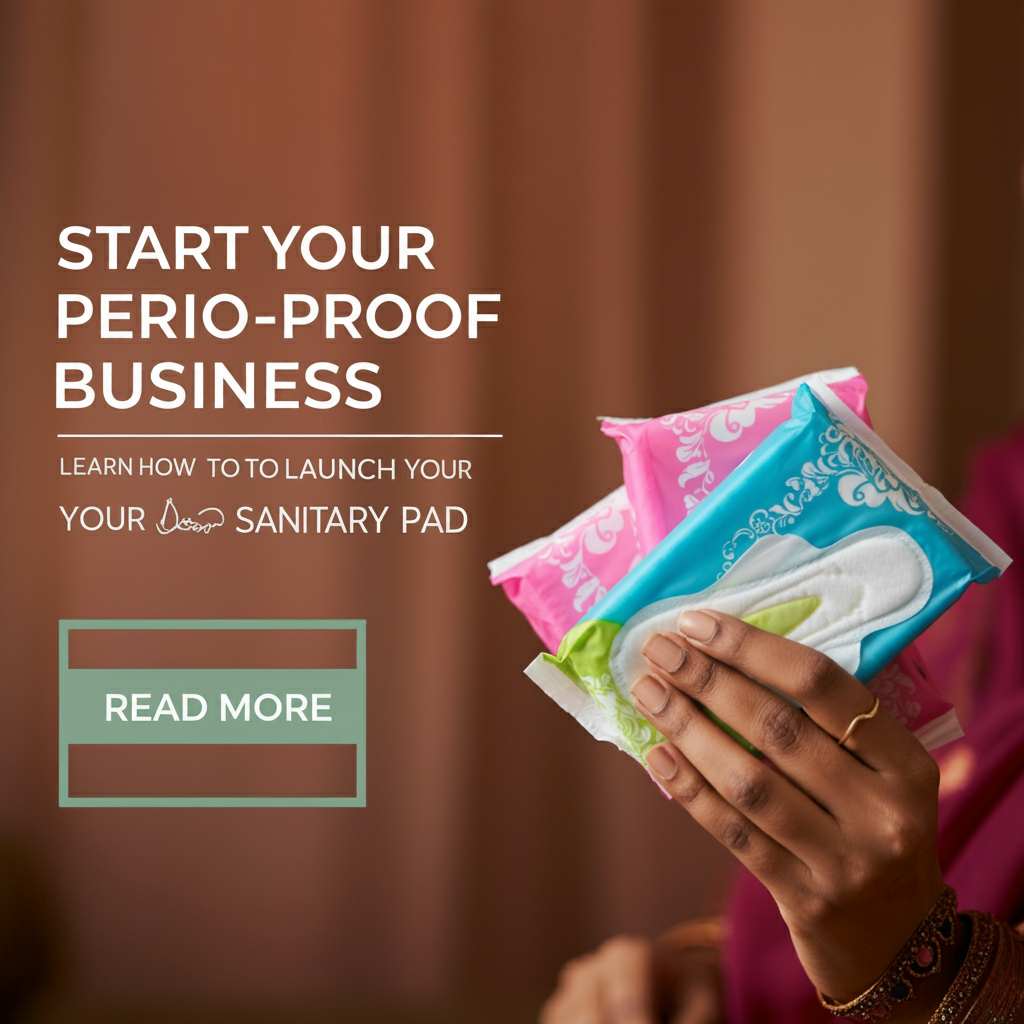
Turning Passion into Impact: Launching Your Sanitary Pad Business
Starting a sanitary pad business is more than just selling a product; it’s about empowering women and girls by providing access to safe and affordable feminine hygiene products. For more, see sourcing raw materials for sanitary pad business. This guide, brought to you by the experts at Favourite Fab, will walk you through the essential steps to turn your vision into a thriving and impactful business.Why Start a Sanitary Pad Business?
The global feminine hygiene products market is experiencing significant growth, driven by rising awareness about menstrual health and hygiene, particularly in developing countries. For more, see top sanitary pad manufacturers. This presents a unique opportunity for entrepreneurs passionate about social impact and women’s well-being. Here’s why starting a sanitary pad business is a powerful endeavor:- Meeting a Critical Need: Access to affordable and hygienic sanitary pads remains a challenge for millions of women, impacting their health, education, and overall well-being.
- Social Impact: By providing affordable options, you empower women and girls to manage their periods with dignity and confidence.
- Growing Market: The demand for sanitary pads, especially biodegradable sanitary pads and sustainable sanitary pads, is on the rise, creating a promising business opportunity.
Step 1: Craft a Solid Sanitary Pad Business Plan
A comprehensive sanitary pad business plan is your roadmap to success. It outlines your business goals, target audience, market analysis, financial projections, and marketing strategies. Here’s what to include:- Executive Summary: A concise overview of your business, including your mission, products, target market, and key objectives.
- Company Description: Details about your business structure, legal entity (sole proprietorship, partnership, LLC, etc.), and business registration. You’ll need to explore the necessary sanitary pad business licenses and sanitary pad manufacturing regulations in your region.
- Market Analysis: Research the feminine hygiene products market in your area. Identify your target audience, competitors, market size, and potential growth opportunities.
- Products and Services: Clearly define your product line. Will you offer a single type of pad or a variety? Will you consider biodegradable sanitary pads or focus on affordable sanitary pads?
- Marketing and Sales Strategy: Outline your plan to reach your target customers. This includes your brand positioning, pricing strategy, distribution channels (online, retail, partnerships with NGOs), and promotional activities.
- Operations Plan: Detail your production process, sourcing sanitary pad raw materials, quality control measures, and inventory management.
- Financial Projections: Provide a realistic estimate of your startup costs, operating expenses, revenue projections, and profitability timeline. Explore funding options, such as small business loans specifically designed for women entrepreneurs or grants focused on social impact businesses.
Step 2: Secure Funding for Your Sanitary Pad Business
Starting a manufacturing business requires capital investment. Determine your startup costs and explore funding sources such as:- Personal Savings: Utilizing your savings can provide initial capital.
- Small Business Loans: Many banks and financial institutions offer loans tailored for small businesses, including those focused on manufacturing. Research how to get a loan for a sanitary pad manufacturing business and the specific requirements.
- Government Grants: Some governments offer grants to support women-owned businesses or ventures with a strong social impact.
- Angel Investors: Seek out individuals or groups interested in investing in early-stage companies with high growth potential.
Step 3: Source High-Quality Sanitary Pad Raw Materials
The quality of your sanitary pad raw materials directly impacts the quality and safety of your product. Research and partner with reliable suppliers who offer:- Absorbent Core: Materials like wood pulp, cotton, or bamboo fiber are commonly used.
- Top Sheet: This layer comes in direct contact with the skin and should be soft, comfortable, and hypoallergenic.
- Back Sheet: This layer prevents leakage and is usually made of polyethylene film.
- Adhesive: Ensures the pad stays securely in place.
- Packaging Materials: Choose hygienic and attractive packaging that reflects your brand and complies with sanitary pad packaging regulations.
Step 4: Invest in a Sanitary Pad Making Machine
A sanitary pad making machine is a crucial investment for your business. These machines automate the production process, ensuring efficiency and consistency. When choosing a machine, consider:- Production Capacity: Select a machine that aligns with your projected sales volume.
- Automation Level: Machines range from semi-automatic to fully automatic, impacting labor requirements.
- Features: Look for features like adjustable pad size, different embossing patterns, and automatic packaging options.
- Budget: Sanitary pad making machines come in various price ranges. Research and compare options from reputable suppliers.
Step 5: Master the Sanitary Pad Production Process
The sanitary pad production process involves several steps, including:- Raw Material Preparation: Inspecting, cleaning, and preparing raw materials according to their specific requirements.
- Formation of the Absorbent Core: Layering and compressing absorbent materials to create the pad’s core.
- Application of Top Sheet and Back Sheet: Attaching the top and back sheets to the absorbent core using adhesive.
- Cutting and Sealing: Cutting the pads to the desired size and sealing the edges to prevent leakage.
- Quality Control: Implementing rigorous quality checks at each stage to ensure hygiene and adherence to hygiene standards for sanitary pads.
- Packaging: Packaging the finished products in hygienic and attractive packaging.
Step 6: Develop a Powerful Sanitary Pad Marketing Strategy
In a competitive market, a strong marketing strategy is essential for attracting customers and building brand loyalty. Here are key elements to consider:- Define Your Brand: Create a memorable brand name, logo, and brand story that resonates with your target audience.
- Highlight Your Unique Selling Proposition (USP): What makes your sanitary pads stand out? Is it affordability, sustainability, or a focus on specific needs?
- Pricing Strategy: Research competitor pricing and determine a pricing strategy that is both competitive and profitable.
- Distribution Channels: Explore a mix of online and offline channels to reach your target market. This could include selling through your website, e-commerce platforms, local retailers, pharmacies, and partnering with NGOs.
- Promotional Activities: Utilize a mix of online and offline marketing tactics such as social media marketing, content marketing, influencer collaborations, educational campaigns, and participating in women’s health events.
Step 7: Ensure Compliance and Safety Standards
Meeting the highest hygiene standards for sanitary pads is non-negotiable. Ensure your production process and products adhere to all relevant regulations:- Manufacturing License: Obtain the necessary licenses and permits to manufacture and sell sanitary pads in your region.
- Quality Certifications: Consider obtaining quality certifications to demonstrate your commitment to safety and hygiene standards.
- Labeling Requirements: Comply with all labeling regulations, including ingredient lists, manufacturing date, expiry date, and usage instructions.
FAQs about Starting a Sanitary Pad Business
1. How much does it cost to start a sanitary pad business in India? The cost varies depending on factors like production scale, automation level of the sanitary pad making machine, and location. On average, you can expect to invest between INR 5 lakhs to INR 20 lakhs. 2. What are the best marketing strategies for a new sanitary pad brand? Focus on digital marketing, influencer collaborations, educational campaigns, and partnerships with NGOs to raise awareness and reach your target audience. 3. What are the top sanitary pad manufacturing machines for small businesses? Several reputable manufacturers offer machines suitable for small businesses. Research and compare features, production capacity, and price to find the best fit for your needs.Sanitary Pad Manufacturing Business: Investment Breakdown 2025
Before launching, you need realistic numbers. The “INR 5–20 lakh” range often quoted online is for a fully manual operation with limited output. Here is the actual capex range based on production model and target output, used by Indian sanitary pad manufacturers in 2025: sanitary pad business quality
| Production Model | Capex (INR) | Output (pads/day) | Best For |
|---|---|---|---|
| Manual / Semi-auto small scale | 5–15 lakh | 2,000–5,000 | NGO, micro-enterprise, local brand |
| Semi-automatic mid scale | 15–35 lakh | 10,000–25,000 | Regional brand, government contracts |
| Fully automatic servo-driven | 50 lakh–1.5 crore | 50,000–150,000 | National brand, retail chain supply |
| High-speed export-grade line | 2–5 crore | 200,000–500,000 | Private-label OEM, export |
Beyond machinery, factor in: factory space rental (₹40–₹120/sq ft/month for 1,500–3,000 sq ft), licensing (BIS, GST, Pollution Board, ₹1.5–3 lakh), initial raw material inventory (typically 2 months at production volume), packaging and brand setup (₹2–5 lakh), and 6 months working capital. For a detailed breakdown, see: plant setup cost feasibility overview.
Sanitary Pad Production Cost Per Piece
One of the most asked B2B questions is: what does it actually cost to produce one pad? Here is the typical 2025 cost breakdown for a regular-flow sanitary pad produced in India at semi-automatic scale:
| Cost Component | Cost per pad (INR) | % of Total |
|---|---|---|
| Top sheet nonwoven (18 GSM, 0.65g) | 0.18 | 10% |
| Fluff pulp + SAP core | 0.45 | 26% |
| Back sheet PE film | 0.22 | 13% |
| Release paper + adhesive | 0.15 | 9% |
| Wing wrap + packaging | 0.30 | 17% |
| Labour + overheads | 0.25 | 14% |
| Power, freight, depreciation | 0.20 | 11% |
| Total cost per pad | ~1.75 | 100% |
At wholesale price points of ₹2.50–₹3.50 per pad and retail of ₹4–₹8, gross margins range from 30% to 50% before marketing and distribution costs. Sourcing raw materials directly from the manufacturer (no trader markup) typically improves margin by 12–18%.
Compliance and Certification Roadmap
Sanitary pad manufacturing in India has specific compliance requirements that must be addressed before commercial sale. Skipping these is the most common reason new manufacturers fail in the first year.
- BIS certification (IS 5405): Mandatory for all sanitary pad sales in India. Process takes 4–8 weeks, costs ₹1.5–2.5 lakh including testing fees. Apply through BIS regional office with sample submission.
- Drug and Cosmetics License: If marketed with antimicrobial or medical claims, additional FDA-state licensing required.
- GST registration and HSN code 9619.00.10: Standard requirement; sanitary napkins are GST-exempt for end consumers since 2018.
- Pollution Control Board (PCB) clearance: Required for any manufacturing facility. Usually a Yellow category clearance for sanitary pad production.
- Trademark registration: Apply with Class 5 (sanitary preparations) for brand protection.
- Export-specific: CE marking for EU, FDA for USA, country-specific health authority registration. ISO 13485 may be required for medical-grade pads.
Common Mistakes New Sanitary Pad Manufacturers Make
- Underestimating raw material consistency requirements: Switching nonwoven suppliers to save 5% cost often causes machine downtime worth 10x the savings.
- Single-source dependency: Always qualify two suppliers per critical material before going commercial.
- Skipping the trial roll stage: Run 100–500 kg trial rolls of any new material before placing full-roll orders.
- Inadequate quality testing: Set up at minimum: GSM scale, absorbency tester, tensile tester. Outsourcing all testing creates batch-release delays.
- Underpricing to enter the market: Below-cost pricing kills cash flow before brand traction kicks in. Better strategy: target a niche (organic, ultra-thin, regional B2B supply) at sustainable margins.
Favourite Fab supports new manufacturers with trial roll quantities, technical specification matching, and full B2B supply of all raw materials. Contact our team at sale@favouritehub.com or WhatsApp +91-8800775462 to get started.
Contact Favourite Fab for Expert Guidance
Starting a sanitary pad business is an empowering journey. At Favourite Fab, we are dedicated to supporting entrepreneurs like you. Contact us today for high-quality sanitary pad raw materials and expert guidance. Let’s work together to make a difference! Email: sale@favouritehub.com WhatsApp: +91 95288811566Get Everything You Need from Favourite Fab
Starting a sanitary pad business? We supply both machines and raw materials — one trusted B2B partner from India:
- fully automatic sanitary pad making machine price in India
- raw material for sanitary pad — complete sourcing guide
- sanitary pad raw material supplier in India — bulk wholesale quote
- sanitary napkin raw material list — full component breakdown
Frequently Asked Questions
How much does it cost to start a sanitary pad business in India?
Small-scale semi-automatic unit: Rs 20-50 lakh (machine + working capital). Mid-scale automatic line: Rs 1-3 crore. Home-scale manual machine: Rs 2-5 lakh for social enterprise model. Government PMBJP scheme subsidises machine cost for rural women entrepreneurs.
What licences do I need for sanitary pad manufacturing in India?
Required: MSME/Udyam registration, GST registration, BIS certification IS 5405 (mandatory since 2018), factory licence from state labour department, pollution NOC from SPCB. FSSAI not required as sanitary pads are not food contact items.
What is the profit margin in sanitary pad manufacturing?
Gross margin: 30-45% depending on brand vs private label. Net margin at scale: 15-25%. Key: vertical integration and direct raw material sourcing. Buying from manufacturers like Favourite Fab (vs distributors) saves 15-20% on COGS.
What raw materials do I need to start sanitary pad production?
BOM per 1000 pads: ~2 kg spunlace topsheet, ~1.5 kg ADL, ~4 kg SAP, ~5 kg fluff pulp, ~2 kg PE backsheet, ~1 kg hot melt adhesive, ~500g packaging film. Favourite Fab supplies all nonwoven raw materials with B2B pricing from 500 kg MOQ.
Related B2B Resources

Gaurav Garg
I'm Gaurav Garg, CEO of Favourite Fab, a company on a mission to revolutionize the nonwoven industry with sustainable practices. We work hand-in-hand with manufacturers and suppliers who share our commitment to eco-friendly production. With a deep interest in textile innovation, I'm passionate about educating consumers about sustainable material options and their potential to transform the nonwoven landscape.


