

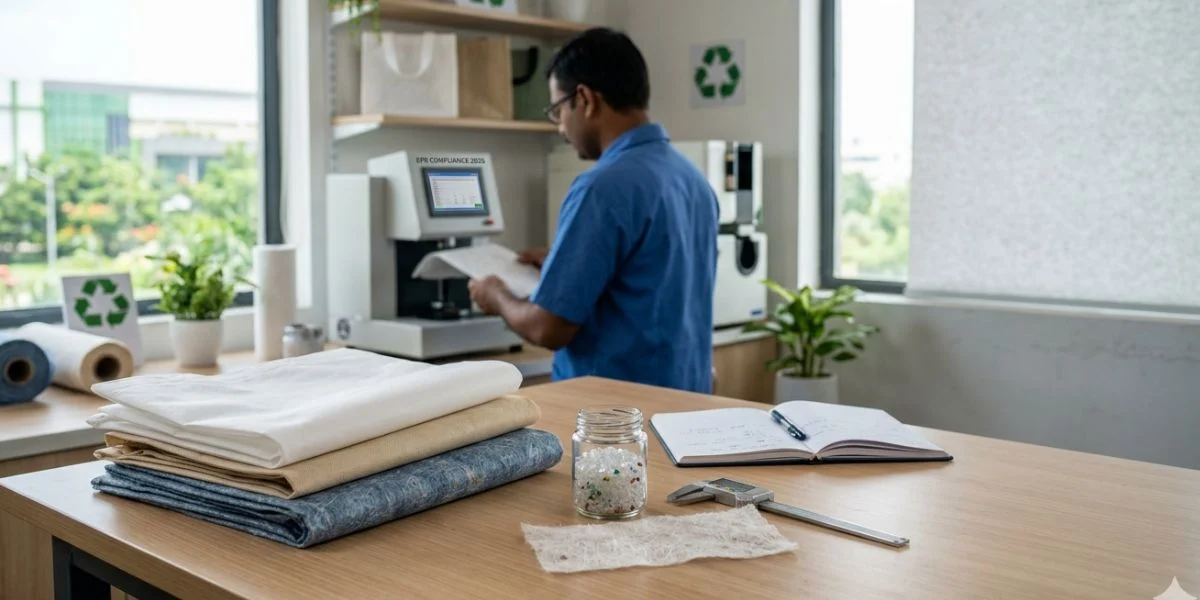
EPR Compliant Nonwoven Bags Raw Material India 2026
India’s Extended Producer Responsibility (EPR) framework for plastic packaging is reshaping the nonwoven carry bag and packaging sector. With 2026 compliance milestones requiring producers, importers, and brand owners to demonstrate EPR registration and targets for plastic waste management, Indian nonwoven bag manufacturers face both regulatory pressure and a market opportunity. Favourite Fab supplies EPR compliant nonwoven bags raw material — polypropylene and recycled nonwoven rolls engineered for EPR-compliant bag production, available at wholesale to converters and bag manufacturers across India.
India EPR Rules 2022 — What Bag Manufacturers Need to Know in 2026
The Plastic Waste Management (PWM) Amendment Rules 2022 established the EPR framework in India. Key provisions relevant to nonwoven bag manufacturers in 2026 include:
- EPR registration mandatory: Producers, importers, and brand owners using plastic packaging must register on the CPCB EPR portal and obtain an EPR certificate
- Recycled content targets: EPR rules mandate increasing percentages of recycled plastic content in packaging — 30% by 2025-26, scaling upward to 60% by 2028-29
- Non-woven carry bags classification: CPCB classifies polypropylene nonwoven carry bags (GSM ≥60) as Category III under EPR — not banned, but subject to EPR obligations
- Minimum thickness for PP bags: Non-woven carry bags must be minimum 60 microns thickness (60 gsm for PP nonwoven) to be permitted for carry bag use
- End-of-life collection targets: Producers must demonstrate waste collection and recycling target achievement through certified recyclers
How Favourite Fab Supports EPR Compliance for Bag Manufacturers
Favourite Fab manufactures nonwoven rolls specifically for bag manufacturers operating under India’s EPR framework:
Virgin PP Nonwoven — EPR-Compliant Grade
- GSM range: 60–120 gsm (meeting CPCB minimum GSM requirement for carry bags)
- Width: 1.0m – 3.2m, slit to your bag-making line specification
- Material certificates available for EPR compliance documentation
- Consistent quality for high-speed bag making machinery
Recycled PP Nonwoven — Meets 2026 Recycled Content Targets
- Post-consumer recycled PP content: 30%–60% blend options
- Supports mandatory recycled content requirements for 2026 and beyond
- Recycled content certification available for EPR portal documentation
- Performance maintained for carry bag, promotional bag, and shopping bag applications
| Grade | PP Content | Recycled % | GSM | EPR Compliance | Application |
|---|---|---|---|---|---|
| PP-60V | 100% Virgin PP | 0% | 60–80 gsm | Minimum compliant (EPR obligation applies) | Standard carry bags |
| PP-80R30 | PP blend | 30% recycled | 80–100 gsm | 2025-26 recycled content target met | Retail bags, promotional bags |
| PP-100R60 | PP blend | 60% recycled | 80–120 gsm | 2028-29 target compliant, future-proof | Institutional bags, bulk packaging |
EPR Documentation Support from Favourite Fab
Successfully registering and maintaining EPR compliance requires documentation from your raw material supplier. Favourite Fab provides:
- Material composition certificates (PP grade, recycled content percentage)
- Recycled content certification from certified recyclers in our supply chain
- GSM and physical property test reports
- Invoice documentation supporting your EPR registration and annual return submissions
Market Opportunity: EPR-Compliant Nonwoven Bags in India
India’s EPR framework is creating a differentiated market for EPR-compliant nonwoven bag manufacturers. Brands and retailers facing their own EPR obligations are actively seeking nonwoven bag suppliers who can demonstrate recycled content and compliance documentation. This gives EPR-compliant bag manufacturers a commercial advantage in institutional and retail procurement tenders.
Frequently Asked Questions
Are polypropylene nonwoven bags banned in India?
No. PP nonwoven carry bags of minimum 60 gsm are explicitly permitted under India’s Plastic Waste Management Rules. The ban applies to single-use plastic items including thin polythene bags below 75 microns. Nonwoven carry bags above 60 gsm are classified as multi-use reusable bags and are subject to EPR obligations rather than a ban.
What recycled content percentage is required in 2026 for PP nonwoven?
Under India’s EPR rules, the mandatory recycled content target for plastic packaging is 30% by 2025-26 (i.e., applicable from April 2025 for the 2025-26 financial year). Favourite Fab’s recycled PP nonwoven grades meet this target. Contact our sales team to confirm the latest CPCB circular requirements as rules are periodically updated.
Can Favourite Fab supply nonwoven for laminated or printed bag applications?
Yes. Our PP nonwoven rolls are compatible with standard lamination and flexographic printing processes used in bag making. Provide your lamination and printing process specifications when requesting samples so we can confirm compatibility and recommend the appropriate grade.
Is there a minimum order quantity for recycled PP nonwoven rolls?
Minimum order for standard recycled PP nonwoven grades starts at 500 kg. Custom specifications and blended recycled content percentages are available at standard wholesale MOQs. Contact our sales team for exact pricing and lead times.
Source EPR-Compliant Nonwoven Bag Raw Material from Favourite Fab
India’s 2026 EPR compliance milestones are a business-critical deadline for every nonwoven bag manufacturer in the country. Favourite Fab gives manufacturers direct access to EPR compliant nonwoven bags raw material India 2026 — with the recycled content credentials, compliance documentation, and wholesale pricing needed to meet regulatory targets and win EPR-conscious customers. Request samples and a wholesale quote from our B2B team today.
Related B2B Resources

Gaurav Garg
I'm Gaurav Garg, CEO of Favourite Fab, a company on a mission to revolutionize the nonwoven industry with sustainable practices. We work hand-in-hand with manufacturers and suppliers who share our commitment to eco-friendly production. With a deep interest in textile innovation, I'm passionate about educating consumers about sustainable material options and their potential to transform the nonwoven landscape.


