

Bicomponent Fibre Technology — Sheath Core Nonwoven India
Bicomponent fibre technology enables nonwoven manufacturers to combine two polymers in a single fibre cross-section, delivering performance that neither polymer achieves alone. Favourite Fab supplies bicomponent fibre nonwoven fabric as an upstream raw material to hygiene, medical, and technical textile manufacturers in India and export markets. This guide covers bicomponent fibre configurations, specifications, and sourcing options.
What Is Bicomponent Fibre Technology
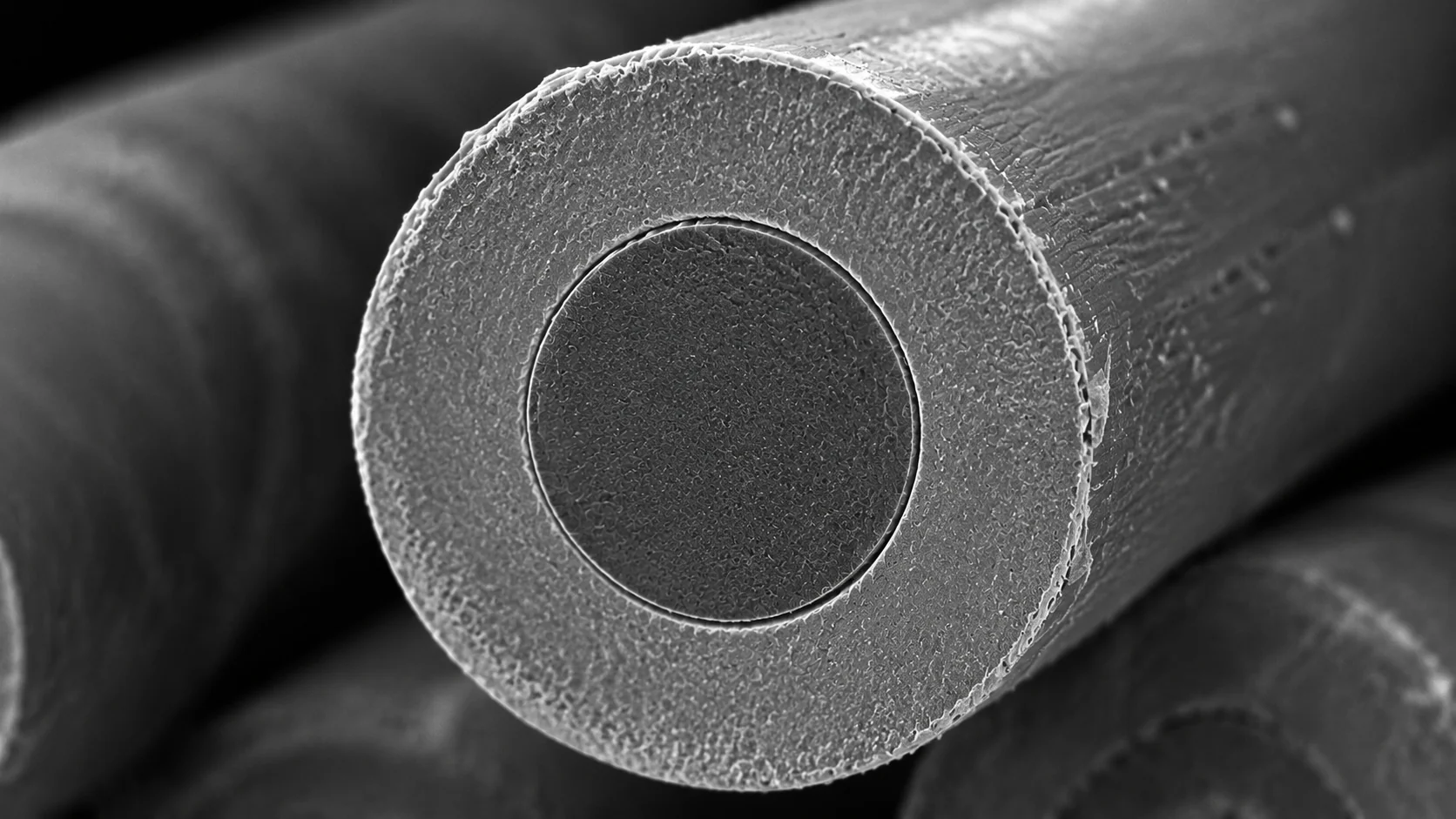
Bicomponent fibres — also called bico fibres — contain two distinct polymer components arranged in a defined cross-sectional geometry within a single filament. The two polymers are extruded simultaneously through a specialised spinneret and remain bonded throughout the fibre’s length.
The primary purpose of bicomponent fibre technology is to combine a low-melt outer component (sheath) with a high-strength inner component (core). When the web is thermally bonded, only the sheath melts. The core remains intact, preserving fibre strength while the sheath creates adhesive bond points across the web.
This mechanism allows manufacturers to produce nonwoven fabrics with higher loft, softer hand feel, better bond strength, and superior wet resilience compared to single-component fibres at the same basis weight.
Bicomponent Fibre Cross-Section Configurations
Bicomponent Fibre Nonwoven — Specifications and Options
Favourite Fab supplies bicomponent fibre nonwoven in sheath-core PE/PP and PE/PET configurations for hygiene and medical applications. Specifications below cover standard grades.
| Parameter | Specification | Detail |
|---|---|---|
| Fibre Configuration | Sheath-Core / Side-by-Side | Islands-in-sea available on development order |
| Polymer Combination | PE/PP, PE/PET, coPET/PET | PE sheath for low bond temperature; PET core for strength |
| Basis Weight | 12–50 gsm | Topsheet: 12–18 gsm; Coverstock: 20–30 gsm |
| Fibre Titre | 1.5–6.0 denier | Fine-denier (1.5–2.2 D) for soft hygiene applications |
| Bonding Temperature | 120–140°C (PE sheath) | Lower than PP-only; preserves core fibre integrity |
| Tensile Strength (MD) | ≥40 N/5cm at 20 gsm | Higher than equivalent single-component at same GSM |
| Surface Finish | Hydrophilic / Hydrophobic | Hydrophilic finish for topsheet; hydrophobic for backsheet |
| Roll Width | 1,600 mm standard | Slit widths from 200 mm available |
Applications in Hygiene and Medical Manufacturing
Bicomponent fibre technology delivers soft, strong, and thermally stable nonwovens that perform better than single-polymer fabrics in demanding hygiene and medical applications.
- Sanitary napkin and baby diaper topsheets: PE/PP sheath-core bico in 12–15 gsm provides ultra-soft skin contact with rapid fluid strike-through. See our PE/PP bico spunbond nonwoven for topsheet specifications.
- Diaper acquisition and distribution layers (ADL): side-by-side bico creates self-crimped lofty fibres that hold fluid capacity and rewet resistance.
- Surgical gown inner liners: soft-finish bico coverstocks improve wear comfort in surgical and isolation gown constructions.
- Feminine hygiene coverstock: hydrophilic-treated bico topsheets in panty liners and incontinence pads.
- Wipe substrates: islands-in-sea bico generates ultra-fine microfibres after sea component removal for premium wet wipe and cleaning cloth applications.
- Medical packaging: bicomponent spunbond provides sterile barrier performance with improved seal strength versus mono-component alternatives.
Bicomponent Technology Versus Single-Component Nonwoven
Single-component PP spunbond bonds through full fibre melting during calendering. This reduces fibre integrity at bond points and limits softness. Bicomponent sheath-core technology bonds only the outer PE sheath, leaving the PP or PET core intact. The result is a fabric with higher tensile strength, better loft retention, and noticeably softer hand feel — critical for skin-contact hygiene products.
For composite barrier fabrics, bicomponent spunbond outer layers in SMS composites improve both softness and bond strength simultaneously. For applications requiring an even finer fibre architecture, see PET/PA splittable bico which splits post-bonding into sub-denier fibres.
The full bicomponent product range is listed on our bicomponent nonwoven fabric manufacturer India page with certification details and export grades.
Why Source From Favourite Fab
- MOQ-friendly — suitable for small and large manufacturers
- Export-ready — ships raw materials to 50+ countries
- ISO certified manufacturing facility
- 10+ years supplying the hygiene and medical industry
- Custom specifications available on request
Pricing and MOQ
Bicomponent fibre nonwoven pricing reflects the additional complexity of dual-component spinning versus single-polymer production. PE/PP sheath-core in standard topsheet grades is priced competitively for hygiene volume customers. Fine-denier grades and custom hydrophilic finishes carry additional processing charges.
Minimum order quantities start from 500 kg for standard PE/PP configurations. Development grades and islands-in-sea configurations require higher MOQ. Contact the sales team with your required polymer combination, denier, GSM, and monthly volume for a precise quote.
How to Order
- Send your material requirements to sale@favouritehub.com
- Receive a quote and sample within 48 hours
- Confirm order and production begins
Frequently Asked Questions
What is bicomponent fibre technology in nonwoven fabric manufacturing?
Bicomponent fibre technology extrudes two polymers simultaneously through a single spinneret to create fibres with a defined dual-component cross-section. The most common configuration is sheath-core, where a low-melt sheath surrounds a high-strength core. This allows thermal bonding at lower temperatures while preserving fibre integrity and improving fabric softness and strength.
What is the difference between PE/PP and PE/PET bicomponent fibre?
PE/PP bico uses a polyethylene sheath over a polypropylene core. It is the most cost-effective configuration and is widely used in hygiene topsheets. PE/PET uses a polyethylene sheath over a polyethylene terephthalate core, offering higher tensile strength and better dimensional stability at elevated temperatures. PE/PET is preferred for medical gowns and technical applications requiring higher performance.
Why does bicomponent sheath-core nonwoven feel softer than standard PP spunbond?
In standard PP spunbond, the entire fibre must reach bonding temperature, causing fibres to partially melt and harden at bond points. In PE/PP sheath-core bico, only the PE sheath melts at ~130°C while the PP core stays solid. This produces a more flexible bond point and retains fibre loft — both of which contribute to a noticeably softer, more cloth-like feel.
Can bicomponent fibre nonwoven be treated for hydrophilic performance?
Yes. Both hydrophilic and hydrophobic surface finishes are applied during production. Hydrophilic-treated bicomponent nonwoven is used as the skin-contact topsheet in sanitary napkins and baby diapers — fluid passes quickly through the fabric to the absorbent core. The finish durability varies by formulation and number of fluid strikes.
What denier should I specify for a hygiene topsheet application?
For premium soft topsheets in sanitary napkins or baby diapers, specify 1.5–2.2 denier PE/PP sheath-core at 12–15 gsm with hydrophilic finish. Fine denier fibres create a softer, denser surface with better fluid distribution. Standard economy topsheets use 2.2–3.0 denier at 15–18 gsm. Share your strike-through time requirement and we will recommend the appropriate grade.
Does Favourite Fab supply bicomponent fibre nonwoven for export?
Yes. Bicomponent nonwoven is exported to customers in Southeast Asia, the Middle East, Africa, and Europe. Export documentation including test reports, Certificate of Origin, and compliance declarations are provided with each shipment. Rolls are packaged in moisture-barrier polyethylene film on export pallets for both sea and air freight.
Contact Favourite Fab
Email: sale@favouritehub.com
WhatsApp: +91-8800775462
Send your material specifications today for a same-day quote.

Gaurav Garg
I'm Gaurav Garg, CEO of Favourite Fab, a company on a mission to revolutionize the nonwoven industry with sustainable practices. We work hand-in-hand with manufacturers and suppliers who share our commitment to eco-friendly production. With a deep interest in textile innovation, I'm passionate about educating consumers about sustainable material options and their potential to transform the nonwoven landscape.


