

Hydrophilic Spunbond Nonwoven Fabric — Fast Strike-Through Hygiene Grade India
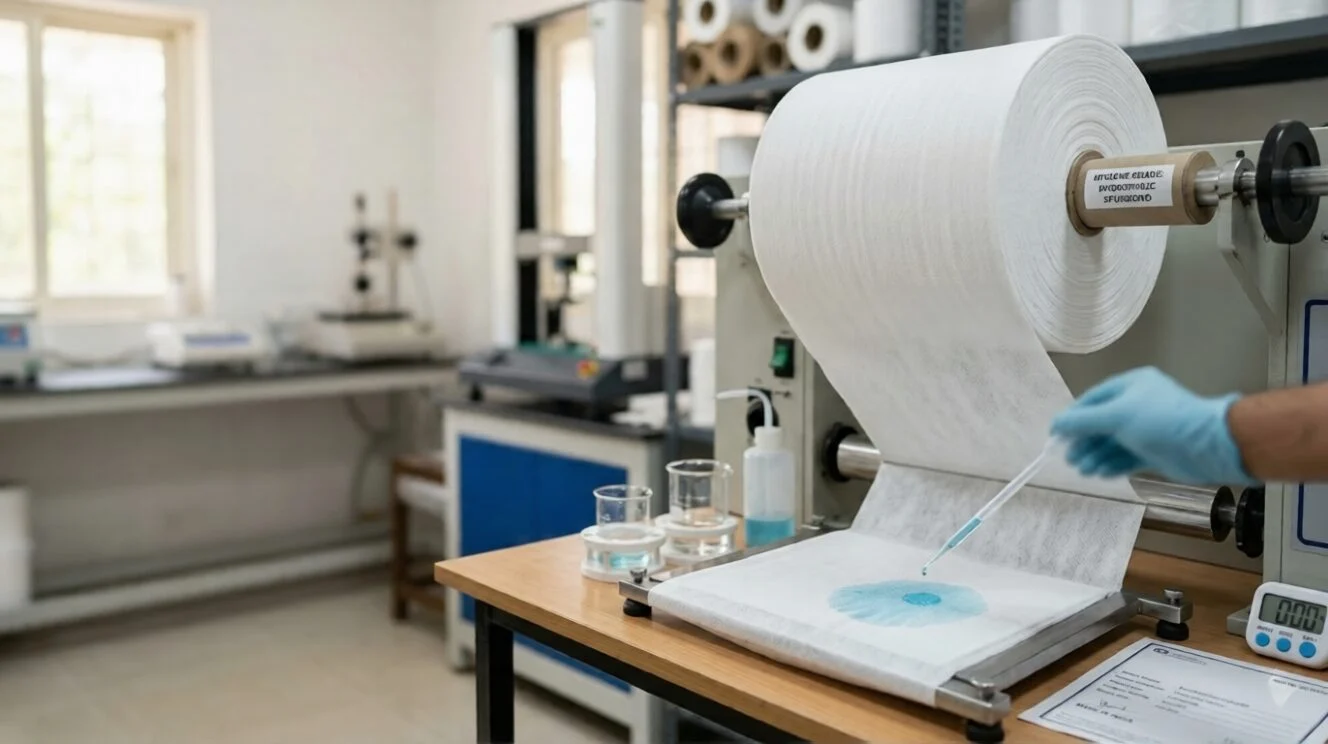
Hydrophilic spunbond nonwoven fabric is PP spunbond treated with a permanent hydrophilic finish — transforming naturally water-repellent polypropylene into a fast liquid-accepting topsheet material for hygiene products. Liquid strike-through time under 3 seconds (EDANA 150.3) is the key performance target. Used as the primary skin-contact topsheet in sanitary napkins, baby diaper coverstock, adult incontinence pads, and underpads. Favourite Fab supplies hydrophilic spunbond in 15–35 GSM — the most cost-effective hygiene topsheet solution.
Technical Specifications
| Parameter | Specification |
|---|---|
| GSM | 15–35 GSM |
| Fibre | PP spunbond with permanent hydrophilic finish |
| Strike-through | <3 sec (EDANA 150.3) |
| Rewet | <0.2g (EDANA 151.1) |
| Width | 160–260 cm |
| pH | 6.5–7.5 |
| MOQ | 500 kg |
Applications
Sanitary pad topsheet, baby diaper coverstock, adult incontinence topsheet, underpad facing, panty liner topsheet.
Source from Favourite Fab
Direct manufacturer Agra, India. Custom GSM/width. COA per batch. Sample 3–5 days. See: nonwoven fabric for hygiene products. Related: spunbond nonwoven fabric manufacturer India.
Frequently Asked Questions
What makes spunbond hydrophilic?
PP is inherently hydrophobic (water-repelling). Hydrophilic finish — typically a surfactant or permanent hydrophilic polymer coating — reduces surface tension so liquid spreads across and passes through the fabric in <3 seconds. Permanent finish survives product shelf life without loss of performance.
What is the difference between hydrophilic and standard PP spunbond topsheet?
Standard PP spunbond repels liquid — unsuitable as topsheet. Hydrophilic PP spunbond accepts liquid rapidly (<3 sec) and passes it to the absorbent core, keeping the skin-contact surface dry. Rewet <0.2g ensures dryness between absorption events.
What GSM is standard for sanitary pad topsheet?
15–20 GSM for ultra-thin pads. 20–25 GSM for standard pads. 25–30 GSM for overnight pads. Most commercial sanitary pads use 18–22 GSM hydrophilic spunbond as the cost-effective topsheet choice.
B2B Applications & End-Uses
Hydrophilic spunbond nonwoven fabric is a precision-engineered material where surface chemistry determines functional performance. Unlike standard PP spunbond — which repels water with a contact angle exceeding 110° — hydrophilic treated PP spunbond achieves a contact angle below 20°, enabling rapid, controlled fluid transfer essential in absorbent hygiene and medical applications.
The distinction between topical treatment and permanent surfactant grafting is commercially significant. Topically applied hydrophilic finishes wash out or diminish with repeated fluid contact, causing strike-through time to degrade over the product’s service life. Permanent grafting methods bond the hydrophilic agent to the polymer chain, maintaining EDANA ERT 150.5 strike-through performance below 1 second even after 5 standardised wash or saturation cycles. Buyers specifying hydrophilic nonwoven for products requiring repeat absorption performance — adult incontinence pads, reusable hygiene liners, high-absorbency surgical drapes — must confirm durability methodology before approving a supplier.
Primary B2B end-use sectors for Favourite Fab’s hydrophilic spunbond fabric include:
- Sanitary pad topsheet manufacturers — 15–25 GSM hydrophilic spunbond is the industry-standard topsheet substrate. Rapid strike-through and low rewet (EDANA ERT 151.3) are the two critical functional requirements. Our grades are validated against both parameters.
- Baby diaper and adult incontinence OEMs — Acquisition and distribution layer (ADL) and secondary topsheet applications where durable hydrophilicity across multiple insult cycles is a product durability claim.
- Hospital and surgical disposables converters — Medical bed sheets, surgical drapes, and patient gowns where single-use fluid management reduces cross-contamination risk. Hydrophilic spunbond at 30–40 GSM provides fluid absorption without the bulk of cotton-based alternatives.
- Medical device packaging — Sterile barrier systems requiring controlled porosity and predictable fluid behaviour under sterilisation conditions (EtO and gamma).
- Wound care dressing manufacturers — Secondary dressing layers where exudate management and patient skin comfort require a soft, rapid-wetting nonwoven interface.
Certifications & Quality Assurance
Hydrophilic performance claims require verifiable test data. Favourite Fab’s hydrophilic spunbond range is validated through the following quality assurance framework:
- EDANA ERT 150.5 — Strike-Through Time: Primary performance indicator. Results are documented per production lot with target <1 second. Testing simulates real-world fluid insult conditions using standardised synthetic urine at defined flow rate and volume.
- EDANA ERT 151.3 — Rewet: Secondary indicator measuring fluid return to the surface under load. Critical for topsheet applications where skin dryness is a product claim. Rewet values are included in COA for hygiene-grade shipments.
- Durability Verification — 5-Cycle Wash Protocol: Hydrophilic finish durability is validated by measuring strike-through time before and after 5 standardised saturation and drying cycles. Lots failing to maintain <1 second performance post-cycle are segregated and not released to hygiene-grade customers.
- GSM Uniformity (ISO 9073-1 / EDANA ERT 40.3): Basis weight controlled across the 12–40 GSM range with CV ≤4% within roll and lot-to-lot.
- Tensile Strength (ISO 9073-3): MD and CD tensile documented per lot. Critical for high-speed converting lines where web tension during unwinding can cause substrate failure.
- ISO 9001:2015 QMS: Full traceability from raw material batch to finished roll dispatch. COA issued per shipment with method references, results, and specification limits.
For customers requiring material safety documentation, our hydrophilic grades are supplied with REACH compliance declarations and surfactant component disclosure where required by the buyer’s regulatory framework.
More Questions Answered
What is the functional difference between durable and non-durable hydrophilic treatments for spunbond nonwoven?
Non-durable (topical) hydrophilic treatments apply a surfactant coating to the fibre surface. This coating provides rapid initial strike-through but gradually depletes with repeated fluid contact, friction, or washing, causing performance to degrade. Durable treatments chemically bond the hydrophilic agent to the polypropylene polymer structure, ensuring consistent strike-through performance across multiple absorption cycles. For single-use products with one fluid insult event, topical treatment is functionally adequate. For multi-insult products — adult incontinence pads, reusable liners, or high-capacity surgical drapes — durable hydrophilic treatment is the technically correct specification. Favourite Fab can supply both grades; our technical team can help you select the appropriate treatment level based on your product’s performance specification.
What GSM range is standard for sanitary pad topsheet versus hospital bed sheet applications?
Sanitary pad topsheet applications typically specify 15–25 GSM hydrophilic spunbond, where a balance between fluid acquisition speed, softness, and converting web tension is required. Thinner grades (12–15 GSM) are used in ultra-thin premium pad constructions where caliper reduction is a design objective. Hospital bed sheet and surgical drape applications generally require 30–40 GSM to provide adequate opacity, fluid containment, and mechanical handling strength in clinical environments. Favourite Fab stocks standard grades across the full 12–40 GSM range and can produce custom GSM to specification for volume orders requiring application-specific optimisation.
B2B Applications & End-Uses
Hydrophilic spunbond nonwoven fabric is a precision-engineered material where surface chemistry determines functional performance. Unlike standard PP spunbond — which repels water with a contact angle exceeding 110° — hydrophilic treated PP spunbond achieves a contact angle below 20°, enabling rapid, controlled fluid transfer essential in absorbent hygiene and medical applications.
The distinction between topical treatment and permanent surfactant grafting is commercially significant. Topically applied hydrophilic finishes wash out or diminish with repeated fluid contact, causing strike-through time to degrade over the product’s service life. Permanent grafting methods bond the hydrophilic agent to the polymer chain, maintaining EDANA ERT 150.5 strike-through performance below 1 second even after 5 standardised wash or saturation cycles. Buyers specifying hydrophilic nonwoven for products requiring repeat absorption performance — adult incontinence pads, reusable hygiene liners, high-absorbency surgical drapes — must confirm durability methodology before approving a supplier.
Primary B2B end-use sectors for Favourite Fab’s hydrophilic spunbond fabric include:
- Sanitary pad topsheet manufacturers — 15–25 GSM hydrophilic spunbond is the industry-standard topsheet substrate. Rapid strike-through and low rewet (EDANA ERT 151.3) are the two critical functional requirements. Our grades are validated against both parameters.
- Baby diaper and adult incontinence OEMs — Acquisition and distribution layer (ADL) and secondary topsheet applications where durable hydrophilicity across multiple insult cycles is a product durability claim.
- Hospital and surgical disposables converters — Medical bed sheets, surgical drapes, and patient gowns where single-use fluid management reduces cross-contamination risk. Hydrophilic spunbond at 30–40 GSM provides fluid absorption without the bulk of cotton-based alternatives.
- Medical device packaging — Sterile barrier systems requiring controlled porosity and predictable fluid behaviour under sterilisation conditions (EtO and gamma).
- Wound care dressing manufacturers — Secondary dressing layers where exudate management and patient skin comfort require a soft, rapid-wetting nonwoven interface.
Certifications & Quality Assurance
Hydrophilic performance claims require verifiable test data. Favourite Fab’s hydrophilic spunbond range is validated through the following quality assurance framework:
- EDANA ERT 150.5 — Strike-Through Time: Primary performance indicator. Results are documented per production lot with target <1 second. Testing simulates real-world fluid insult conditions using standardised synthetic urine at defined flow rate and volume.
- EDANA ERT 151.3 — Rewet: Secondary indicator measuring fluid return to the surface under load. Critical for topsheet applications where skin dryness is a product claim. Rewet values are included in COA for hygiene-grade shipments.
- Durability Verification — 5-Cycle Wash Protocol: Hydrophilic finish durability is validated by measuring strike-through time before and after 5 standardised saturation and drying cycles. Lots failing to maintain <1 second performance post-cycle are segregated and not released to hygiene-grade customers.
- GSM Uniformity (ISO 9073-1 / EDANA ERT 40.3): Basis weight controlled across the 12–40 GSM range with CV ≤4% within roll and lot-to-lot.
- Tensile Strength (ISO 9073-3): MD and CD tensile documented per lot. Critical for high-speed converting lines where web tension during unwinding can cause substrate failure.
- ISO 9001:2015 QMS: Full traceability from raw material batch to finished roll dispatch. COA issued per shipment with method references, results, and specification limits.
For customers requiring material safety documentation, our hydrophilic grades are supplied with REACH compliance declarations and surfactant component disclosure where required by the buyer’s regulatory framework.
More Questions Answered
What is the functional difference between durable and non-durable hydrophilic treatments for spunbond nonwoven?
Non-durable (topical) hydrophilic treatments apply a surfactant coating to the fibre surface. This coating provides rapid initial strike-through but gradually depletes with repeated fluid contact, friction, or washing, causing performance to degrade. Durable treatments chemically bond the hydrophilic agent to the polypropylene polymer structure, ensuring consistent strike-through performance across multiple absorption cycles. For single-use products with one fluid insult event, topical treatment is functionally adequate. For multi-insult products — adult incontinence pads, reusable liners, or high-capacity surgical drapes — durable hydrophilic treatment is the technically correct specification. Favourite Fab can supply both grades; our technical team can help you select the appropriate treatment level based on your product’s performance specification.
What GSM range is standard for sanitary pad topsheet versus hospital bed sheet applications?
Sanitary pad topsheet applications typically specify 15–25 GSM hydrophilic spunbond, where a balance between fluid acquisition speed, softness, and converting web tension is required. Thinner grades (12–15 GSM) are used in ultra-thin premium pad constructions where caliper reduction is a design objective. Hospital bed sheet and surgical drape applications generally require 30–40 GSM to provide adequate opacity, fluid containment, and mechanical handling strength in clinical environments. Favourite Fab stocks standard grades across the full 12–40 GSM range and can produce custom GSM to specification for volume orders requiring application-specific optimisation.
Related Hydrophilic Cluster Resources
- Master Pillar: Hydrophilic Non Woven Fabric Manufacturer India — production, grades (SS / SSS / SMS / HATB / spunlace), GSM matrix, B2B ordering.
- Application Pillar: Hydrophilic Top Sheet for Diapers and Hygiene Products — topsheet selection logic for baby diaper, sanitary napkin, adult incontinence, underpad.
- Process Pillar: Hydrophilic Hot Air Through Nonwoven Fabric — HATB / TAB lofty topsheet + ADL grades, bicomponent fibers, premium hygiene applications.

Gaurav Garg
I'm Gaurav Garg, CEO of Favourite Fab, a company on a mission to revolutionize the nonwoven industry with sustainable practices. We work hand-in-hand with manufacturers and suppliers who share our commitment to eco-friendly production. With a deep interest in textile innovation, I'm passionate about educating consumers about sustainable material options and their potential to transform the nonwoven landscape.


