

Hydrophobic Spunbond Nonwoven Fabric — Liquid Repellent Grade Manufacturer India
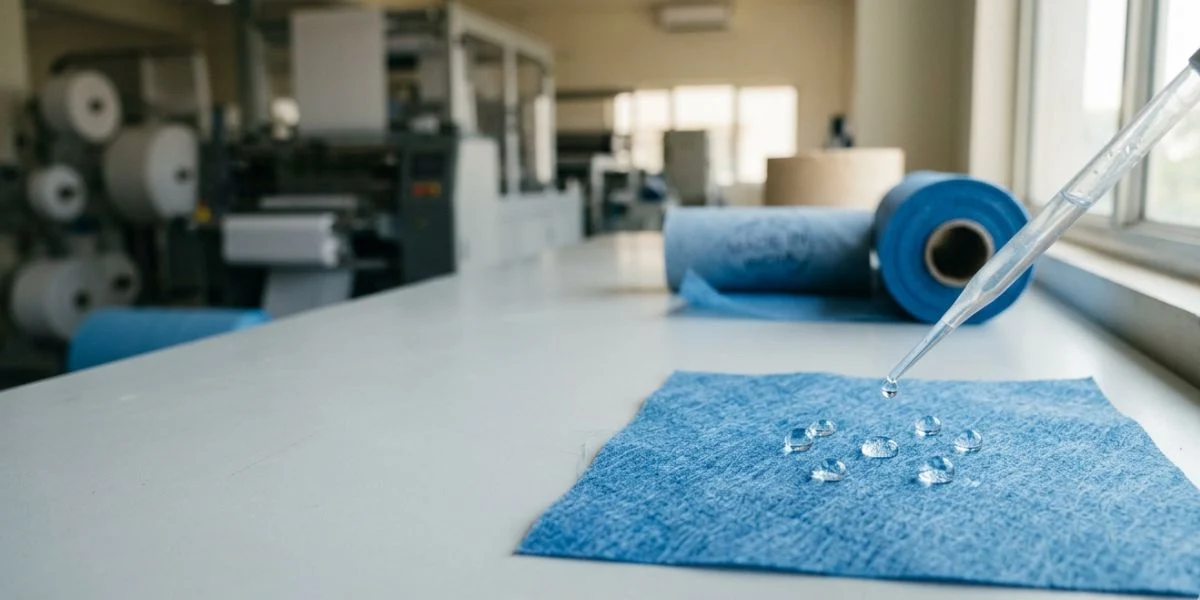
Hydrophobic spunbond nonwoven fabric retains PP’s natural liquid-repellent property — water and urine bead off the surface without penetrating. Used as the outer cover (garment-facing layer) of baby diapers and adult incontinence products, leg cuff barrier fabric, and outer layer of medical protective apparel. Hydrophobic spunbond keeps the outer surface dry and prevents rewet from the inside. Favourite Fab supplies natural hydrophobic PP spunbond in 15–60 GSM.
Technical Specifications
| Parameter | Specification |
|---|---|
| GSM | 15–60 GSM |
| Fibre | 100% PP spunbond, no hydrophilic treatment |
| Water repellency | Hydrostatic head 10–30 cmH₂O |
| Colour | White, plus custom masterbatch |
| Width | 160–260 cm |
| Soft finish | Optional — outer cover grade |
| MOQ | 500 kg |
Applications
Diaper outer backsheet nonwoven, leg cuff material, adult incontinence outer cover, medical gown outer layer, protective packaging.
Source from Favourite Fab
Direct manufacturer Agra, India. Custom GSM/width. COA per batch. Sample 3–5 days. See: spunbond nonwoven fabric manufacturer India. Related: nonwoven fabric for hygiene products.
Frequently Asked Questions
What is hydrophobic spunbond used for in diapers?
Hydrophobic PP spunbond is the outer cover (garment-facing) layer laminated to the PE backsheet film. It provides a cloth-like feel on the outside while the PE film provides liquid impermeability. Without this layer, diapers would have a plastic-feel exterior.
How is hydrophobic spunbond different from SMS?
Hydrophobic spunbond is a single layer — moderate liquid repellency (hydrostatic head 10–30 cmH₂O). SMS has a meltblown layer providing much higher barrier (20–70 cmH₂O) and BFE filtration. Hydrophobic spunbond for outer covers and leg cuffs; SMS for medical barrier applications.
Can hydrophobic spunbond be printed?
Yes. Flexographic printing available on hydrophobic PP spunbond for branded diaper outer cover designs. Custom colours and patterns. Minimum order 3,000 kg for printed grades.
B2B Applications & End-Uses
Hydrophobic spunbond nonwoven derives its liquid-repellent character from the intrinsic low surface energy of polypropylene (contact angle approximately 110° for untreated PP) combined, where enhanced repellency is required, with fluorocarbon or silicone finish treatments that raise the contact angle to above 130°. This surface energy differential is the technical basis for applications across medical, hygiene, agricultural, and industrial sectors where controlled liquid barrier performance is a primary design requirement.
Medical protective apparel — surgical gowns, isolation gowns, and coverall outer shells — represents the highest-specification hydrophobic spunbond application. The outer fabric layer must resist blood, body fluid, and aqueous chemical splash (AAMI PB70 Level 1–3 classification for the US market; EN 13795 for European hospital procurement). Hydrostatic head resistance, combined with breathability and acceptable drape for surgical team mobility, defines the specification window. SMS construction — with a spunbond outer providing hydrophobic barrier and mechanical strength, a meltblown core providing filtration and additional fluid barrier, and a soft spunbond inner — is the architecture used for AAMI Level 3 surgical gowns.
Hygiene product backsheet — the outer covering of baby diapers, adult incontinence products, and feminine hygiene pads — requires hydrophobic spunbond that is soft to touch (replacing the original crinkle PE film backsheet) while maintaining zero liquid strike-through. The cloth-like appearance and tactile quality of nonwoven backsheet is now the market standard for premium hygiene products in all tier-1 and tier-2 markets. Favourite Fab supplies backsheet nonwoven in widths to 3,200mm for high-speed diaper and napkin production lines.
Agricultural mulch film alternatives are an emerging application: hydrophobic PP spunbond at 30–50 GSM provides weed suppression through light blocking while allowing rain and irrigation water to penetrate to the soil surface — a characteristic traditional PE mulch film cannot provide. For greenhouse cultivation, hydrophobic spunbond as a crop cover allows rainfall through while blocking UV and reducing crop temperature variance. Industrial packaging liners, electronics component moisture-barrier packaging, and construction vapour control layers on walls and floors complete the end-use range.
Certifications & Quality Assurance
Hydrophobicity is characterised by three complementary test methods used depending on the application market: contact angle measurement (sessile drop method, ASTM D7334) for surface energy characterisation; AATCC 22 spray test (0–100 scale) for repellency rating of treated fabrics; and hydrostatic head (ISO 811 / EN 20811) for pressure-resistance performance in protective apparel and hygiene applications. Untreated PP spunbond achieves AATCC 22 ratings of 80–90; fluorocarbon-treated grades achieve 100 (no penetration or wetting).
For medical gown and coverall applications, fabric barrier performance is tested per ASTM F1670 (synthetic blood penetration resistance) and ASTM F1671 (viral penetration resistance) through accredited third-party laboratories, with results used to support AAMI PB70 level classification documentation. EN 13795 test panel results for surgical gown fabrics — including wet linting, cleanliness, and microbial barrier (BFE) — are available for EU hospital procurement compliance.
Agricultural-grade hydrophobic spunbond is tested for UV stabilisation longevity — minimum 12 months field exposure without tensile degradation exceeding 50% of original values — appropriate for multi-season crop cover applications. All hydrophobic grades are manufactured without restricted substances listed under EU REACH SVHC and comply with Oeko-Tex Standard 100 Class II (product in contact with skin, non-baby).
More Questions Answered
What is the difference between hydrophobic PP spunbond and PE film backsheet for baby diapers, and when is each preferred?
PE film backsheet is entirely liquid-impermeable and provides absolute leak prevention but has a plastic, crinkle hand that is considered inferior in premium markets. Hydrophobic nonwoven backsheet bonded to a thin PE film (laminate construction) delivers the same liquid barrier performance while providing a soft, cloth-like outer surface preferred in premium diaper segments and all modern branded products. The nonwoven-laminate construction is higher cost but commands higher retail margins; plain PE film remains preferred in economy-segment products where material cost is the primary procurement driver.
Can fluorocarbon-treated hydrophobic nonwoven be supplied in compliance with EU PFAS restrictions?
EU REACH restrictions on PFAS (per- and polyfluoroalkyl substances) are progressively restricting C8 and C6 fluorocarbon finishes, with broader PFAS restriction proposals under active regulatory development. Favourite Fab offers C0 (fluorine-free) durable water repellent (DWR) treated grades using silicone or hydrocarbon DWR chemistry as alternatives for customers requiring PFAS-free documentation. Performance of fluorine-free DWR grades is somewhat reduced versus C6 treatments under repeated hydrostatic stress, and application suitability should be confirmed with our technical team for your specific end-use requirement.
Related Hydrophilic Cluster Resources
- Master Pillar: Hydrophilic Non Woven Fabric Manufacturer India — production, grades (SS / SSS / SMS / HATB / spunlace), GSM matrix, B2B ordering.
- Application Pillar: Hydrophilic Top Sheet for Diapers and Hygiene Products — topsheet selection logic for baby diaper, sanitary napkin, adult incontinence, underpad.
- Process Pillar: Hydrophilic Hot Air Through Nonwoven Fabric — HATB / TAB lofty topsheet + ADL grades, bicomponent fibers, premium hygiene applications.

Gaurav Garg
I'm Gaurav Garg, CEO of Favourite Fab, a company on a mission to revolutionize the nonwoven industry with sustainable practices. We work hand-in-hand with manufacturers and suppliers who share our commitment to eco-friendly production. With a deep interest in textile innovation, I'm passionate about educating consumers about sustainable material options and their potential to transform the nonwoven landscape.


