

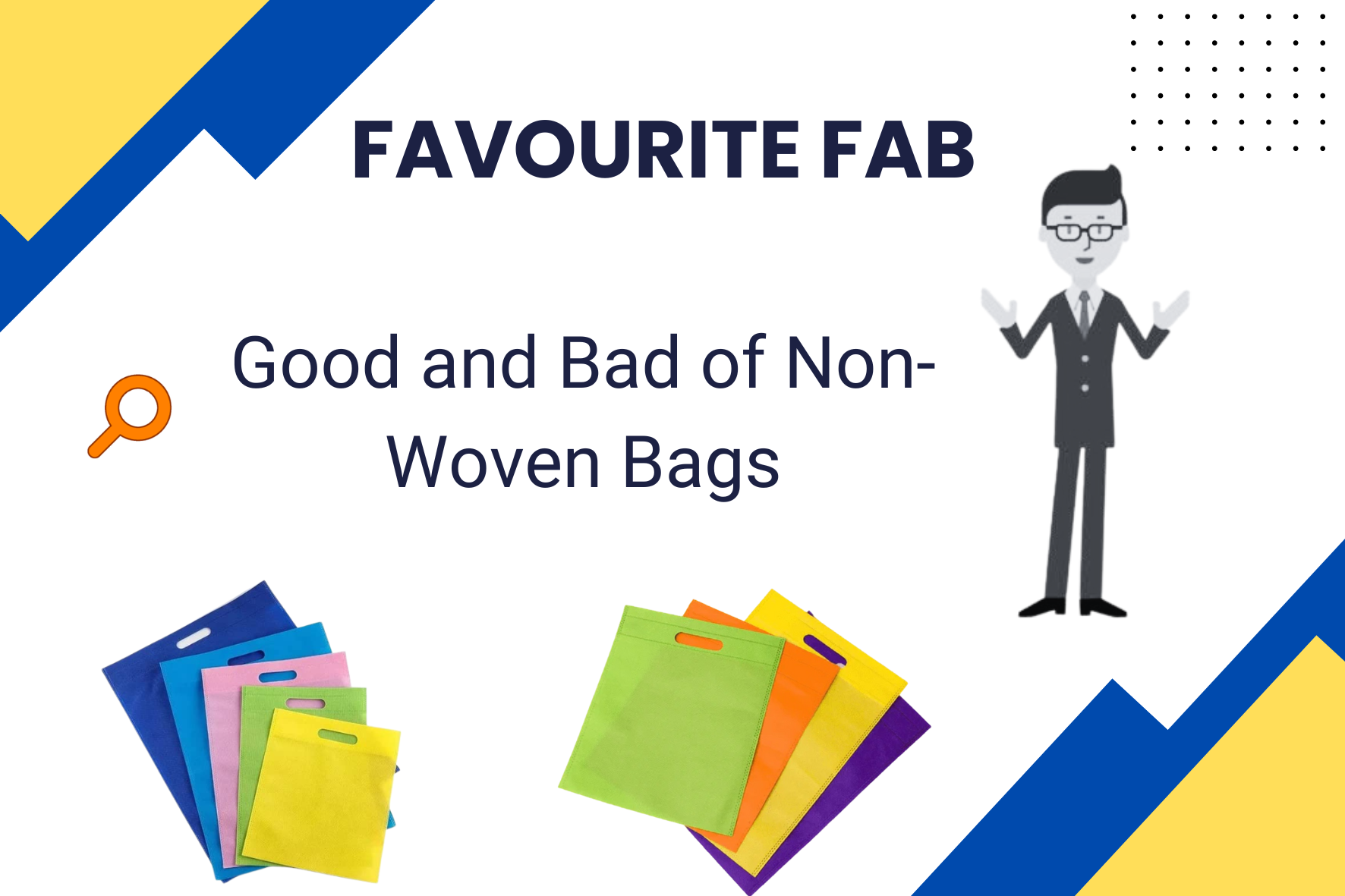
Non woven bags are lightweight, reusable carry bags made from PP spunbond nonwoven fabric. The raw material is PP spunbond fabric supplied in rolls — typically 50–100 GSM — to bag converters who cut and stitch D-cut, W-cut, and loop-handle bags. Favourite Fab manufactures and supplies these rolls from Agra, India, with custom widths from 10 cm to 320 cm, in any colour, with or without lamination. B2B wholesale supply with TDS and COA on every consignment. Request a sample roll today.
What Is Non Woven Bag Raw Material?
PP spunbond fabric is the primary non woven bag raw material used by bag converters across India. It is manufactured by extruding polypropylene filaments, bonding them thermally under controlled pressure — no weaving or knitting involved. The resulting fabric is lightweight, tear-resistant, and water-repellent, with a cloth-like texture that makes it suitable for reusable carry bags in retail, FMCG, pharma, garment, and industrial packaging applications.
Unlike the finished bag, which is the converter’s end-product, bag makers purchase non woven fabric in roll form and run it through semi-automatic or fully automatic bag-making machines to produce D-cut, W-cut, loop-handle, and box bags. The key properties that drive raw material selection are:
- Basis weight (GSM) — governs bag strength, load capacity, and cost per metre
- Roll width — determines how many bag panels can be cut per pass, directly affecting machine yield
- Colour — available in solid inline-dyed colours or white for post-conversion printing
- Finish — raw spunbond, embossed, or BOPP-laminated (for premium and waterproof bag styles)
- Polymer grade — virgin PP for food-safe and export applications; recycled-content grades for cost-sensitive domestic use
Spunbond PP is the dominant choice for carry bags. SMS (spunbond-meltblown-spunbond) fabric is occasionally used where additional liquid-barrier properties are required, though it is more common in medical and hygiene applications. Learn more about fabric construction at Favourite Fab’s spunbond manufacturing page.
Fabric Types & GSM Guide for Bags
Selecting the correct GSM and width is the most critical purchasing decision for a bag converter. Under-specifying GSM leads to bag failures at the stitch line; over-specifying adds unnecessary material cost. The table below is a practical reference for standard bag types:
| Bag Type | Recommended GSM | Typical Roll Width | Common Application |
|---|---|---|---|
| D-cut (small retail) | 50–60 GSM | 10–60 cm | Grocery, pharmacy, stationery |
| D-cut (heavy load) | 65–70 GSM | 30–70 cm | FMCG packs, supermarket |
| W-cut (mid-size) | 60–80 GSM | 40–100 cm | Garment, gifting, FMCG |
| W-cut (industrial) | 90–100 GSM | 60–200 cm | Hardware, agri-input, industrial |
| Loop-handle / Box bag | 80–100 GSM | 60–120 cm | Premium retail, gifting, apparel |
| Laminated (BOPP) bag | 70–90 GSM + film | 40–120 cm | Premium carry, cosmetics, export |
W-cut bags are particularly versatile for industrial buyers. The W-shaped die-cut at the top provides a wider mouth opening, making them suitable for bulkier items — hardware components, seed packets, agri-inputs — and they are easier to load on automated packing lines. W-cut bag fabric is typically supplied at 60–100 GSM with a roll width matched precisely to the bag-making machine’s working width.
D-cut bags (punched handle) are the most common format for domestic retail and pharma. Their handles are integral to the fabric sheet and punched out by the bag machine, so precise GSM consistency across the roll batch is critical to avoid handle tear-outs.
Browse our non woven carry bag fabric range or view all products to explore available configurations.
Wholesale Pricing Factors
Favourite Fab offers competitive wholesale pricing on all non woven bag raw material rolls. Several factors influence the landed cost per kg or per metre; understanding them helps procurement teams evaluate quotes accurately and optimise their sourcing strategy.
1. GSM
Higher GSM means more polymer per square metre. A 100 GSM roll costs more per metre than a 50 GSM roll of equal width, but may cost less per finished bag if load-bearing requirements allow thicker walls without rejects. Always evaluate cost per saleable bag, not cost per kg in isolation.
2. Roll Width
Custom slit widths are available but carry a minor conversion charge. Standard widths (e.g., 40, 60, 80, 100, 120, 160 cm) ship faster at lower minimum order quantities. Wider rolls suited for industrial W-cut bags or loop-handle bags are priced per running metre.
3. Colour
White and natural (undyed) fabric is the lowest cost option. Single solid colours — black, green, blue, red — add dye cost but are available as standard stocked items. Custom Pantone-matched shades are produced to order with a minimum quantity per batch.
4. Order Quantity (MOQ)
Wholesale pricing follows a tiered structure. Larger orders attract better per-kg rates. Standard colour rolls typically carry a 500 kg MOQ; custom colours may require 1,000 kg per colour variant. Established repeat buyers may negotiate flexible MOQs with their account manager.
5. Lamination
BOPP-laminated fabric (glossy or matte finish) commands a higher per-metre price due to the additional extrusion coating step. Laminated rolls are used for premium bag styles and export bags where surface aesthetics and water resistance are paramount.
6. Certifications
REACH compliance, OKO-TEX Standard 100, or food-contact documentation add marginal cost but are often mandatory for export orders and large institutional or retail chain buyers. Request the relevant certificates at the time of enquiry.
Note: Favourite Fab does not publish specific INR price lists online as pricing is volume and specification-dependent. Contact the sales team for a customised quotation.
Printing Options — Screen vs Digital
Bag converters regularly need to advise their own clients on print options. Most fabric printing for non woven carry bags happens at the converter’s end — on finished bags — though Favourite Fab can supply pre-printed rolls for certain formats. Understanding both methods helps you specify the right supply accordingly.
Screen Printing
Screen printing (silkscreen) is the dominant method for volume non woven bag decoration in India. Ink is forced through a mesh screen stencil, one colour layer at a time, directly onto the bag surface.
- Best for: Runs of 500+ bags per design; bold 1–4 colour logos; solid fills and block text
- Advantages: Low per-unit ink cost at scale; excellent ink adhesion to PP spunbond; opaque coverage on coloured backgrounds
- Limitations: Separate screen required per colour; photorealistic gradients require more screens and increase setup cost; minimum run size makes it uneconomical for short SKU runs
- Recommended fabric: White or light-solid 60–80 GSM spunbond without embossing (embossed texture can cause ink skip)
Digital Printing (Inkjet on PP)
Digital printing applies ink via inkjet heads directly onto the fabric or finished bag — no screens required.
- Best for: Short runs and sampling; full-colour photorealistic artwork; designs with gradients, photographs, or complex artwork; rapid design changeovers
- Advantages: Zero setup cost; unlimited colour depth; fast proofing turnaround
- Limitations: Higher per-unit ink cost at volume; ink adhesion depends on corona treatment of the fabric surface; not cost-competitive against screen printing at runs above 1,000–2,000 bags
- Recommended fabric: Corona-treated white spunbond, 60–80 GSM, smooth finish
For most B2B converters supplying branded carry bags to domestic FMCG or retail clients, screen printing on white 60–80 GSM spunbond is the standard workflow. Digital printing suits sampling, promotional short runs, or situations with frequent SKU artwork changes.
Eco-Friendly & Biodegradable Considerations
PP spunbond non woven bag raw material is petroleum-derived and is not inherently biodegradable. However, its environmental profile is more nuanced than a simple “plastic = bad” assessment — an important point for bag converters selling to eco-conscious retail or institutional buyers.
Life-Cycle Advantage
Life-cycle analysis studies consistently show that a reusable non woven bag, used 20–50+ times, has a significantly lower per-use carbon footprint than a single-use LDPE plastic bag. The key is the reuse rate — a non woven bag used only once or twice does not deliver its environmental payback.
Recyclability
PP (polypropylene, resin identification code #5) is technically recyclable. Organised PP recycling infrastructure exists in major Indian cities. Bag manufacturers and brands communicating recyclability claims should ensure the finished bag is mono-material PP (handles, labels, and closures in compatible polymers).
Biodegradable and Oxo-Degradable Variants
Some suppliers offer oxo-biodegradable (d2w additive) PP fabric. These materials are contested under India’s Plastic Waste Management Rules 2022 and the EU’s single-use plastics directives, as oxo-degradation accelerates fragmentation into microplastics rather than true mineralisation. Verify the regulatory status in your target market before specifying these variants.
EPR Compliance
Under India’s Plastic Waste Management Rules 2022, manufacturers and importers of plastic carry bags may be subject to Extended Producer Responsibility (EPR) registration. Bag converters buying raw fabric rolls should confirm the classification of their finished product with their legal/compliance team. Favourite Fab can supply polymer declarations and material certifications to support your EPR documentation.
Why Source From Favourite Fab
Favourite Fab is an Agra-based PP spunbond nonwoven fabric manufacturer supplying bag converters, packaging firms, and industrial users across India and internationally. Here is what differentiates us as a raw material partner for bag production:
- Custom widths on-site: Slitting capability from 10 cm to 320 cm eliminates width wastage in your bag-making process — you receive rolls cut to your machine’s exact working width
- Colour consistency: Pantone-matched inline-dyed batches; Delta-E colour documentation available on request for brand-critical projects
- Documentation on every consignment: Technical Data Sheet (TDS), Certificate of Analysis (COA), GST invoice with HSN code, and MSDS are standard — not optional
- Flexible MOQ for repeat buyers: Established accounts benefit from flexible minimum orders that suit seasonal demand patterns
- Consistent GSM accuracy: Each batch is weighed and documented; weight variation is held within ±3% of stated GSM — critical for automated bag machine settings
- Pan-India delivery: FCA Agra with transport arrangements available to converter facilities across India
Read more about our manufacturing capabilities on the non woven fabric manufacturer page or explore our full non woven fabric product range.
How to Order Non Woven Bag Raw Material
Sample rolls (minimum 1 kg per colour and GSM variant) are available to qualified bag converters on request. For a bulk quotation, contact the sales team with the following details: required GSM, roll width, colour (RAL/Pantone reference if applicable), monthly quantity, bag type (D-cut / W-cut / loop-handle), and any certification requirements.
- Email: sale@favouritehub.com
- WhatsApp: +91 88007 75462
- Contact form: Contact Us
Standard turnaround for stocked colours: 7–10 business days from order confirmation. Custom Pantone colours: 15–21 days. Export documentation (e-BRC, packing list, COO) available on request.
Frequently Asked Questions
What GSM is used for D-cut non woven bags?
D-cut bags are most commonly made from 50–60 GSM PP spunbond fabric. For heavier-load D-cut formats — pharmacy packs, FMCG multipacks — converters typically use 65–70 GSM to reduce handle tear-out rates. Favourite Fab supplies both ranges in standard and custom widths.
What roll width do I need for W-cut bag production?
The required fabric roll width for W-cut bags depends on your finished bag width and the number of lanes your bag-making machine runs simultaneously. As a rule, single-lane W-cut bag machines use fabric widths of 40–100 cm; multi-lane machines may need wider rolls up to 200 cm. Contact Favourite Fab’s technical team with your machine model and bag dimensions for an exact width recommendation.
Can I get pre-printed non woven bag raw material rolls?
Yes. Favourite Fab supplies inline-dyed solid-colour rolls and can arrange rotary or screen-printed rolls for select designs with sufficient order volume. For most bag converters, the standard workflow is to purchase plain or solid-colour rolls and print on finished bags using your own or a contract printing facility.
What is the HSN code and GST rate for non woven bag fabric?
PP spunbond nonwoven fabric for bag-making typically classifies under HSN 5603 (nonwovens, whether or not impregnated, coated, covered or laminated) and currently attracts 12% GST. Verify the applicable HSN code and rate against the current CBIC notification before filing, as rates may be revised.
What is the difference between laminated and non-laminated non woven bag fabric?
Non-laminated (raw) spunbond fabric is used for standard carry bags — it is lighter, lower cost, and suitable for screen or digital printing. Laminated fabric has a BOPP film coating bonded to one or both surfaces, giving a glossy or matte finish with higher water resistance and a premium look-and-feel. Laminated rolls cost more per metre but command higher end-bag selling prices in premium retail and export markets.
What is the minimum order quantity (MOQ) for non woven bag raw material from Favourite Fab?
The standard MOQ for custom colour or custom width rolls is 500 kg per SKU (colour + GSM + width combination). Sample rolls of 1–5 kg are available for approved buyers to run machine trials before committing to full orders. Standard white and black rolls may be available at lower MOQ for established customers — contact the sales team to confirm current stock positions.

Gaurav Garg
I'm Gaurav Garg, CEO of Favourite Fab, a company on a mission to revolutionize the nonwoven industry with sustainable practices. We work hand-in-hand with manufacturers and suppliers who share our commitment to eco-friendly production. With a deep interest in textile innovation, I'm passionate about educating consumers about sustainable material options and their potential to transform the nonwoven landscape.


