

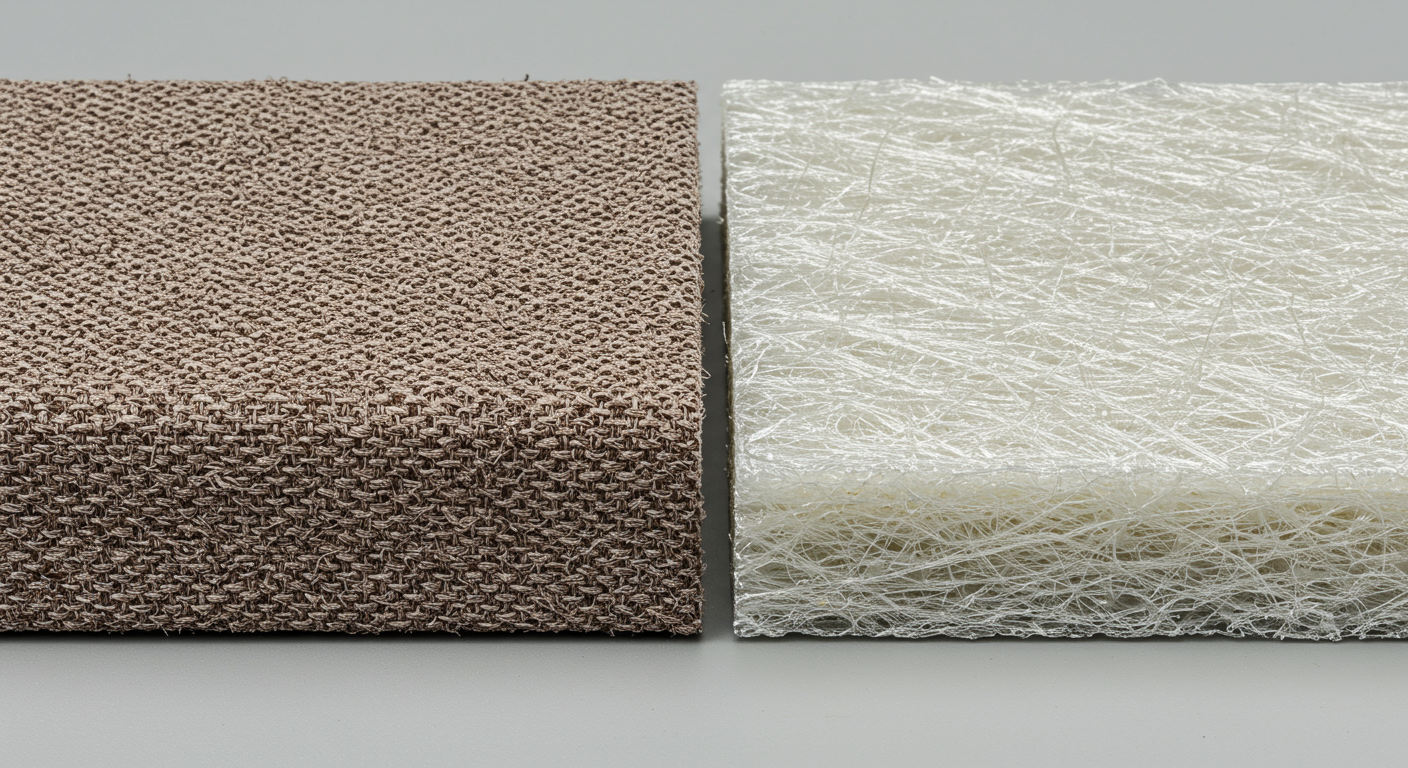
Choosing the right air filter fabric is crucial for maintaining optimal air quality in any commercial environment. Whether you’re managing a large HVAC system, manufacturing automotive components, or operating a cleanroom, the filtration media you select directly impacts efficiency, air quality, and, ultimately, your bottom line.
Two of the most common types of filter fabric are synthetic and fiberglass. But which one is best for your specific application? This guide from Favourite Fab, a leading air filter fabric supplier in India, will compare these materials across key performance indicators.
Understanding the Basics: What are Synthetic and Fiberglass Air Filter Fabrics?
Synthetic Air Filter Fabric
Synthetic air filter fabric encompasses a broad range of materials, typically made from polymers like:
- Polyester air filter fabric: Durable, moisture-resistant, and cost-effective.
- Polypropylene air filter fabric: Excellent chemical resistance.
- Non-woven air filter fabric: Bonded fibers for versatile filtration.
- PTFE air filter fabric: High-performance, chemical-resistant, and high-temperature tolerance.
- Activated carbon filter fabric: Absorbs odors, gases, and VOCs.
Fiberglass Air Filter Fabric
Fiberglass air filter fabric is made from fine glass fibers, spun into a mat-like structure. It’s cost-effective but has some limitations compared to modern synthetic options.
Key Performance Indicators: A Head-to-Head Comparison
Filtration Efficiency and MERV Rating
- Synthetic: Can achieve high MERV ratings (MERV 13+), offering better filtration for small particles.
- Fiberglass: Typically lower MERV ratings (MERV 1-4), effective for larger particles but not smaller contaminants.
Air Permeability and Pressure Drop
- Synthetic: Optimized airflow with lower energy consumption.
- Fiberglass: Can lead to higher energy costs due to increased resistance.
Dust Holding Capacity
- Synthetic: Longer lifespan due to high dust-holding capacity.
- Fiberglass: Requires more frequent replacement.
Durability and Moisture Resistance
- Synthetic: Resistant to moisture and wear.
- Fiberglass: Can deteriorate in humid conditions.
Cost
- Synthetic: Higher initial cost, but lower long-term expenses.
- Fiberglass: Lower upfront cost but higher maintenance costs.
Choosing the Right Fabric for Your Application
- HVAC Systems: Synthetic fabrics with appropriate MERV ratings.
- Automotive: Synthetic non-wovens for durability.
- Industrial: PTFE and activated carbon for specialized filtration.
- Cleanrooms: High-MERV synthetic fabrics.
Contact Favourite Fab
For high-quality air filter fabrics, contact Favourite Fab:
Email: sale@favouritehub.com
WhatsApp: +91 8800775462
Frequently Asked Questions (FAQ)
What is the best fabric for air filters?
Synthetic fabrics like polyester and polypropylene provide the best balance of efficiency, durability, and cost-effectiveness.
What is a fabric air filter?
A fabric air filter uses woven or non-woven fabric to capture airborne particles.
Where can I buy air filter fabric?
Favourite Fab supplies high-quality air filter fabric across India and internationally. Contact us for pricing and availability.

Gaurav Garg
I'm Gaurav Garg, CEO of Favourite Fab, a company on a mission to revolutionize the nonwoven industry with sustainable practices. We work hand-in-hand with manufacturers and suppliers who share our commitment to eco-friendly production. With a deep interest in textile innovation, I'm passionate about educating consumers about sustainable material options and their potential to transform the nonwoven landscape.


