
Sustainable Non Woven Materials in India: Eco-Friendly Options for Businesses
In the wake of growing environmental concerns, businesses worldwide are transitioning towards sustainable practices. Non-woven materials have emerged as a beacon of eco-friendliness in various industries. In India, where the demand for eco-friendly products is on the rise, non-woven materials are transforming the way businesses approach sustainability. Let’s explore how these materials are paving the way for a greener future and why they are the ideal choice for businesses looking to adopt sustainable practices.
Understanding Non-Woven Materials
Non-woven materials are engineered fabrics created by bonding fibers through mechanical, chemical, or thermal processes. Unlike traditional woven textiles, non-woven fabrics do not require weaving or knitting, making them a more cost-effective and versatile option. These materials are commonly used in industries such as healthcare, agriculture, packaging, and fashion due to their lightweight, durable, and customizable nature.
Why Choose Sustainable Non-Woven Materials?
- Eco-Friendly Composition: Sustainable non-woven materials are often made from biodegradable or recyclable fibers, reducing their environmental impact.
- Energy Efficiency: The production process of non-woven materials consumes less energy compared to traditional textiles, making it a greener manufacturing option.
- Customizability: Businesses can customize non-woven materials to meet specific needs, from size and thickness to colors and branding.
- Reduced Waste: Non-woven materials can be reused and recycled, contributing to a circular economy.
Applications of Non-Woven Materials in India
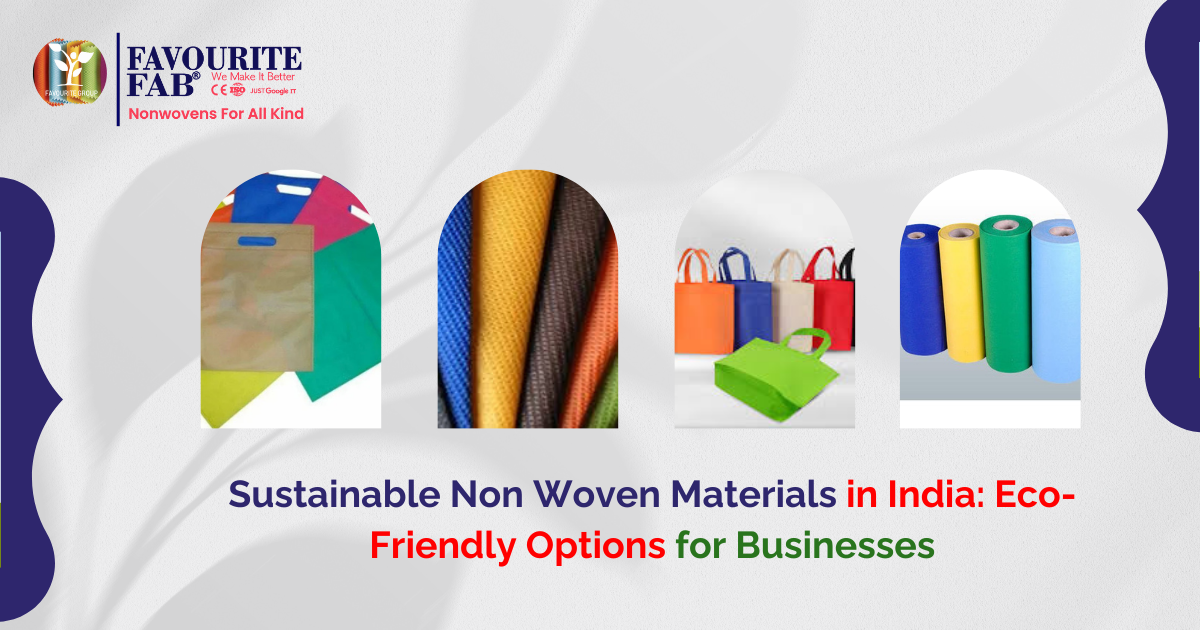
- Retail and Packaging: Non-woven bags are a popular alternative to plastic bags, especially in retail and packaging industries. They are sturdy, reusable, and environmentally friendly, making them a preferred choice for businesses and consumers alike.
- Healthcare: Non-woven fabrics are extensively used in medical applications, such as surgical gowns, masks, and disposable gloves. Their hygienic properties and disposability make them indispensable in the healthcare sector.
- Agriculture: Non-woven materials are used in crop covers, mulch fabrics, and seedbed protection, helping farmers improve yield while minimizing environmental impact.
- Fashion and Lifestyle: Non-woven materials are gaining traction in the fashion industry for creating trendy, sustainable products such as tote bags, shoe covers, and promotional items.
Key Features of Sustainable Non-Woven Materials
- Durability: Designed to withstand repeated use without compromising quality.
- Biodegradability: Many non-woven fabrics decompose naturally, leaving no harmful residues.
- Lightweight: Easy to transport and handle, reducing logistical costs and carbon footprint.
- Cost-Effective: Affordable production costs make them an economical choice for businesses.
Adopting Non-Woven Materials: A Step Towards Sustainability
India’s push for sustainable alternatives is driven by initiatives like the ban on single-use plastics and the rising awareness of environmental conservation. Businesses adopting non-woven materials not only contribute to this cause but also enhance their brand image as eco-conscious entities.
Choosing the Right Supplier
Partnering with a reliable supplier is crucial for ensuring the quality and sustainability of non-woven materials. Companies like Favourite Fab specialize in manufacturing premium non-woven products that align with eco-friendly practices. With customizable options and industry expertise, Favourite Fab can help businesses transition to sustainable solutions seamlessly.
Conclusion
The shift towards sustainable non-woven materials in India signifies a promising step towards a greener future. By embracing these eco-friendly options, businesses can play a pivotal role in reducing environmental impact while catering to the growing demand for sustainable products. Whether it’s retail, healthcare, or agriculture, non-woven materials offer versatile, cost-effective, and environmentally responsible solutions for modern businesses.

Gaurav Garg
I'm Gaurav Garg, CEO of Favourite Fab, a company on a mission to revolutionize the nonwoven industry with sustainable practices. We work hand-in-hand with manufacturers and suppliers who share our commitment to eco-friendly production. With a deep interest in textile innovation, I'm passionate about educating consumers about sustainable material options and their potential to transform the nonwoven landscape.


