
Introduction
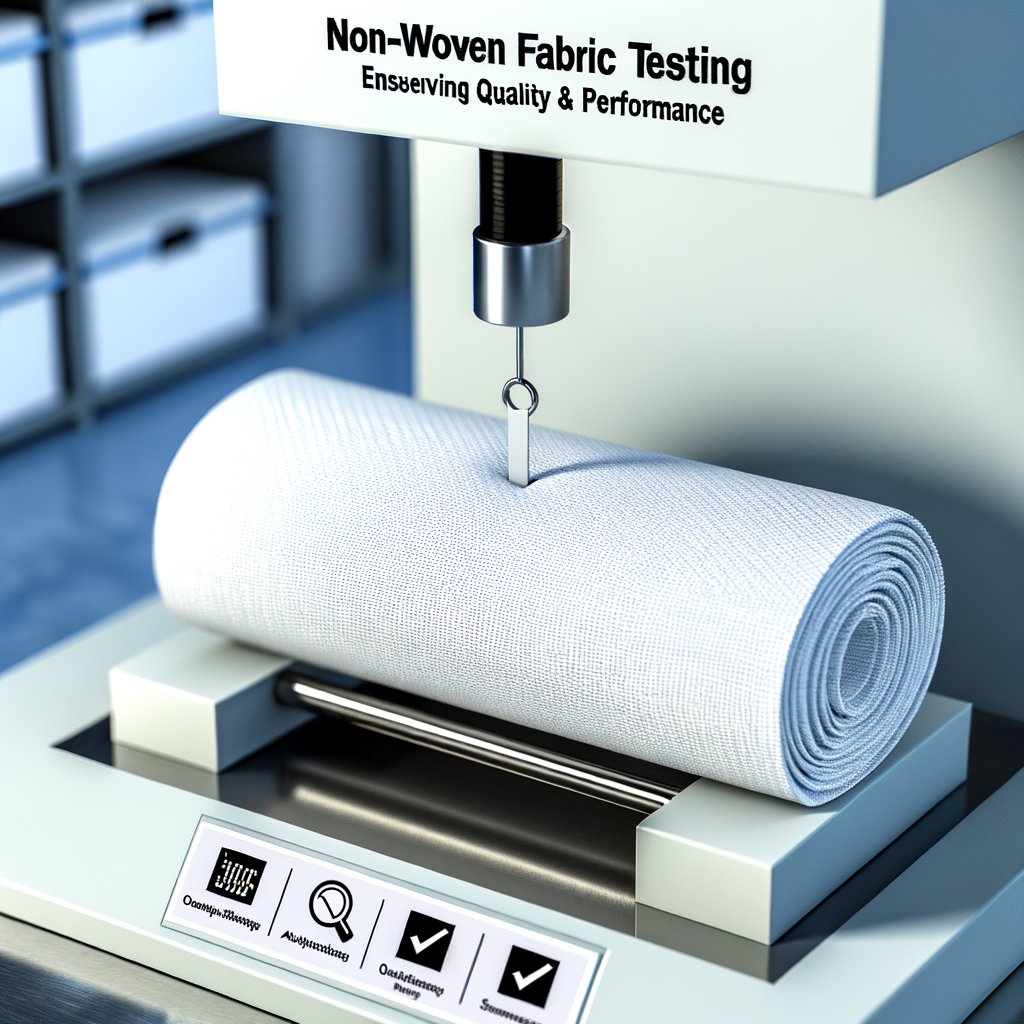
Are you curious about non-woven fabrics and how their quality is ensured? This comprehensive guide explores the world of non-woven fabric testing, covering various methods, their significance, and the standards governing them. Understanding these tests is crucial for ensuring the performance and reliability of non-woven fabrics.
Understanding Non-Woven Fabrics: A Quick Overview
Before diving into testing methods, it is important to understand what non-woven fabrics are. Unlike woven or knitted fabrics, non-wovens are made directly from fibers bonded through chemical, mechanical, thermal, or solvent treatments. This unique construction gives them distinct properties, making specialized testing essential.
Importance of Non-Woven Fabric Testing
Non-woven fabric testing is crucial for several reasons:
1. Quality Control
- Identifies defects early in production.
- Ensures the fabric meets industry standards.
2. Performance Evaluation
- Assesses properties such as strength, absorbency, and filtration efficiency.
- Confirms suitability for specific applications.
3. Compliance with Regulations
- Ensures adherence to industry standards in medical, hygiene, and automotive sectors.
4. Product Development
- Helps in the research and development of new materials.
5. Customer Satisfaction
- Ensures consistent quality and reliability in products.
Common Non-Woven Fabric Test Methods
A variety of tests are used to evaluate non-woven fabrics, depending on their intended use. Below are some of the most common methods:
1. Basis Weight (Grammage) Test
- Measures the fabric’s weight per unit area (grams per square meter, GSM).
- Indicates fabric density and thickness.
2. Tensile Strength Test
- Determines fabric resistance to breaking under tension.
- Involves pulling a sample until it breaks.
3. Tear Resistance Test
- Assesses the force required to propagate an existing tear.
- Uses methods such as the Elmendorf tear test.
4. Air Permeability Test
- Measures how easily air passes through the fabric.
- Important for filtration and breathable applications.
5. Water Resistance/Repellency Test
- Evaluates the fabric’s ability to resist water penetration.
- Common methods include spray, hydrostatic pressure, and impact penetration tests.
6. Absorbency Test
- Measures the fabric’s capacity to absorb liquids.
- Crucial for applications like wipes, diapers, and medical dressings.
7. Filtration Efficiency Test
- Assesses the fabric’s ability to filter particles from air or liquids.
- Uses sophisticated equipment and standardized test particles.
8. Abrasion Resistance Test
- Determines the fabric’s resistance to wear and tear from rubbing.
- Simulates different types of abrasion.
9. Bursting Strength Test
- Measures the force required to rupture the fabric under pressure.
10. Flammability Test
- Determines how easily the fabric ignites and burns.
- Essential for safety in various applications.
Standards for Non-Woven Fabric Testing
Several organizations develop standards for non-woven fabric testing, ensuring consistency and reliability. Key organizations include:
- INDA (Association of the Nonwoven Fabrics Industry) – Publishes test methods specifically for non-wovens.
- EDANA (European Disposables and Nonwovens Association) – Develops test methods for the non-woven industry.
- ASTM International (American Society for Testing and Materials) – Covers various material properties and testing procedures.
- ISO (International Organization for Standardization) – Establishes international standards for textiles and non-wovens.
Favourite Fab: Your Partner in Non-Woven Excellence
At Favourite Fab, we understand the importance of non-woven fabric testing. Our commitment to quality ensures that our fabrics meet stringent industry standards. Using advanced testing equipment and rigorous quality control, we guarantee superior performance.
We offer a diverse range of non-woven fabrics for various applications and continuously innovate to provide customized solutions tailored to your needs.
Contact Us
Ready to discuss your non-woven fabric needs?
- Email: sale@favouritehub.com
- WhatsApp: +91-8800775462
Our experts are ready to provide technical support and help you choose the right non-woven fabric for your application.
Frequently Asked Questions (FAQ)
Q1: What is the difference between woven and non-woven fabric?
A1: Woven fabrics are made by interlacing yarns, while non-woven fabrics are made directly from bonded fibers, giving them distinct properties.
Q2: What is GSM in non-woven fabric?
A2: GSM (Grams per Square Meter) measures fabric weight per unit area, indicating its density and thickness.
Q3: Why are there different test methods for non-woven fabrics?
A3: Different applications require different properties, necessitating various tests to assess relevant characteristics.
Q4: How do I choose the right non-woven fabric for my needs?
A4: Consider factors like strength, absorbency, and filtration efficiency. Contact Favourite Fab for expert guidance.
Q5: What tests determine fabric quality?
A5: Basis weight, tensile strength, and tear resistance are key indicators. Specific tests depend on the fabric’s application.
Q6: How do you test non-woven fabric strength?
A6: Strength tests include tensile strength, tear resistance, and bursting strength assessments.
Q7: Is non-woven fabric tested?
A7: Yes, non-woven fabric undergoes extensive testing to ensure quality, performance, and compliance.
Q8: What are the testing standards for non-woven fabric?
A8: INDA, EDANA, ASTM, and ISO provide various standards for different test methods and applications.
Conclusion
Non-woven fabric testing is essential for ensuring quality, performance, and safety. By understanding the various test methods and standards, businesses can make informed decisions when selecting non-woven fabrics. Favourite Fab is your trusted partner for high-quality non-woven fabrics and expert support. Contact us today to learn more—your success is our priority!

Gaurav Garg
I'm Gaurav Garg, CEO of Favourite Fab, a company on a mission to revolutionize the nonwoven industry with sustainable practices. We work hand-in-hand with manufacturers and suppliers who share our commitment to eco-friendly production. With a deep interest in textile innovation, I'm passionate about educating consumers about sustainable material options and their potential to transform the nonwoven landscape.


