

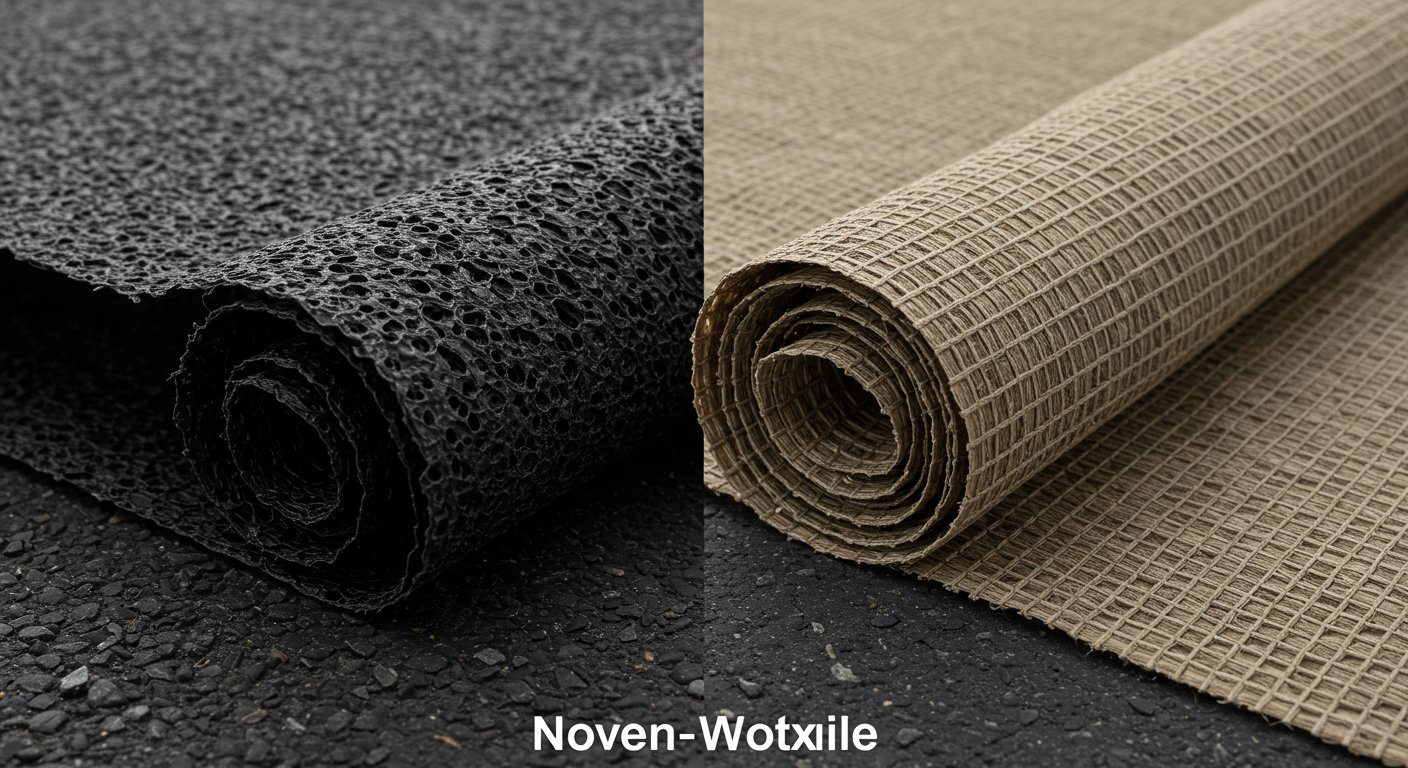
Choosing the right geotextile filter fabric is crucial for the success of any commercial construction or landscaping project. The wrong choice can lead to costly repairs, project delays, and even structural failures. This is especially true when dealing with drainage, erosion control, and soil stabilization. This guide will help you understand the key differences between non-woven geotextile filter fabric and woven geotextile fabric, enabling you to make an informed decision for your specific needs. We’ll explore their properties, applications, and ultimately, which one is better suited for your project.
Understanding Geotextile Filter Fabrics
Geotextiles are permeable fabrics used in conjunction with soil to separate, filter, reinforce, protect, or drain. They’re essentially the unsung heroes of many construction projects. Think of them as a vital layer that enhances the performance and longevity of your infrastructure. They come in two primary types: woven and non-woven.
What is Woven Geotextile Fabric?
Woven geotextiles are created by interlacing two or more sets of yarns or filaments at right angles, similar to how traditional fabrics are made. This process creates a strong, stable, and relatively impermeable fabric. Woven geotextiles are known for their high tensile strength and low elongation, making them ideal for applications requiring reinforcement and separation.
What is Non-Woven Geotextile Filter Fabric?
Non-woven geotextile filter fabric, on the other hand, is manufactured by bonding together short staple fibers or continuous filaments through mechanical, thermal, or chemical processes. This results in a fabric with a random, felt-like structure. This structure provides excellent filtration and drainage properties, making it a popular choice for a wide range of applications. Nonwoven geotextile filter fabric is particularly effective in situations where water needs to pass through the fabric while preventing soil particles from migrating.
Key Differences: Non-Woven vs. Woven Geotextiles
The manufacturing process significantly impacts the properties of each type of geotextile. Here’s a breakdown of the key differences:
| Feature | Non-Woven Geotextile Filter Fabric | Woven Geotextile Fabric |
|---|---|---|
| Manufacturing | Bonded fibers (mechanical, thermal, or chemical) | Interlaced yarns |
| Structure | Random, felt-like | Regular, woven pattern |
| Permeability | High – Excellent drainage and filtration | Low – Primarily for separation and reinforcement |
| Filtration | Excellent – Retains fine soil particles | Good, but less effective with very fine particles |
| Tensile Strength | Moderate | High |
| Elongation | High | Low |
| AOS (Apparent Opening Size) | Smaller – Better for fine particle filtration | Larger |
| Primary Use | Filtration, drainage, separation, erosion control, sediment control | Reinforcement, separation, stabilization |
Deep Dive into Non-Woven Geotextile Filter Fabric Properties
Permeability
Permeable geotextile fabric is designed to allow water to flow through it easily. This is measured by the geotextile permeability rate, often expressed in gallons per minute per square foot (gpm/ft²).
Filtration Rate
The geotextile filtration rate indicates how quickly water passes through the fabric while retaining soil particles. A higher filtration rate doesn’t always mean better; it depends on the specific application and soil type.
Apparent Opening Size (AOS)
The geotextile AOS refers to the size of the openings in the fabric. A smaller AOS is better for filtering out finer particles. This is often determined using standards like ASTM D4491.
Tensile Strength
While not as high as woven geotextiles, non-woven geotextile fabric filter still offers sufficient geotextile tensile strength for many applications.
Geotextile GSM (Grams per Square Meter)
This measures the weight and, indirectly, the thickness of the fabric. A higher GSM generally indicates a thicker, more robust fabric.
Applications of Non-Woven Geotextile Filter Fabric
Drainage: Used in French drains, subsurface drainage systems, and behind retaining walls to prevent soil from clogging drainage pipes and to promote water flow.
Erosion Control: Helps stabilize slopes, embankments, and shorelines by preventing soil erosion caused by water or wind.
Soil Stabilization: Improves the load-bearing capacity of soil by distributing weight and preventing soil movement.
Sediment Control: Used in construction sites to prevent soil erosion and sediment runoff from polluting waterways.
Road Construction: Used as a separation layer between the subgrade and the aggregate base, preventing mixing and improving the road’s structural integrity.
French Drains: Prevents soil from clogging the gravel fill, ensuring long-term drainage performance.
Choosing the Right Non-Woven Geotextile Filter Fabric
Selecting the best non-woven geotextile filter fabric for your project depends on several factors:
Soil Type: The particle size distribution of the soil will determine the required AOS of the fabric.
Water Flow Rate: The expected volume and velocity of water flow will influence the required permeability and filtration rate.
Load Requirements: If the fabric needs to support significant loads, a higher tensile strength and GSM may be necessary.
Project Life Expectancy: For long-term projects, choose a durable fabric with good UV resistance.
Specific Application: Consider the purpose of the geotextile (e.g., drainage, erosion control).
Favourite Fab: Your Trusted Geotextile Supplier
At Favourite Fab, we understand the importance of choosing the right geotextile membrane for your project. We are a leading geotextile manufacturer and supplier, offering a wide range of high-quality non-woven geotextile filter fabrics.
Contact Us
Ready to discuss your project and find the perfect geotextile filter fabric? Contact us today!
Email: sale@favouritehub.com
WhatsApp: 8800775462
Frequently Asked Questions (FAQ)
Q: What is non-woven geotextile fabric used for?
A: Primarily used for filtration, drainage, separation, erosion control, and sediment control.
Q: What is a non-woven fabric for filtration?
A: A type of geotextile made by bonding fibers together, creating a porous structure for filtration.
Q: Can water pass through non-woven geotextile?
A: Yes, water can easily pass through, making it ideal for drainage and filtration applications.
Conclusion
Choosing between non-woven geotextile filter fabric and woven geotextile fabric depends on your project’s specific requirements. For superior drainage, filtration, and erosion control, non-woven is the better choice. For high tensile strength and reinforcement, woven geotextiles are more suitable. Partnering with a reputable supplier like Favourite Fab ensures high-quality materials and expert guidance, leading to a successful and long-lasting project. Contact us today to discuss your needs and get a customized solution.

Gaurav Garg
I'm Gaurav Garg, CEO of Favourite Fab, a company on a mission to revolutionize the nonwoven industry with sustainable practices. We work hand-in-hand with manufacturers and suppliers who share our commitment to eco-friendly production. With a deep interest in textile innovation, I'm passionate about educating consumers about sustainable material options and their potential to transform the nonwoven landscape.


