

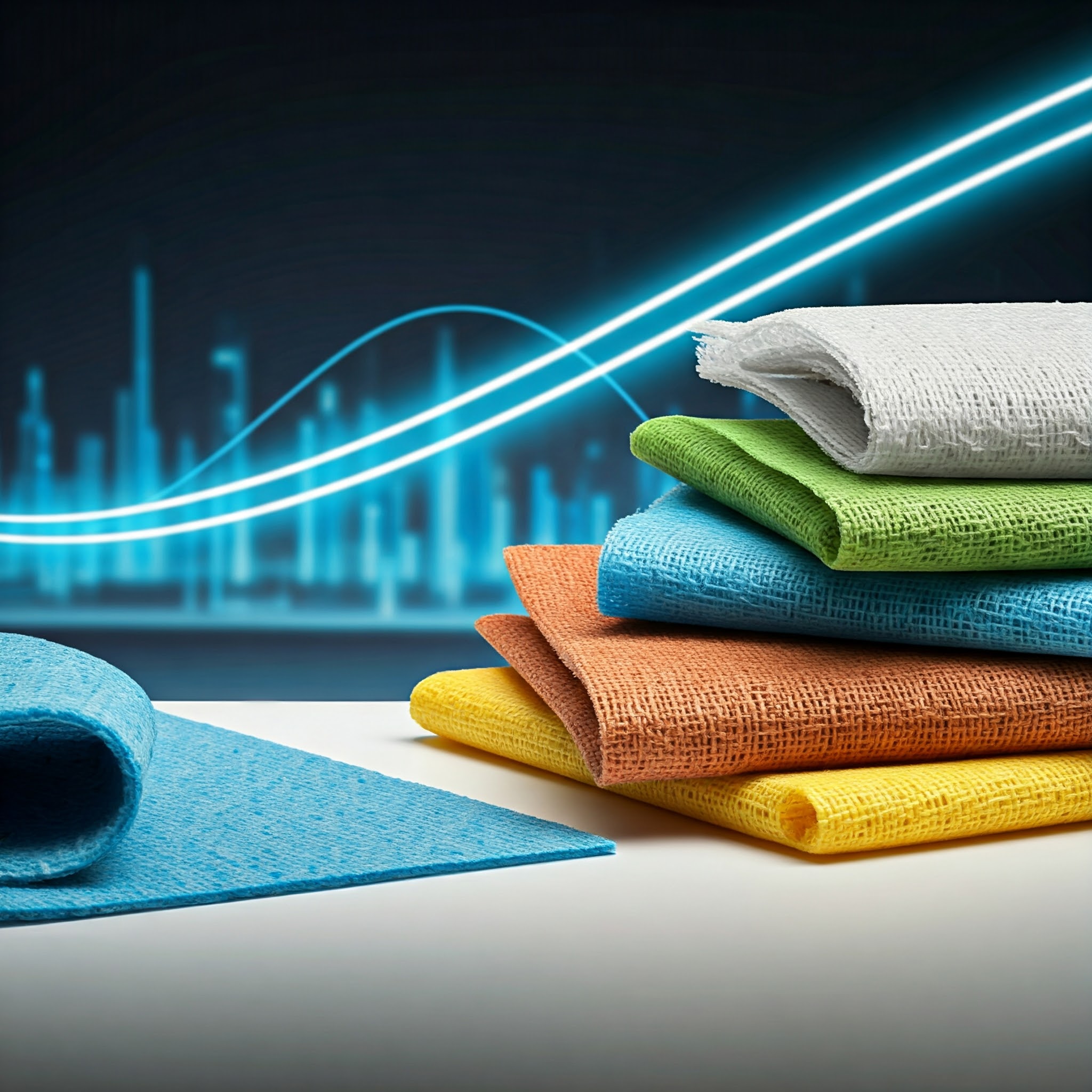
Non-Woven Material Innovations: The Future of Fabric Technology
The world of textiles is constantly evolving. One of the most exciting advancements is the rise of non-woven materials. These versatile fabrics are transforming industries from healthcare to automotive. This comprehensive guide explores the diverse landscape of non-woven materials, their unique properties, and their groundbreaking applications.
What are Non-Woven Materials?
Unlike traditional woven or knitted fabrics, non-woven materials are manufactured by bonding fibers together. This bonding process can be mechanical (like needlepunching), thermal, or chemical. The result is a fabric structure that offers distinct advantages in terms of strength, absorbency, breathability, and durability.
Exploring the Non-Woven Material List
The variety within non-woven fabrics is vast. Let’s delve into some key types:
Polypropylene Non-Woven Fabric:
Known for its strength and resistance to moisture, polypropylene non-woven fabric finds applications in packaging, furniture, and geotextiles.
Polyester Non-Woven Fabric:
Offering excellent drape and softness, polyester non-woven fabric is popular in apparel, automotive interiors, and filtration.
Rayon Non-Woven Fabric:
Highly absorbent and soft, rayon non-woven fabric is ideal for hygiene products and medical applications.
Cellulose Non-Woven Fabric:
Derived from natural fibers, cellulose non-woven fabric is biodegradable and sustainable, making it suitable for wipes and personal care items.
Bicomponent Non-Woven Fabric:
Combining two different polymers, bicomponent non-woven fabrics offer unique properties tailored to specific applications.
PLA Non-Woven Fabric:
Biodegradable and compostable, PLA (polylactic acid) non-woven fabric is a sustainable alternative for various applications.
PET Non-Woven Fabric:
Strong and recyclable, PET (polyethylene terephthalate) non-woven fabric is used in packaging, automotive, and geotextiles.
Non-Woven Fabric Manufacturing Processes
Different manufacturing processes result in varied non-woven fabric types:
Spunbond Non-Woven:
This process involves directly extruding polymers into filaments and then bonding them together.
Meltblown Non-Woven:
This method creates finer fibers, often used in filtration and medical applications.
Needlepunch Non-Woven:
Mechanical interlocking of fibers creates a durable and dimensionally stable fabric.
Airlaid Non-Woven:
This process uses air to form a web of fibers, resulting in a soft and absorbent material.
Thermal Bonded Non-Woven:
Heat is used to fuse fibers together, creating a strong and stable structure.
Chemically Bonded Non-Woven:
Adhesives bind the fibers together, offering flexibility in design and properties.
Non-Woven Fabric Applications Across Industries
Non-woven materials are revolutionizing various sectors:
Non-Woven Materials for Medical:
Surgical gowns, drapes, masks, and wound dressings benefit from the sterility and barrier properties of non-wovens.
Non-Woven Materials for Filtration:
Air and liquid filtration systems rely on the fine fiber structure of non-wovens.
Non-Woven Materials for Hygiene:
Diapers, wipes, and feminine hygiene products utilize the absorbency and softness of non-wovens.
Non-Woven Materials for Automotive:
Car interiors, headliners, and insulation utilize non-wovens for their lightweight and sound-dampening properties.
Non-Woven Materials for Geotextiles:
Erosion control, drainage, and reinforcement in construction utilize durable non-woven geotextiles.
Non-Woven Materials for Agriculture:
Crop covers, weed control fabrics, and frost protection utilize the breathability and UV resistance of non-wovens.
There were no bullet points in the provided markdown. If you provide text with bullet points using markdown’s I can convert those as well.

Gaurav Garg
I'm Gaurav Garg, CEO of Favourite Fab, a company on a mission to revolutionize the nonwoven industry with sustainable practices. We work hand-in-hand with manufacturers and suppliers who share our commitment to eco-friendly production. With a deep interest in textile innovation, I'm passionate about educating consumers about sustainable material options and their potential to transform the nonwoven landscape.


