

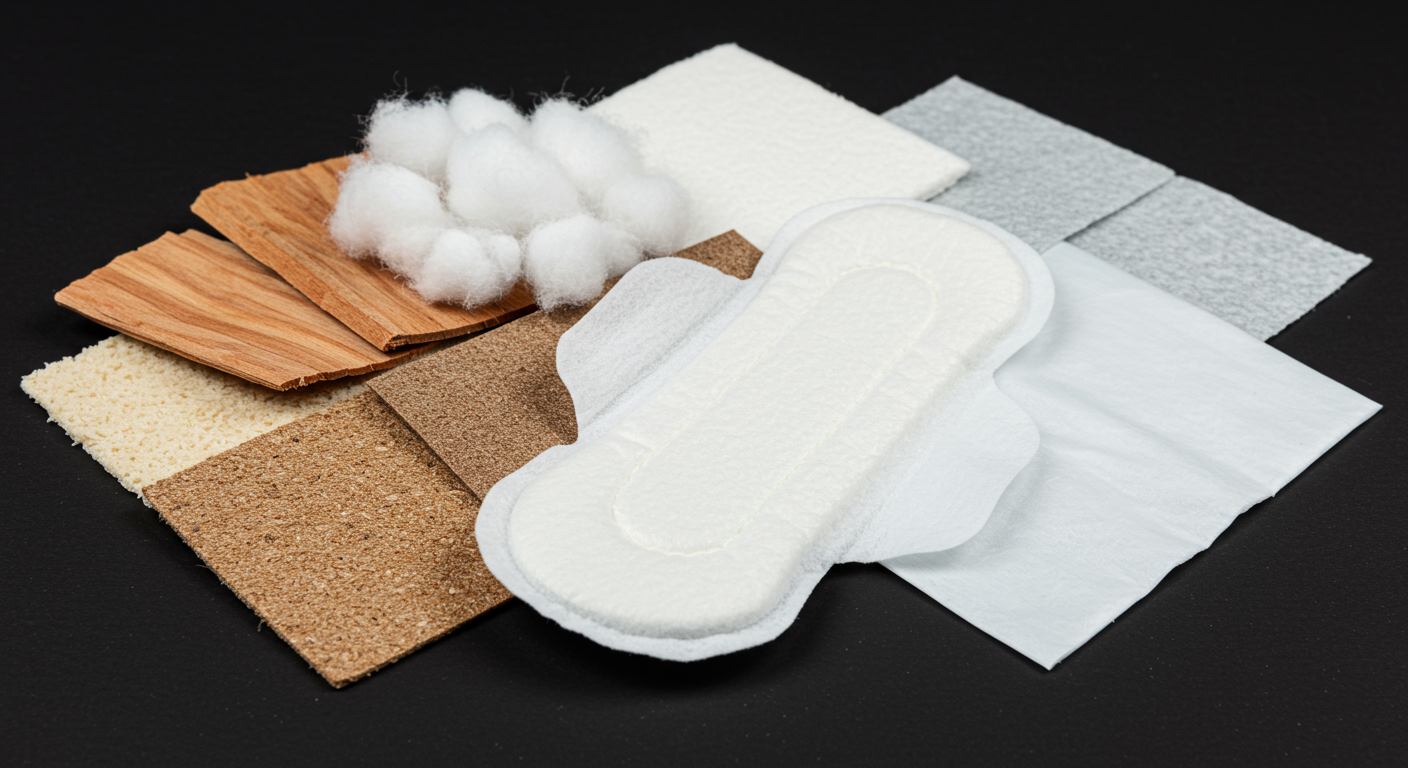
Are you looking to understand the essential raw materials for sanitary napkins? Perhaps you’re a manufacturer aiming to optimize your sourcing of hygiene product raw materials. For more, see sanitary pad materials list. Or maybe you’re simply curious about what are sanitary napkins made of? Whatever your reason, you’ve come to the right place. At Favourite Fab, we pride ourselves on our deep understanding of the sanitary napkin manufacturing process and the crucial sanitary pad ingredients that go into creating effective and reliable hygiene products.
This comprehensive guide will delve into the detailed sanitary napkin raw material list, explaining the function of each component of sanitary napkins. We’ll explore the different materials used in sanitary pads, from the absorbent core to the outer layers. Moreover, we’ll touch upon material sourcing for sanitary pads and why choosing the right sanitary napkin material suppliers is paramount.
The Core of Absorbency: Super Absorbent Polymer (SAP) and Fluff Pulp
At the heart of every effective sanitary napkin lies its absorbent core. Two key absorbent core materials play a vital role here:
Super Absorbent Polymer (SAP)
SAP, or Super Absorbent Polymer, is a game-changer in the hygiene industry. This incredible material has the unique ability to absorb and retain vast amounts of liquid, significantly more than its own weight. Therefore, it’s a crucial ingredient in providing superior protection against leaks. The function of SAP in sanitary napkins is primarily to quickly draw in menstrual fluid and lock it away, keeping the user feeling dry and comfortable.
Fluff Pulp
Fluff pulp is another essential component of the absorbent core. This material, typically derived from wood pulp, provides bulk and structure to the core. Furthermore, it aids in the rapid distribution of fluid throughout the pad, allowing the SAP to work efficiently. The combination of fluff pulp and SAP creates a powerful absorbent system.
The Outer Layers: Comfort and Protection
Besides the absorbent core, the outer layers of a sanitary napkin are equally important for comfort and leak prevention.
Top Sheet: Hydrophilic Nonwoven Fabric
The top layer, which comes into direct contact with the skin, is typically made of a hydrophilic nonwoven fabric. The term “hydrophilic” means it has an affinity for water, allowing fluid to pass through quickly into the absorbent core. Different types of nonwoven fabric for sanitary pads are used, each offering varying degrees of softness and fluid acquisition speed. Consequently, the choice of hydrophilic nonwoven directly impacts user comfort.
Acquisition Distribution Layer (ADL) Material
Often found beneath the top sheet, the Acquisition Distribution Layer material plays a crucial role in quickly spreading fluid across the pad. This ensures that the absorbent core is utilized effectively and prevents localized saturation. Because of the ADL, the pad can handle larger volumes of fluid more efficiently.
Backsheet: PE Film or Breathable Film
The bottom layer of the sanitary napkin is the backsheet, which acts as a barrier to prevent leakage. This layer is commonly made of PE film (Polyethylene film), which is waterproof. Increasingly, breathable film options are gaining popularity. These breathable film backsheets allow air and moisture vapor to escape while still preventing leaks, leading to improved comfort and reduced humidity.
Securing the Pad: Adhesives and Release Paper
To ensure the sanitary napkin stays securely in place, two key materials are used:
Adhesive: Hot Melt Adhesive
Adhesive, specifically hot melt adhesive, is applied to the back of the sanitary pad. This allows it to stick firmly to underwear, preventing movement and ensuring reliable protection. The quality and application of the hot melt adhesive are critical for user confidence.
Release Paper
The adhesive on the back of the pad is covered with release paper. This paper has a non-stick surface, allowing the user to easily peel it off before use. The quality of the release paper ensures a hassle-free application process.
Other Important Components
While the above materials form the core of a sanitary napkin, other components contribute to its overall functionality and user experience. These may include:
- Wings: Many sanitary napkins feature wings made of nonwoven fabric and backed with adhesive and release paper. These wings wrap around the sides of the underwear for extra security and leak protection.
- Individual Wrappers: Some sanitary napkins are individually wrapped in a film, often made of plastic, for hygiene and convenience.
Sourcing the Best Raw Materials for Sanitary Pad Production
For manufacturers in the sanitary napkin manufacturing industry, sourcing high-quality sanitary pad ingredients is paramount. Choosing reliable sanitary napkin material suppliers is crucial for ensuring the consistency and performance of your products. Factors to consider when selecting suppliers include:
- Quality of Materials: Ensuring that the SAP, fluff pulp, nonwoven fabric, and other materials meet stringent quality standards.
- Reliability of Supply: Partnering with suppliers who can consistently deliver the required quantities of hygiene product raw materials.
- Cost-Effectiveness: Balancing quality with competitive pricing to maintain profitability in the sanitary pad production process.
- Technical Support: Some suppliers offer valuable technical expertise and support regarding the application and properties of their materials.
Favourite Fab is committed to providing high-quality materials for sanitary napkin manufacturing. We understand the importance of reliable sanitary napkin material suppliers and strive to be a trusted partner in your production process.
B2B Sourcing Strategy: Domestic vs Import for Sanitary Napkin Raw Materials
For Indian manufacturers, the sourcing question is not just “where” but “what mix”. A balanced sourcing strategy reduces forex exposure, secures supply continuity, and protects margins when commodity prices swing. Most established sanitary pad manufacturers in India today follow a 70:30 domestic-to-import split for non-critical raw materials, while keeping 100% domestic sourcing for high-volume nonwoven topsheets, ADL layers, and PE backsheet films.
Domestic sourcing through partners like Favourite Fab typically offers shorter lead times of 5–10 days, INR-denominated pricing, smaller minimum order quantities, and easier sample approvals. Imports — usually from China, South Korea, or Japan — make sense for specialty SAP grades, specific tri-laminate constructions, and printed release paper where domestic capacity is still limited.
| Material | Recommended Source | Typical MOQ | Lead Time |
| Spunbond/SMS topsheet | Domestic (India) | 500 kg | 5–10 days |
| Hot Air Through (ADL) | Domestic | 300 kg | 7–12 days |
| SAP (T-grade) | Domestic + Import mix | 1 MT | 10–25 days |
| Fluff pulp | Import (US/Scandinavia) | 5 MT | 30–45 days |
| PE backsheet film | Domestic | 500 kg | 7 days |
| Release paper | Domestic + Import | 200 kg | 10–20 days |
OEM buyers operating private-label brands should also build a CoA (Certificate of Analysis) checklist for every consignment — covering GSM tolerance, absorption capacity (g/g), retention under load, and skin compatibility. We supply complete CoA documentation with every dispatch and can support buyer-driven third-party lab testing where required.
Quality Testing Parameters and Compliance for Manufacturers
For manufacturers selling under their own brand, ISO 9001 quality systems and BIS-aligned product testing are no longer optional — they are gating requirements for institutional tenders, exports, and modern trade listings. The critical lab parameters every sanitary napkin should be tested for include absorption rate (target ≥ 10x own weight for SAP+pulp core), rewet value (≤ 0.3 g under 7 kPa load), pH neutrality of topsheet, and burst strength of the PE backsheet (≥ 1.5 kgf/cm²).
Export-focused manufacturers should additionally pursue ISO 13485 (medical devices QMS), CE marking under EU MDR for European markets, and FDA 510(k) where the US market is a target. Favourite Fab supplies hygiene-grade Hot Air Through bonded nonwoven, SAP sheet, and PE-laminated SMS that already meet international hygiene standards, simplifying downstream compliance. For new entrants, our team can also share template specification sheets benchmarked against the leading Indian and global pad brands so your finished product targets the right market tier from day one.
Common manufacturer mistakes we see at the sourcing stage include: choosing topsheet GSM purely on price (15 GSM may seem cheaper but causes pilling and rewet failures), under-specifying SAP retention capacity, and skipping release-paper silicone-coating tests. A 5-paisa saving per pad on raw material that triggers a 0.5% customer return rate wipes out the entire saving. Talk to our technical team before finalising specs — sale@favouritehub.com or WhatsApp +91-8800775462.
Frequently Asked Questions (FAQ)
What are the raw materials for sanitary pads?
The primary raw materials for sanitary pads include Super Absorbent Polymer (SAP), fluff pulp, hydrophilic nonwoven fabric for the top sheet, Acquisition Distribution Layer (ADL) material, PE film or breathable film for the backsheet, hot melt adhesive, and release paper. Additionally, nonwoven fabric for wings and packaging film may be used.
What are the components of a sanitary napkin?
The main components of a sanitary napkin are the top sheet, the absorbent core (containing SAP and fluff pulp), the Acquisition Distribution Layer (ADL), the backsheet, adhesive for securing the pad, and release paper covering the adhesive. Some pads also include wings.
What are the materials in a napkin?
The materials in a napkin typically consist of nonwoven fabrics (for the top sheet and sometimes wings), an absorbent core made of fluff pulp and Super Absorbent Polymer (SAP), a polyethylene or breathable film backsheet, and hot melt adhesive with a release paper backing.
What material is needed to make sanitary pads?
The essential material needed to make sanitary pads includes Super Absorbent Polymer (SAP), fluff pulp, hydrophilic nonwoven fabric, Acquisition Distribution Layer (ADL) material (optional but recommended), PE film or breathable film, hot melt adhesive, and release paper.
Related Keywords and Further Information
For those seeking more in-depth information, you might find resources related to:
- Sanitary napkin raw material list pdf
- Sanitary napkin raw material list pdf download
- Sanitary napkin raw material list with price (Note: Prices can fluctuate, so contacting suppliers directly is recommended.)
- Sanitary napkin raw material list in india
- Sanitary pad Raw Material supplier
- Sanitary napkin raw material list near me (Contact Favourite Fab for your needs in Agra and surrounding regions.)
- Sanitary Pad Raw Material Supplier in India (Favourite Fab is a reliable supplier in India.)
- Sanitary pad manufacturing process PDF (Understanding the process highlights the importance of each raw material.)
Conclusion: Partnering for Quality Hygiene Products
Understanding the sanitary napkin raw material list is crucial for manufacturers aiming to produce high-quality and reliable hygiene products. From the highly absorbent SAP to the comfortable hydrophilic nonwoven, each component of sanitary napkins plays a vital role in the overall performance.
At Favourite Fab, we are dedicated to providing top-notch hygiene product raw materials. We understand the intricacies of sanitary napkin manufacturing and are committed to being a dependable sanitary napkin material supplier.
Contact Us Today:
For inquiries about our sanitary pad ingredients and material sourcing for sanitary pads, please reach out to us.
- Email: sale@favouritehub.com
- WhatsApp: 8800775462
Let Favourite Fab be your trusted partner in sourcing the best raw materials for sanitary pad production. We are here to support your journey in creating effective and comfortable sanitary napkins.
Source Every Material on This List from Favourite Fab
B2B wholesale supplier for all sanitary napkin raw materials — MOQ-friendly, export-ready, free samples available:
Related Resources
- Wholesale Anion Chip Pricing — Guide to Bulk Orders
- Anion Chip Benefits — Impact on Menstrual Health & Comfort
- What Is an Anion Chip — Core Technology Behind Negative Ion Devices
- Anion Strip for Sanitary Pad Manufacturers — Best Price Quote
- Anion Chip Roll for Sanitary Pad — Factory Direct Price Quote
Related Resources
- Why Choose Local Sanitary Pad Raw Material Suppliers in South Africa
- Bulk Non Woven Desiccant Bags — Sourcing & Customization Options
- Manufacturing Corona-Treated Breathable Fabric Rolls — Process Guide
- 8th Non Woven Tech Asia 2022 — Industry Event Coverage
Frequently Asked Questions
What is the full list of raw materials needed to make sanitary napkins?
Complete list: spunlace nonwoven topsheet 25-50 GSM, ADL 40-80 GSM, SAP sodium polyacrylate, fluff pulp, tissue wrap, PE backsheet film 18-25 GSM, release paper liner, hot melt adhesive, packaging film and pouches.
How much raw material is needed to make 1000 sanitary napkins?
Per 1000 regular pads (240mm): ~2 kg spunlace topsheet, ~1.5 kg ADL, ~3-5 kg SAP, ~4 kg fluff pulp, ~1.5 kg PE backsheet, ~0.8 kg hot melt adhesive.
What certifications should sanitary napkin raw materials have?
Look for: OEKO-TEX Standard 100, ISO 9001, FDA 21 CFR compliance for USA export, IS 5405 Indian standard. Favourite Fab holds ISO 9001 and supplies OEKO-TEX certified fabrics.
What is ADL in sanitary pads?
ADL (Acquisition Distribution Layer) is a through-air bonded nonwoven placed between topsheet and SAP core. It distributes fluid laterally and prevents rewet. Typically 40-80 GSM polyester or PP/PE bicomponent fibre.
Related B2B Resources
- Sanitary Pad Raw Material Supplier India
- SAP — Super Absorbent Polymer Supplier
- Non Woven Fabric Manufacturer India
Sanitary & Hygiene Raw Material Suppliers

Gaurav Garg
I'm Gaurav Garg, CEO of Favourite Fab, a company on a mission to revolutionize the nonwoven industry with sustainable practices. We work hand-in-hand with manufacturers and suppliers who share our commitment to eco-friendly production. With a deep interest in textile innovation, I'm passionate about educating consumers about sustainable material options and their potential to transform the nonwoven landscape.


